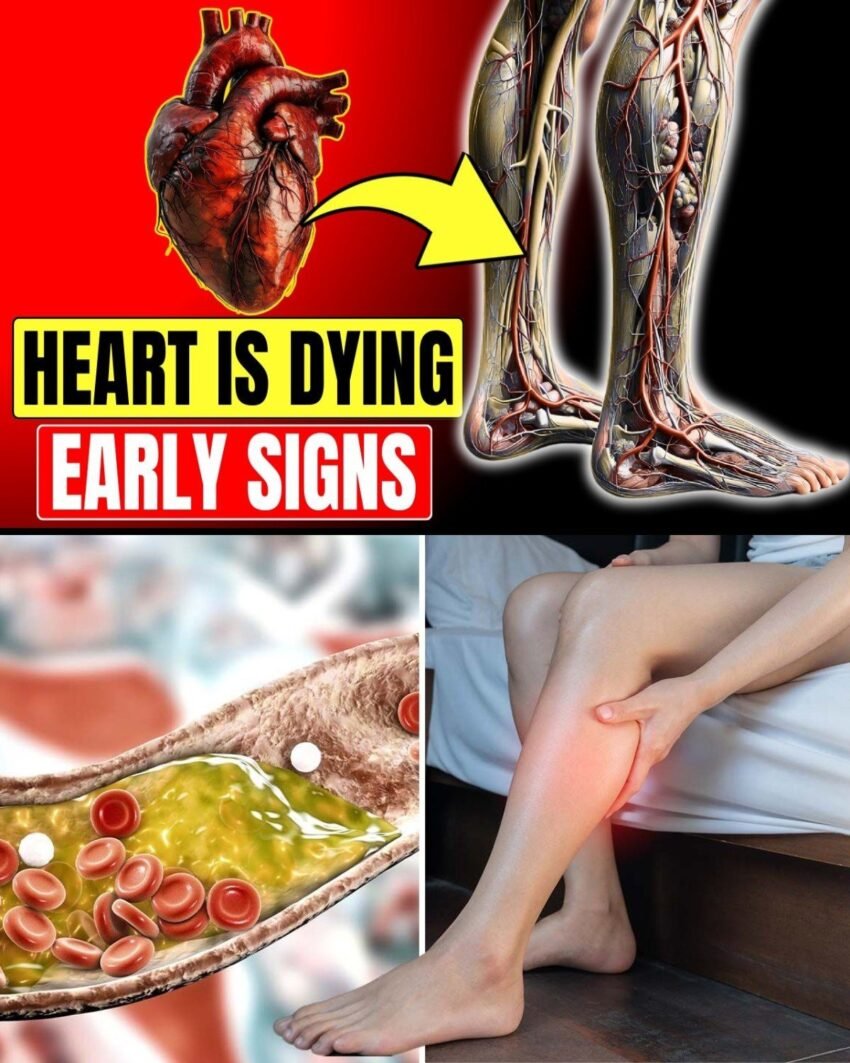
Here’s a full article‑style explanation of the 10 warning signs that could mean blocked arteries in your legs and feet — often caused by peripheral artery disease (PAD), a condition where fatty plaque buildup narrows the vessels that carry blood from the heart to your lower extremities. Recognizing these signs early can help you seek treatment before serious complications develop, including tissue damage or even limb loss. (Mayo Clinic)
10 Warning Signs of Blocked Heart Arteries in Legs and Feet (Don’t Ignore These Signals)
Peripheral artery disease (PAD) affects blood flow to the legs when arteries become narrowed or blocked by plaque. It’s not limited to older adults — but risk rises with age, smoking, diabetes, high blood pressure, and high cholesterol. (CDC)
1. Pain or Cramping During Walking
One of the most common early signs is intermittent claudication — pain, burning, or cramping in the calves, thighs, or buttocks during activity that improves with rest. This happens because your muscles aren’t getting enough oxygen‑rich blood when in use. (Mayo Clinic)
2. Weak or Absent Pulses in Legs and Feet
Healthy circulation generates detectable pulses in the feet and ankles. When arteries are blocked, these pulses may be weak or missing, which clinicians can detect during a physical exam. (medicaltimes.io)
3. Skin Color and Temperature Changes
Poor blood flow can cause the skin of your legs or feet to look pale, bluish, or discolored and feel cooler than the other side. Persistent temperature differences or color changes are red flags. (medicaltimes.io)
4. Slow‑Healing Sores or Wounds
Cuts, blisters, or ulcers on the feet or legs that don’t heal normally can signal blocked arteries. Reduced blood flow means tissues get less oxygen and nutrients essential for healing. (Healthy Life!)
5. Shiny, Hairless Skin
As circulation worsens, the skin on your legs may become smooth, shiny, and hairless. Hair and nail growth both slow because blood isn’t delivering enough nutrients. (medicaltimes.io)
6. Numbness, Tingling or Weakness
Persistent numbness, tingling, pins‑and‑needles, or weakness in your legs or feet can result from poor blood supply affecting nerves and muscles. This may make walking feel awkward or heavy. (Healthy Life!)
7. Legs or Feet That Feel Cold
When the arteries are narrowed or blocked, one or both lower limbs may feel significantly colder than other parts of the body. This is another sign that circulation isn’t adequate. (CDC)
8. Changes in Toenails
Slowed or abnormal toenail growth (brittle, slow, or poor nail quality) can reflect chronically poor blood supply to the toes and feet. (Mayo Clinic)
9. Leg Pain at Rest or at Night
As PAD becomes more severe, pain that once only occurred during activity can progress to pain at rest, especially at night or when your legs are elevated. Dangling your legs over the edge of the bed may temporarily ease discomfort. (MSD Manuals)
10. Foot and Leg Ulcers or Gangrene
In advanced stages, blocked circulation may lead to ulcers, infection, or even tissue death (gangrene). These conditions require urgent medical attention because the lack of blood supply can quickly worsen. (MSD Manuals)
Why These Signs Matter
PAD is often a sign of widespread atherosclerosis — plaque buildup in arteries throughout the body, including those feeding the heart and brain. That means people with PAD also have increased risk for heart attack and stroke. Getting early treatment can slow disease progression and reduce complications. (CDC)
Symptoms can be subtle at first and are often mistaken for normal aging, muscle fatigue, or minor injuries. But persistent or progressive signs — especially pain with walking that goes away with rest, non‑healing wounds, or skin changes — deserve evaluation by a healthcare professional. (Fox Vein Care)
What to Do If You Notice These Symptoms
- See your doctor promptly if you experience any combination of these signs.
- Screening tests like the ankle‑brachial index (ABI) or Doppler ultrasound can measure blood flow and detect PAD early.
- Treatment may include lifestyle changes (exercise, smoking cessation), medications to improve blood flow and reduce plaque, and in some cases procedures to open or bypass blocked arteries.
Early detection and action can preserve limb function and protect heart health — so don’t ignore persistent leg or foot symptoms. (Fox Vein Care)
If you’d like, I can also outline the best lifestyle changes to prevent or manage PAD — including exercise, diet, and medical strategies. Just let me know!
