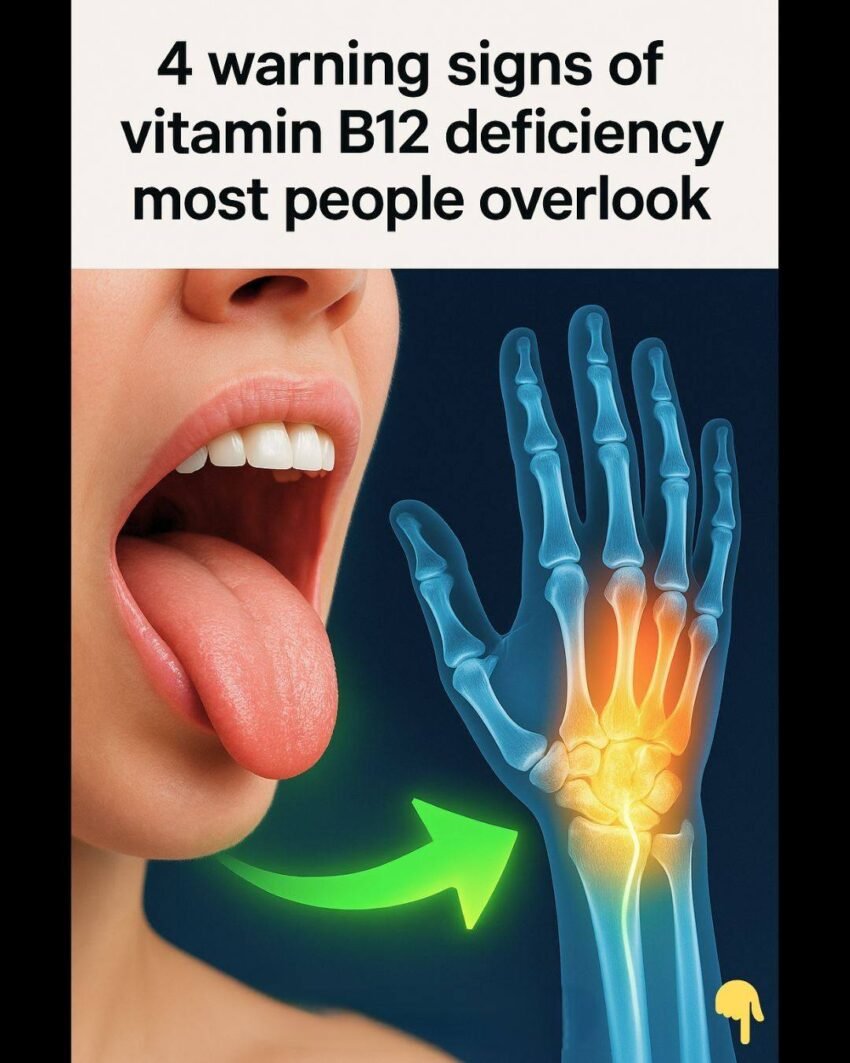
Vitamin B12 deficiency can be subtle at first, but certain symptoms are “red flags” you shouldn’t ignore because prolonged deficiency can lead to nerve damage, anemia, and cognitive issues. Here are four alarming signs:
1. Tingling or Numbness in Hands and Feet
- Often described as pins and needles or “falling asleep” sensation.
- Indicates nerve damage (neuropathy) caused by B12 deficiency.
- If untreated, it can become permanent.
2. Extreme Fatigue or Weakness
- Feeling tired despite enough sleep.
- Occurs because B12 is crucial for red blood cell production; deficiency can lead to megaloblastic anemia.
- May also cause shortness of breath or dizziness.
3. Cognitive Disturbances
- Memory problems, difficulty concentrating, or brain fog.
- B12 is important for myelin sheath maintenance, affecting nerve signaling.
- Left unchecked, deficiency can contribute to mood changes, depression, or confusion.
4. Glossitis and Mouth Problems
- Swollen, red, or sore tongue (glossitis).
- Mouth ulcers or burning sensation, difficulty swallowing, or a metallic taste.
- Indicates B12’s role in DNA synthesis and nerve health is compromised.
Other Things to Watch
- Pale or yellowish skin.
- Vision changes (blurred or light sensitivity).
- Balance problems.
⚠️ When to see a doctor immediately
- Persistent numbness, tingling, or balance issues.
- Severe fatigue or shortness of breath.
- Cognitive symptoms affecting daily life.
A simple blood test can confirm deficiency, and treatment often includes oral supplements or B12 injections, depending on severity and cause.
If you want, I can make a quick guide on early signs vs. late-stage B12 deficiency, so you know what to act on immediately. Do you want me to do that?
