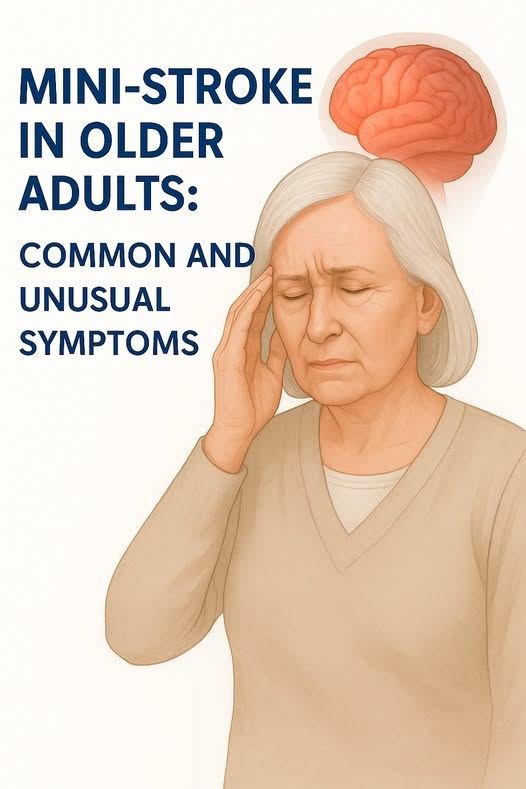
A mini stroke (also called a TIA – Transient Ischemic Attack) is a temporary blockage of blood flow to the brain. Symptoms may last only a few minutes to an hour — but they are a major warning sign of a possible full stroke.
In seniors especially, these signals should never be ignored:
1️⃣ Sudden Weakness or Numbness (Especially on One Side)
- Face drooping
- Arm or leg weakness
- Numbness on one side of the body
If you ask them to smile and one side droops, or they can’t raise one arm — this is urgent.
2️⃣ Trouble Speaking or Understanding
- Slurred speech
- Difficulty finding words
- Confusion
- Trouble understanding simple sentences
Even brief speech changes are a red flag.
3️⃣ Sudden Vision Changes
- Blurred vision
- Double vision
- Temporary loss of vision in one or both eyes
- “Curtain” effect over part of the visual field
Vision symptoms may last only minutes but are serious.
4️⃣ Sudden Dizziness or Loss of Balance
- Trouble walking
- Loss of coordination
- Feeling like the room is spinning
- Unexplained falls
In older adults, this is sometimes mistaken for “just aging.”
5️⃣ Sudden Severe Headache (Without Known Cause)
- Intense, unusual headache
- Different from their typical headaches
- May occur with other neurological symptoms
🚨 Important: Use the FAST Rule
- F – Face drooping
- A – Arm weakness
- S – Speech difficulty
- T – Time to call emergency services
Even if symptoms go away, call emergency services immediately. A TIA can happen hours or days before a major stroke.
Why It’s Critical in Seniors
After a mini stroke:
- Stroke risk is highest within 48 hours
- Up to 1 in 5 people may have a full stroke within 3 months (many within the first few days)
If you’d like, I can also share:
- How mini stroke symptoms differ from regular stroke
- Risk factors seniors should monitor
- Prevention strategies
- What caregivers should do step-by-step
Early action saves brain cells — and lives.
