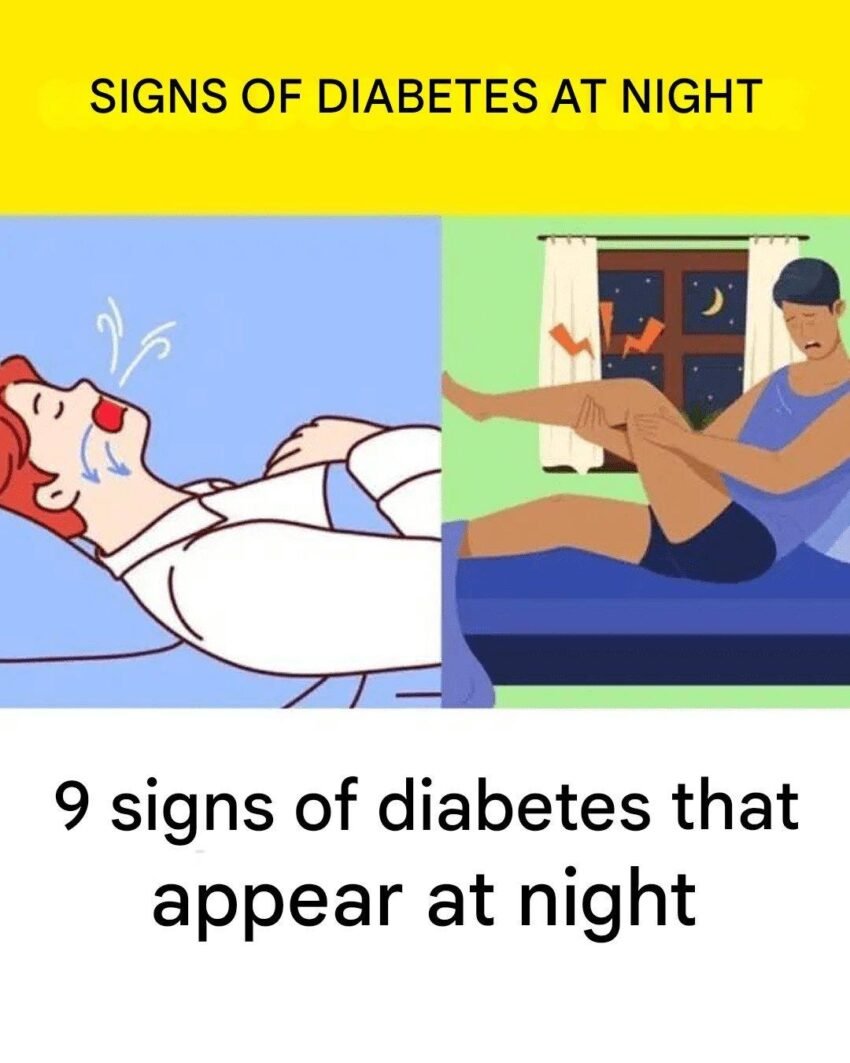
The headline:
“9 Signs of Diabetes That Appear at Night – SEE MORE…”
is typical clickbait — but there are real diabetes symptoms that can be more noticeable at night.
Here’s what’s medically accurate.
🩺 About Diabetes
Diabetes mellitus is a condition where blood sugar (glucose) levels are too high due to problems with insulin production or use.
When blood sugar stays elevated, certain symptoms can become more obvious overnight.
🌙 9 Symptoms That May Show Up at Night
1️⃣ Frequent Urination (Nocturia)
High blood sugar makes your kidneys work harder, leading to waking up multiple times to urinate.
2️⃣ Excessive Thirst
You may wake up very thirsty due to fluid loss from frequent urination.
3️⃣ Night Sweats
Low blood sugar (especially in people on insulin or diabetes medications) can cause sweating during sleep.
4️⃣ Restless Sleep
Blood sugar swings can lead to discomfort, frequent waking, or poor sleep quality.
5️⃣ Leg Cramps
Electrolyte imbalance or nerve changes may contribute to nighttime cramps.
6️⃣ Tingling or Burning in Feet
Diabetic neuropathy often feels worse at night when there are fewer distractions.
7️⃣ Headaches in the Morning
Can result from nighttime blood sugar fluctuations.
8️⃣ Fatigue Upon Waking
Poor glucose control can leave you feeling unrefreshed.
9️⃣ Recurrent Yeast Infections or Itching
High glucose levels can promote infections and skin irritation, sometimes noticed more at night.
⚠️ Important Context
These symptoms do not automatically mean diabetes. They can also be caused by:
- Sleep apnea
- Anxiety
- Hormonal changes
- Prostate enlargement (in men)
- Urinary tract infections
- Medication side effects
Diagnosis requires blood testing — not just symptoms.
🧪 When to Get Checked
Consider seeing a doctor if you have:
- Frequent nighttime urination + excessive thirst
- Unexplained weight loss
- Blurred vision
- Persistent fatigue
Simple blood tests like fasting glucose or HbA1c can confirm or rule out diabetes.
Bottom Line
Nighttime symptoms can sometimes signal blood sugar problems, but they’re not proof of diabetes. Proper testing is the only way to know for sure.
If you’d like, tell me which symptom you’re experiencing and I can help you assess how concerning it might be.
