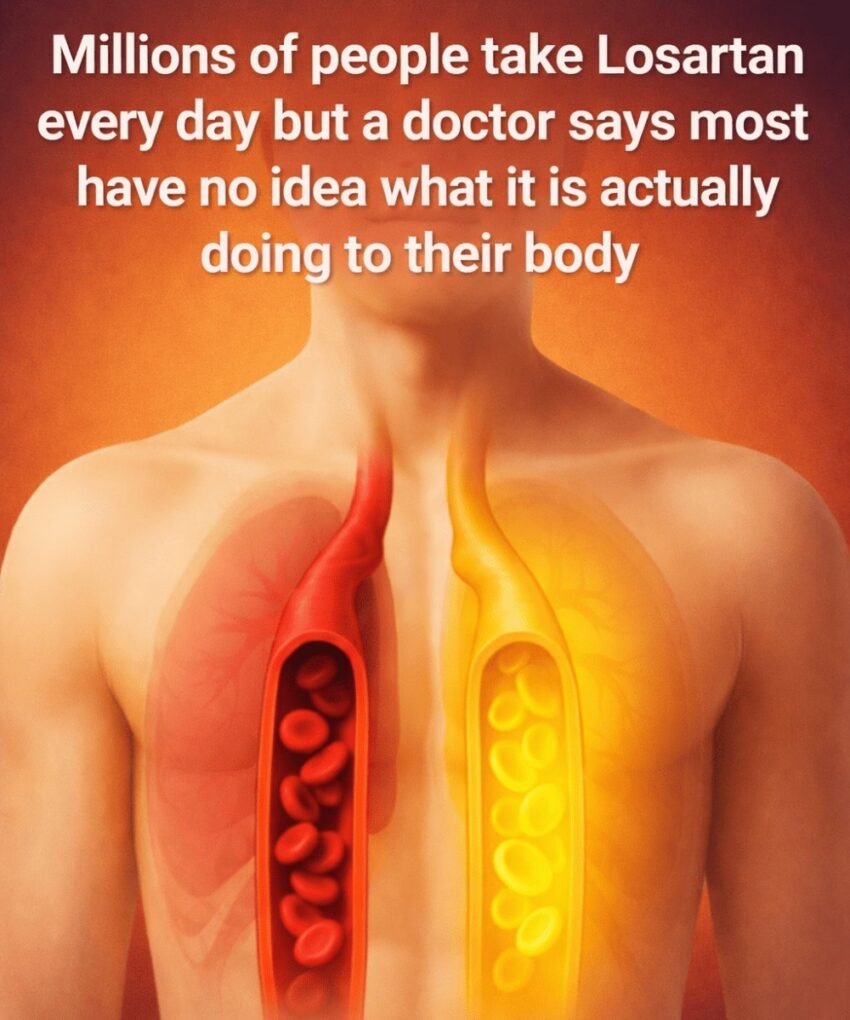
Here’s an **evidence‑based, clear explanation of what really happens in your body when you take losartan — why it’s prescribed, how it works, and what effects (both beneficial and potential side effects) to be aware of. (Mayo Clinic)
🧠 What Losartan Does to Your Body
Losartan is a medication in a class called angiotensin II receptor blockers (ARBs). It’s most often prescribed for high blood pressure (hypertension) and to protect the heart and kidneys, especially in people with diabetes or heart enlargement. (Mayo Clinic)
🔬 How Losartan Works (Mechanism of Action)
At its core, losartan affects a hormonal system in your body called the renin‑angiotensin‑aldosterone system (RAAS) — which helps regulate blood pressure. (NCBI)
1. Blocking Angiotensin II Effects
- Angiotensin II is a hormone that tightens (constricts) blood vessels and signals the body to retain salt and water — both actions raise blood pressure.
- Losartan blocks angiotensin II from binding to its receptors in blood vessel walls. This prevents the vessels from constricting. (Drugs.com)
➡️ As a result:
- Blood vessels relax and widen (vasodilation).
- Blood pressure goes down because blood can flow more easily through relaxed arteries. (Mayo Clinic)
💗 What Happens in Your Body After Taking It
Here’s how losartan affects key parts of your physiology:
✔ Blood Pressure
- Blood pressure gradually lowers as your vessels widen.
- This reduces the workload on your heart and lowers the risk of stroke, heart attack, and heart failure. (Mayo Clinic)
✔ Heart Protection
- In people with heart enlargement (left ventricular hypertrophy), losartan reduces harmful remodeling of the heart muscle and can help prevent future stroke. (Drugs.com)
✔ Kidney Support (especially in diabetes)
- High blood pressure and diabetes damage tiny kidney blood vessels.
- Losartan helps protect kidney function by improving circulation and reducing pressure in the kidneys. (Mayo Clinic)
✔ Hormones and Electrolytes
- By blocking angiotensin II, losartan can reduce the release of aldosterone, a hormone that makes the body retain salt and water.
- This often increases sodium and water excretion and can increase potassium levels — which doctors may monitor. (NCBI)
📈 Typical Timeline of Effects
- Within hours: Losartan starts relaxing blood vessels.
- Over days to weeks: Blood pressure gradually improves and stabilizes.
- Long‑term: Continued use reduces the risk of cardiovascular and kidney complications. (MedlinePlus)
⚠️ Common and Less Common Effects on Your Body
Most people tolerate losartan well, but like all medications, it can affect the body in various ways:
🔹 Common Effects
- Dizziness or lightheadedness (especially when standing up) — due to blood pressure lowering. (nhs.uk)
- Tiredness or fatigue — particularly early in treatment. (Drugs.com)
- Diarrhea or stomach discomfort — occasional digestive changes. (Drugs.com)
- Cold‑like symptoms (stuffy nose, sore throat) — sometimes reported. (Drugs.com)
🔹 Less Common but Important
- Elevated potassium (hyperkalemia) — can affect heart rhythms if high. (Poison Control)
- Decreased kidney function — usually in people with existing kidney issues or dehydration. (Poison Control)
- Rare allergic reactions (swelling of face, lips, throat) known as angioedema — requiring immediate care. (Mayo Clinic)
🧠 Why Some People Notice Side Effects
Your body doesn’t instantly adapt to the way ARBs alter hormone signaling and blood pressure. During the adjustment period, you might feel:
- Dizziness when standing up quickly
- Mild nausea or fatigue
- Changes in thirst or urination pace
These usually improve over time as your body gets used to the medication — but if symptoms persist or worsen, talk to your doctor. (Drugs.com)
🧾 Important Tips While Taking Losartan
✔ Take it consistently at the same time every day. (MedlinePlus)
✔ Don’t stop suddenly — blood pressure may rebound. (MedlinePlus)
✔ Avoid salt substitutes with potassium unless your doctor says it’s okay — because losartan can raise potassium levels. (nhs.uk)
✔ Keep up routine check‑ups (blood pressure, kidney function, electrolytes). (MedlinePlus)
🧠 Summary — What Really Happens
When you take losartan:
- You block a hormone that tightens blood vessels.
- Your blood vessels relax and widen, which helps lower blood pressure. (Mayo Clinic)
- This reduces strain on the heart and kidneys and lowers the risk of stroke and other complications. (Drugs.com)
- Some people may experience dizziness, tiredness, or changes in kidney function or potassium levels — but most side effects are manageable with medical guidance. (nhs.uk)
If you want, I can also outline specific side effects to watch for that require urgent medical attention — just let me know.
