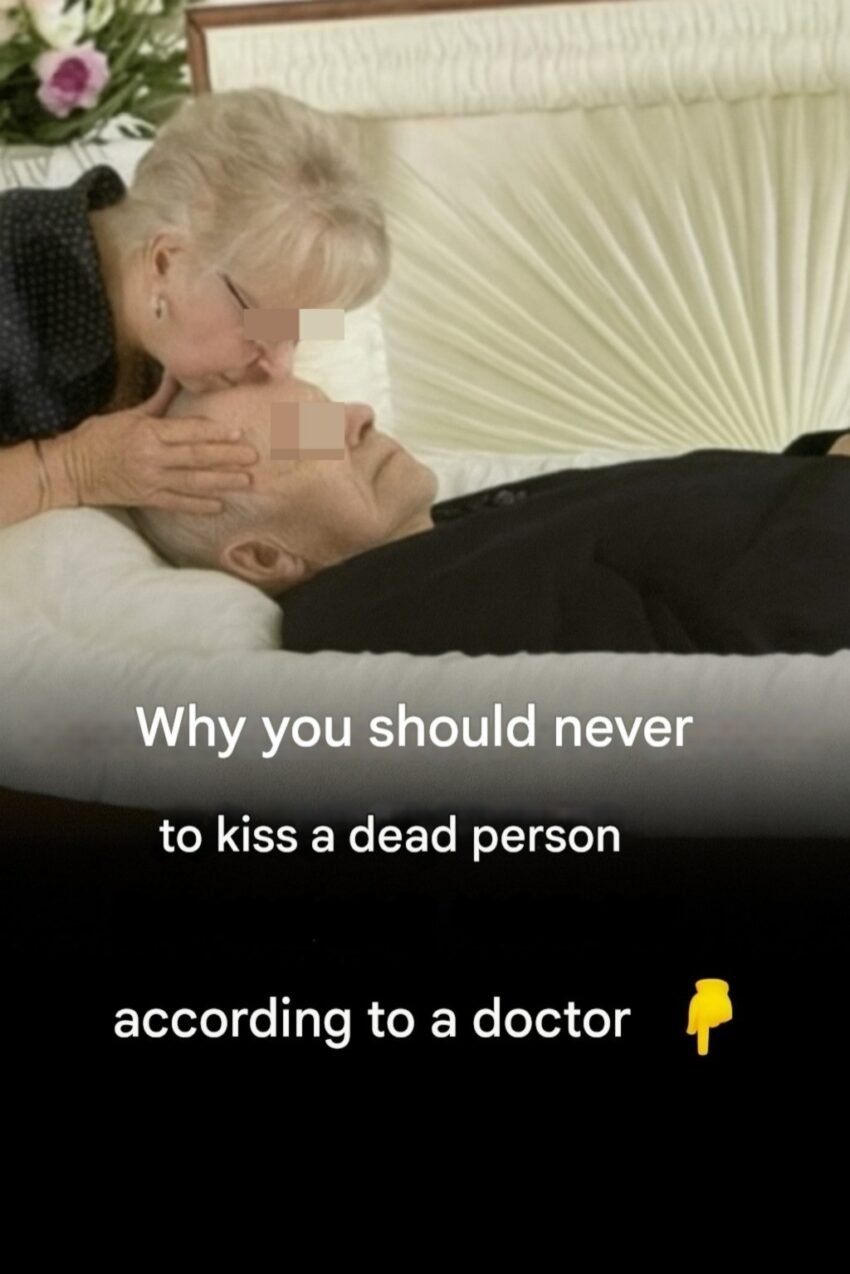
Some doctors advise against kissing a deceased loved one mainly for health and safety reasons, not because of disrespect or emotional concerns. It comes down to what happens to the body after death and the potential (even if small) risk of infection.
Here are the key reasons:
🧬 1. Natural bacterial breakdown after death
After death, the body’s immune system stops working. This allows normal bacteria from the gut and skin to multiply and spread more freely.
- These are usually harmless while a person is alive
- After death, they can move into other tissues
- In some cases, they may be present in higher concentrations around the mouth and respiratory tract
So doctors may discourage direct contact with the face, including kissing.
🦠 2. Possible infectious disease risk (rare but important)
If the person died from a contagious disease, there may be a risk depending on the illness, such as:
- Tuberculosis
- Viral hemorrhagic fevers (rare, but serious)
- COVID-19 (in some early post-mortem guidance situations)
- Certain severe bacterial infections
In most common deaths (heart attack, old age, cancer), this risk is very low—but medical staff tend to give cautious advice.
🧪 3. Post-mortem bodily changes
After death, the body undergoes changes like:
- Fluid leakage
- Tissue breakdown (decomposition begins within hours)
- Possible odor changes due to chemical processes
These changes are natural but can increase exposure to bodily fluids.
🧤 4. Standard hospital and mortuary safety protocols
Healthcare workers follow universal precautions:
- Avoid direct contact with mucous membranes (mouth, eyes, nose)
- Use gloves and protective equipment when handling bodies
- Limit exposure if infection status is unknown
These rules are designed for risk prevention, not emotional distance.
❤️ Important human reality
Despite medical caution, many cultures and families still choose to kiss or touch loved ones after death as part of grieving.
In most cases:
- It is emotionally meaningful
- It is medically low-risk if the cause of death is non-infectious
- The decision is usually personal or cultural, not strictly medical
✔️ Bottom line
Doctors discourage kissing a deceased body mainly as a precautionary hygiene measure, especially when:
- Cause of death is unknown
- Infectious disease is possible
- Hospital safety protocols are in place
For most natural deaths, the risk is small—but caution is used to avoid even rare complications.
If you want, I can explain what is actually safe to do when viewing or touching a deceased loved one in different cultural or medical settings.
