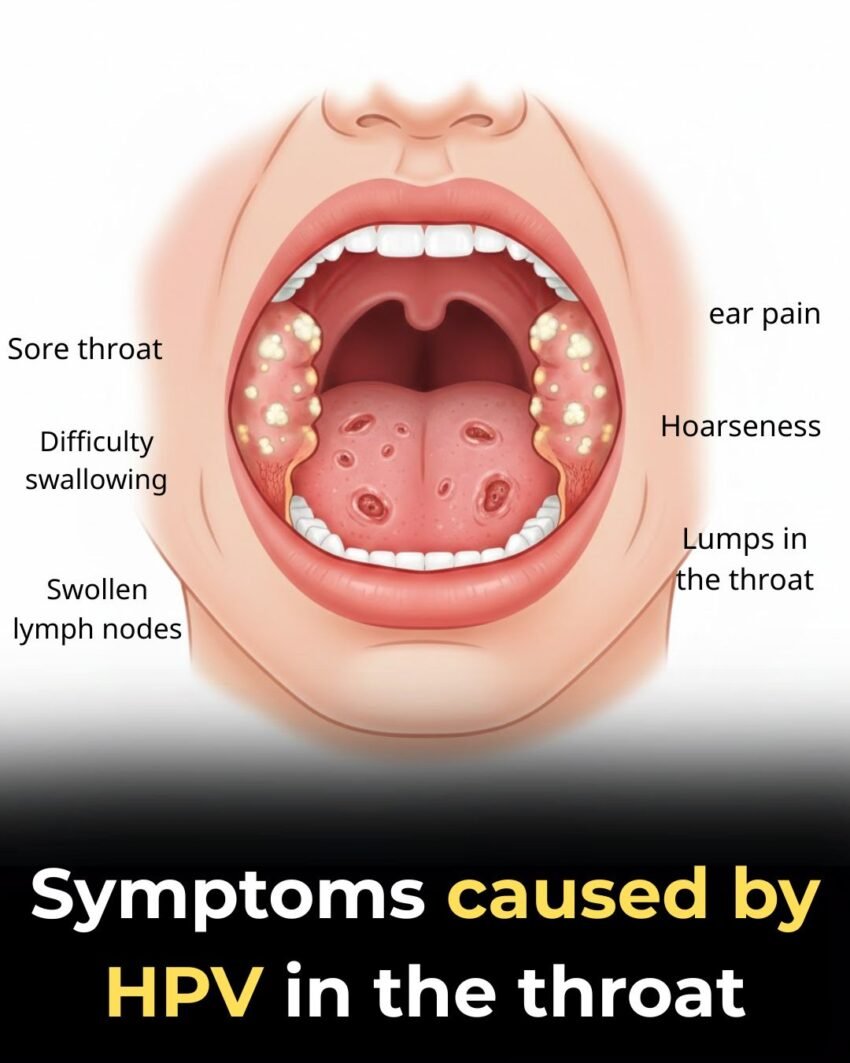
Below is a clear, full-length educational article on symptoms caused by HPV in the throat. It’s written to be informative and easy to understand, not alarming.
Symptoms Caused by HPV in the Throat
Introduction
Human papillomavirus (HPV) is a very common virus with more than 200 known types. While many people associate HPV with cervical or genital infections, certain strains can also infect the throat, including the tonsils, base of the tongue, soft palate, and oropharynx. In most cases, HPV infections cause no symptoms and clear on their own. However, persistent infection with high-risk HPV types can sometimes lead to noticeable throat symptoms or, in rare cases, cancer.
How HPV Affects the Throat
HPV is transmitted through skin-to-skin contact, most commonly through oral sex. Once the virus enters the throat tissues, it may:
- Remain dormant with no symptoms
- Cause benign growths (warts)
- Persist and slowly change cells over time
The most important throat-related strain is HPV-16, which is linked to oropharyngeal cancer.
Early and Common Symptoms
Many people with oral or throat HPV have no symptoms at all, especially in the early stages. When symptoms do occur, they may include:
1. Persistent Sore Throat
- Lasts weeks or months
- Does not improve with typical treatments
- May feel like irritation or scratchiness rather than sharp pain
2. Difficulty Swallowing (Dysphagia)
- Sensation of food sticking in the throat
- Discomfort when swallowing solids or liquids
- Gradual worsening over time
3. Hoarseness or Voice Changes
- Ongoing raspy or hoarse voice
- Voice fatigue
- Changes not related to colds or vocal strain
4. Lump or Growth in the Throat
- Feeling of something “stuck”
- Visible wart-like growth (rare but possible)
- May be painless
5. Swollen Lymph Nodes
- Painless swelling in the neck or jaw
- Often firm and persistent
- May be the first noticeable sign
Less Common Symptoms
Some individuals may experience:
- Ear pain (especially on one side)
- Unexplained bad breath
- Chronic cough
- Mild bleeding from the mouth or throat
- Numbness of the tongue or mouth
- Unexplained weight loss (later stages)
HPV and Throat Cancer Symptoms
When HPV infection persists for many years, it can sometimes lead to HPV-related oropharyngeal cancer. Symptoms may include:
- A painless lump in the neck
- One-sided throat pain
- Persistent difficulty swallowing
- Blood in saliva
- Jaw stiffness
- Changes in speech
⚠️ These symptoms do not automatically mean cancer, but they should be evaluated by a healthcare professional, especially if they last longer than 2–3 weeks.
Who Is at Higher Risk?
- People with multiple oral sex partners
- Tobacco users (smoking or chewing)
- Heavy alcohol use
- Weakened immune system
- People who did not receive the HPV vaccine
Diagnosis
HPV in the throat is diagnosed using:
- Physical examination of the mouth and throat
- Imaging (CT, MRI, or ultrasound if a mass is suspected)
- Biopsy of abnormal tissue
- HPV DNA testing (in certain cases)
There is no routine screening test for oral HPV in people without symptoms.
Treatment
Treatment depends on symptoms and severity:
- No symptoms: Often no treatment; immune system clears the virus
- Benign warts: Surgical removal or laser therapy
- Precancerous changes or cancer: Surgery, radiation, chemotherapy, or combinations
Early detection greatly improves outcomes.
Prevention
- HPV vaccination (highly effective and safe)
- Limiting number of sexual partners
- Using barrier protection during oral sex
- Avoiding tobacco and excessive alcohol
- Regular dental and medical checkups
When to See a Doctor
See a healthcare provider if you have:
- Throat symptoms lasting more than 2–3 weeks
- A painless neck lump
- Difficulty swallowing
- Persistent hoarseness
- Unexplained ear pain
Early evaluation is important and often reassuring.
Conclusion
HPV in the throat often causes no symptoms, but when symptoms appear, they should not be ignored. Most cases resolve naturally, and even HPV-related throat cancers are highly treatable when detected early. Vaccination and awareness are the best tools for prevention.
If you want, I can:
- Rewrite this for patient education, school projects, or medical-level detail
- Add references
- Simplify it further
- Focus only on HPV-related throat cancer
Just tell me 👍
