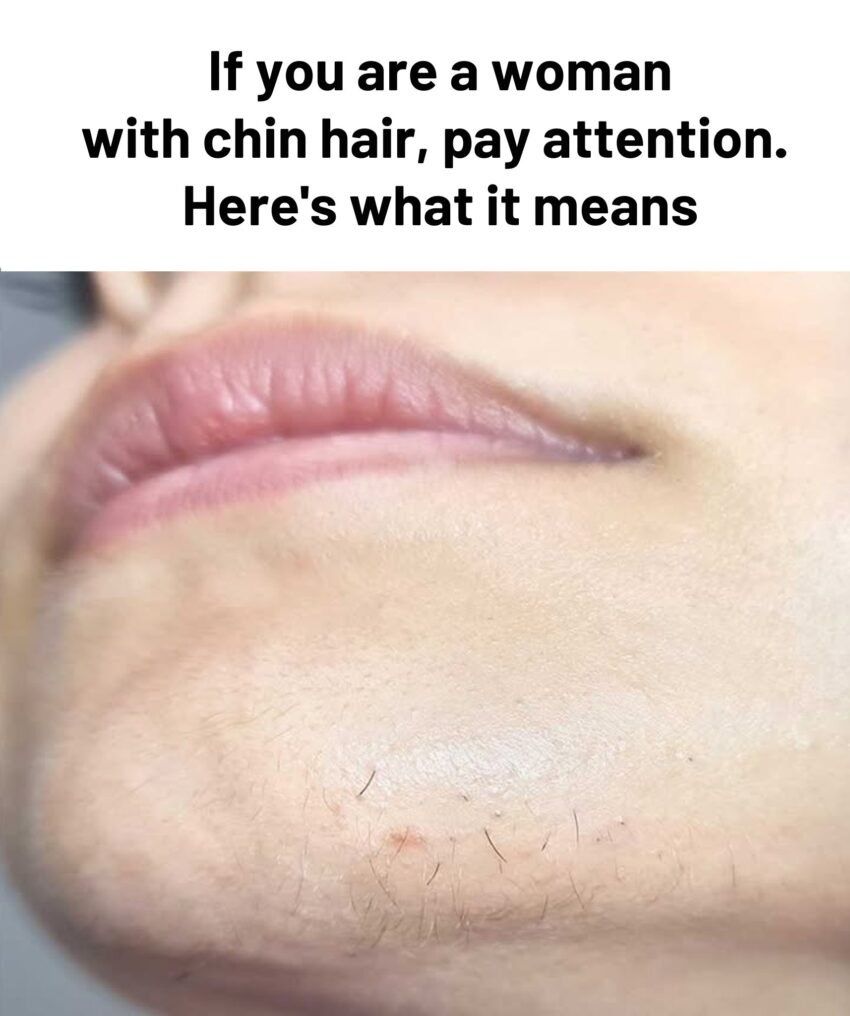
If you’re a woman and notice noticeable chin hair, it’s often normal — but in some cases it can signal something worth paying attention to. Here’s what health experts explain:
🧠 1. Some chin hair is normal
Having a few light, fine hairs on the chin or jawline is common in many women and often normal. Everyone’s genetics and hormone levels vary, and a stray hair here or there doesn’t automatically indicate a medical issue. (Healthline)
⚠️ 2. When to pay closer attention
Chin hair can be a sign of a hormonal imbalance when it’s:
- Coarse, dark, or thick (not just fine peach fuzz)
- Sudden in increase (grows quickly over weeks/months)
- Accompanied by other symptoms, such as:
- Irregular periods
- Acne or oily skin
- Unexplained weight changes
- Excess hair elsewhere on body
These patterns could be a sign of a condition called hirsutism, where male‑pattern hair growth appears due to higher androgen (testosterone) activity in women. (Healthline)
🩺 3. Hormonal conditions that can cause it
Here are common underlying causes doctors consider:
🔹 Polycystic Ovary Syndrome (PCOS)
PCOS is the most frequent hormonal disorder linked to excess facial hair in women. It often accompanies:
- Irregular menstrual cycles
- Acne
- Weight gain or trouble losing weight
- Elevated androgen levels
Some women first notice persistent chin hair when PCOS begins. (mayoclinic.org)
🔹 Menopause or hormonal shifts
As estrogen declines with age (especially around menopause), the balance of hormones changes, which can increase facial hair growth even without a disorder. (IOL)
🔹 Other endocrine issues
Less commonly, things like Cushing syndrome, adrenal gland disorders, thyroid imbalances, or even certain medications can affect hair growth patterns. (MedlinePlus)
🩹 4. What to do
- Track changes: Note how quickly the hair appears and whether other symptoms occur.
- Talk to a clinician: Especially if hair growth is sudden, thick, or accompanied by other signs like irregular cycles — a doctor can check hormone levels (e.g., testosterone, thyroid) and rule out underlying causes.
- Not always worrisome: A few extra chin hairs alone often aren’t a serious health issue, but getting checked can be reassuring and helpful if you’re concerned. (Harvard Health)
🧴 5. Cosmetic vs medical
Some women simply want to remove or manage the hair for personal reasons — plucking, laser, waxing, and medicated creams are cosmetic options. But if the cause is hormonal, treating the underlying imbalance may reduce growth over time. (Healthline)
Bottom line:
A little chin hair can be normal — but if it’s coarse, increasing rapidly, or comes with menstrual or skin changes, it’s worth paying attention and discussing with a healthcare provider. (mayoclinic.org)
