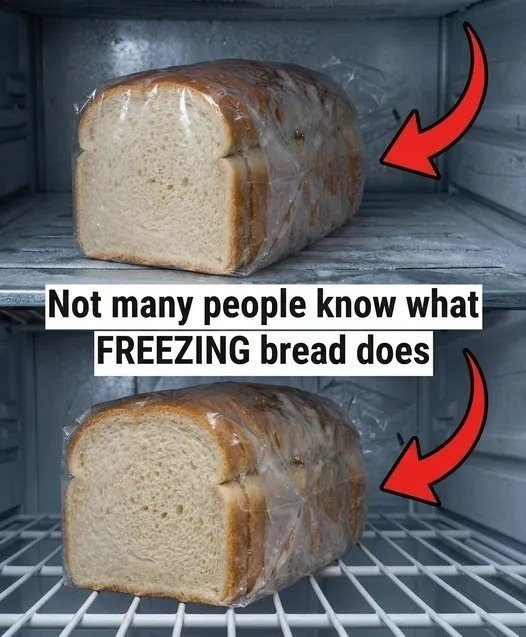
When bread goes into the freezer, several things happen—mostly related to slowing down spoilage and preserving freshness:
1. Slows Staling
- Bread stales because the starch molecules crystallize over time.
- Freezing slows down the starch retrogradation, so bread stays soft longer once thawed.
2. Stops Mold Growth
- Mold needs warmth and moisture to grow.
- Freezing halts mold growth, effectively keeping the bread safe to eat for months.
3. Preserves Moisture
- If wrapped tightly, bread retains its moisture and doesn’t dry out.
- Poorly wrapped bread can get freezer burn, causing dry, leathery spots.
4. Texture Changes
- Freezing can slightly change the texture of bread.
- After thawing, it might be a bit drier or crumbly, especially for delicate breads like croissants or brioche.
5. Flavor Preservation
- Freezing preserves the flavor because chemical reactions that cause spoilage are slowed down.
- Strongly flavored breads, like sourdough, maintain their taste quite well.
Tips for freezing bread effectively:
- Slice before freezing—take out only what you need.
- Wrap tightly in plastic wrap, then in a freezer bag for extra protection.
- Thaw at room temperature or lightly toast slices to restore texture.
If you want, I can also explain why bread gets dry even in the freezer—it’s actually a little surprising and counterintuitive. Do you want me to go into that?
