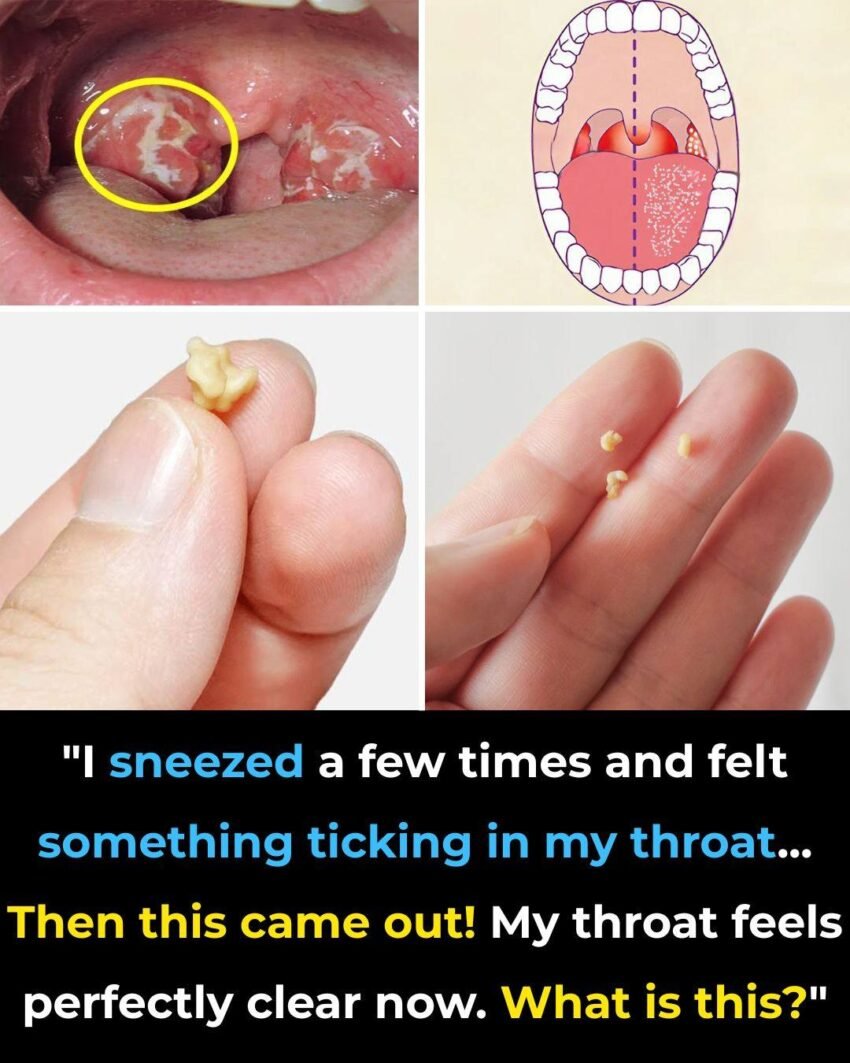
Here’s a clear, complete, and reassuring article on tonsil stones—what they are, why they happen, and what actually helps.
😬 Here’s What You Need to Know About Tonsil Stones
(Causes, Symptoms, and How to Get Rid of Them Safely)
Tonsil stones—also called tonsilloliths—are more common than most people realize. They’re usually harmless, but they can be uncomfortable, embarrassing, and confusing if you don’t know what’s going on.
Let’s break it down in plain language.
🪨 What Are Tonsil Stones?
Tonsil stones are small, hardened lumps that form in the crevices (crypts) of your tonsils. They’re made from a buildup of:
- Food particles
- Dead cells
- Mucus
- Bacteria
Over time, this material calcifies (hardens), forming stones that can range from tiny grains to pea-sized lumps.
👃 Common Signs and Symptoms
Some people don’t notice them at all, but others experience:
- Bad breath (very common)
- A feeling of something stuck in the throat
- White or yellow lumps visible on the tonsils
- Sore throat (without other cold symptoms)
- Ear pain (referred pain from the throat)
- Trouble swallowing (in larger stones)
👉 Bad breath happens because tonsil stones contain sulfur-producing bacteria.
🤔 Why Do Tonsil Stones Form?
You’re more likely to get tonsil stones if you have:
- Large or deeply folded tonsils
- Chronic tonsillitis or frequent sore throats
- Post-nasal drip
- Poor oral hygiene
- Dry mouth
- Allergies or sinus issues
They’re not contagious and don’t mean you’re unhealthy.
🧼 How to Get Rid of Tonsil Stones (Safely)
✔ At-Home Options
- Gargle with warm salt water (helps loosen stones and reduce bacteria)
- Gentle irrigation with a low-pressure water flosser
- Cotton swab removal (only if visible and easy to reach—be gentle)
⚠️ Avoid sharp objects or aggressive digging—you can injure your tonsils.
✔ Medical Treatment
If stones are large, painful, or recurring:
- A dentist or ENT can remove them safely
- Chronic cases may benefit from laser cryptolysis or, rarely, tonsillectomy
🦷 How to Prevent Tonsil Stones
- Brush teeth and tongue twice daily
- Floss daily
- Gargle after meals
- Stay hydrated
- Treat post-nasal drip or allergies
- Avoid smoking
Consistency matters more than perfection.
🩺 When to See a Doctor
Seek medical advice if you have:
- Severe pain
- Recurrent infections
- Difficulty swallowing or breathing
- Fever or swelling
- Tonsil stones that keep coming back despite good hygiene
❓ Are Tonsil Stones Dangerous?
In most cases, no.
They’re a nuisance—not a medical emergency.
But if they’re frequent or affecting quality of life, treatment options are available.
🔑 Final Takeaway
Tonsil stones are:
- Common
- Usually harmless
- Manageable with good oral care
They can be annoying (and awkward), but they’re not something to be ashamed of—and they’re often easy to control once you know what’s happening.
If you’d like, I can also:
- Share best mouthwashes for tonsil stones
- Explain the difference between tonsil stones and strep throat
- Give a daily routine to prevent bad breath
- Help turn this into a blog, video script, or social post
Just let me know 🙂
