Here’s a clear, calm, and informative full article on the topic—focused on awareness, not fear.
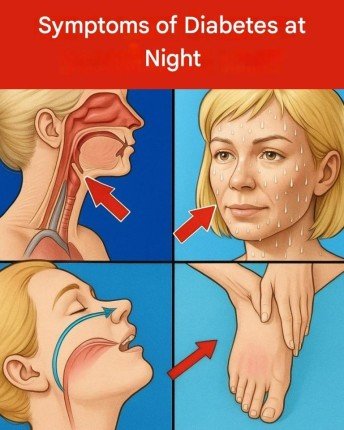
🌙 5 Diabetes Symptoms That Appear at Night
(Warning Signs Your Blood Sugar May Be Out of Balance)
Diabetes doesn’t always announce itself during the day. For many people, some of the earliest and most noticeable symptoms appear at night, when the body is resting and blood sugar levels can fluctuate more dramatically.
Because these signs happen while you’re asleep—or trying to be—they’re often ignored or blamed on stress, aging, or poor sleep.
Here are five nighttime symptoms that may signal diabetes or poorly controlled blood sugar.
1️⃣ Frequent Nighttime Urination (Nocturia)
Waking up multiple times a night to urinate is one of the most common nighttime diabetes symptoms.
Why it happens:
When blood sugar is high, the kidneys work overtime to remove excess glucose from the blood. This pulls extra water with it, leading to increased urine production—especially noticeable at night.
⚠️ If you regularly wake up 2 or more times every night to urinate, it’s worth paying attention.
2️⃣ Excessive Thirst During the Night
Many people with diabetes:
- Wake up with a very dry mouth
- Feel intense thirst during the night
- Keep water by the bed and drink frequently
Why it happens:
Fluid loss from frequent urination causes dehydration, triggering strong thirst signals—even while sleeping.
3️⃣ Night Sweats (Not Related to Room Temperature)
Unexplained night sweats—especially if you wake up drenched in sweat—can be a sign of low blood sugar (hypoglycemia) during the night.
Why it happens:
Blood sugar can drop while you sleep, particularly if you:
- Take insulin
- Use certain diabetes medications
- Skip dinner or eat very little before bed
Low blood sugar triggers a stress response, releasing adrenaline, which causes sweating.
4️⃣ Restless Sleep or Sudden Nighttime Awakening
Blood sugar highs or lows can disrupt sleep, leading to:
- Tossing and turning
- Vivid dreams or nightmares
- Waking suddenly with a racing heart
- Feeling anxious or shaky upon waking
These disturbances are often overlooked but may be linked to overnight glucose swings.
5️⃣ Tingling, Burning, or Pain in Feet at Night
Many people notice nerve-related symptoms most strongly at night, including:
- Tingling or “pins and needles”
- Burning sensations
- Sharp or aching pain in the feet or legs
Why it happens:
Persistently high blood sugar can damage nerves (diabetic neuropathy). At night, with fewer distractions, these sensations become more noticeable.
⚠️ Important Reminder
Experiencing one symptom occasionally does not mean you have diabetes.
Be more concerned if symptoms are:
- Frequent
- Persistent
- Getting worse
- Occurring together
🩺 Who Should Be Especially Alert?
You may be at higher risk if you:
- Are over 45
- Have a family history of diabetes
- Are overweight or inactive
- Have high blood pressure or high cholesterol
- Had gestational diabetes
🧪 What to Do If You Notice These Signs
Early testing is simple and powerful.
Ask your healthcare provider about:
- Fasting blood glucose
- HbA1c test
- Random blood sugar test
Early detection can prevent serious complications.
🌿 Improving Nighttime Blood Sugar Balance
Helpful habits include:
- Avoiding heavy sugar or carb-heavy snacks before bed
- Eating balanced evening meals
- Staying hydrated during the day
- Keeping a consistent sleep schedule
- Monitoring blood sugar if already diagnosed
🔑 Final Takeaway
Your body often sends its earliest warning signs at night, when it’s most sensitive to changes.
Frequent urination, thirst, night sweats, restless sleep, and foot discomfort are not just sleep issues—they may be signals worth listening to.
Catching diabetes early can make a life-changing difference.
If something feels off, trust your instincts and get checked.
If you’d like, I can also:
- Explain how nighttime blood sugar works
- Share bedtime snacks that stabilize glucose
- Break down Type 1 vs Type 2 symptoms
- Adapt this into a blog, video script, or social post
Just let me know 🌙
