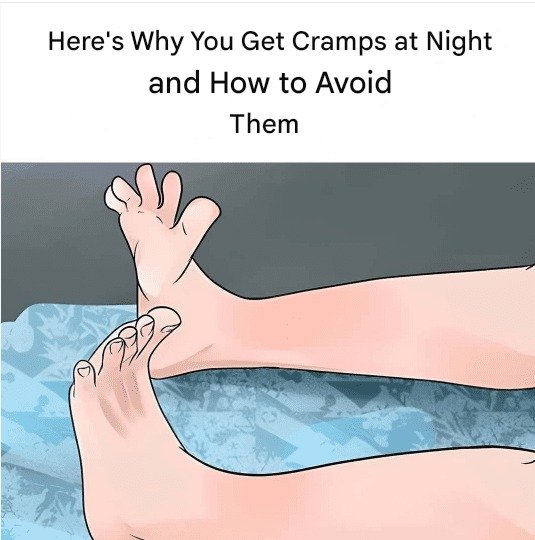
Here’s a full, doctor-informed article-style explanation of why nighttime cramps happen, what they may signal, and how to reduce them.
🌙 This Is Why We Get Cramps at Night
That sudden, painful tightening in your calf, foot, or thigh that jolts you awake isn’t random. Doctors call these nocturnal leg cramps, and they’re incredibly common—especially as we get older. While usually harmless, frequent nighttime cramps can reveal what’s going on inside your body.
🦵 What Actually Causes Nighttime Cramps?
1. Muscle Fatigue and Overuse
One of the top causes is muscle fatigue from the day:
- Standing or walking for long periods
- Exercise without proper stretching
- Repetitive movements
Overworked muscles are more likely to misfire when they finally relax at night.
2. Dehydration
Even mild dehydration can disrupt the balance of fluids and electrolytes your muscles need to function properly.
At night:
- Fluid intake drops
- The body concentrates electrolytes
- Muscles become more prone to spasms
This is why cramps often happen after hot days, workouts, or alcohol intake.
3. Electrolyte Imbalances
Doctors often point to low levels of:
- Magnesium
- Potassium
- Calcium
- Sodium
These minerals regulate muscle contraction and relaxation. When levels dip—even slightly—muscles can contract suddenly and painfully.
4. Poor Circulation
Reduced blood flow during sleep can contribute to cramping, especially in people with:
- Circulatory issues
- Diabetes
- Peripheral artery disease
When muscles don’t get enough oxygenated blood, they’re more likely to spasm.
5. Sleeping Position
Certain positions shorten muscles for long periods:
- Pointed toes
- Tight blankets pulling feet downward
- Sleeping curled tightly
This keeps muscles in a shortened state, making sudden contractions more likely.
6. Nerve Compression
Doctors note that compressed nerves—often from:
- Lower back issues
- Herniated discs
- Spinal alignment problems
can trigger involuntary muscle contractions during sleep.
7. Medication Side Effects
Night cramps are a known side effect of some medications, including:
- Diuretics (water pills)
- Statins
- Certain blood pressure drugs
- Asthma medications
These can alter electrolyte balance or muscle signaling.
8. Pregnancy and Aging
- Pregnancy: Increased blood volume, mineral shifts, and nerve pressure
- Aging: Natural muscle loss and reduced nerve efficiency
Both increase cramp frequency at night.
⚠️ When Night Cramps May Signal a Health Issue
Occasional cramps are normal. But doctors recommend checking in if cramps:
- Happen nightly
- Are severe or worsening
- Come with swelling, redness, or weakness
- Occur alongside numbness or tingling
They may indicate underlying conditions like diabetes, nerve disorders, or vascular disease.
💡 How Doctors Recommend Preventing Nighttime Cramps
✔ Stretch calves and feet before bed
✔ Stay hydrated throughout the day
✔ Ensure adequate magnesium and potassium intake
✔ Avoid excessive caffeine and alcohol
✔ Loosen bedcovers around your feet
✔ Wear supportive shoes during the day
✔ Gently stretch or massage the muscle during a cramp
A warm shower or heating pad before sleep can also help relax tight muscles.
🧠 The Bottom Line
Nighttime cramps usually happen due to muscle fatigue, dehydration, electrolyte imbalance, reduced circulation, or nerve irritation. While often harmless, frequent or severe cramps are your body’s way of asking for attention.
Listening to those signals—and making small changes—can dramatically improve sleep quality and comfort.
If you want, I can also explain which foods help prevent cramps, the best bedtime stretches, or when cramps are a red flag—just tell me.
