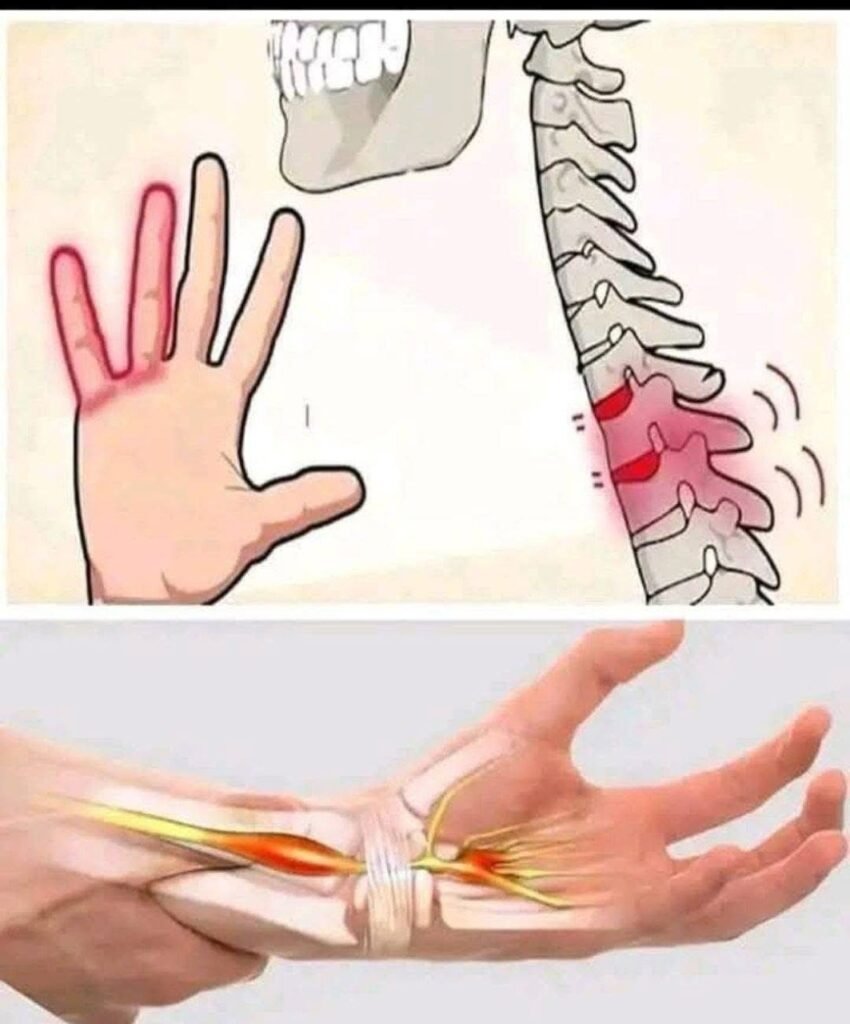
If your hands “fall asleep,” it may be a sign your body is trying to tell you something ✋💤
Full article
That familiar tingling, numbness, or “pins and needles” sensation in your hands—often described as hands falling asleep—is extremely common. Most of the time it’s harmless. But when it happens frequently, intensely, or without an obvious reason, doctors say it can be a signal worth paying attention to.
Here’s what your body may be communicating.
The most common cause: nerve compression
In many cases, numb hands are caused by temporary pressure on nerves, often from:
- Sleeping with bent wrists or arms
- Leaning on elbows for long periods
- Holding a phone or steering wheel too tightly
Once the pressure is released, normal sensation usually returns within minutes.
Possible underlying causes doctors look for
1. Carpal tunnel syndrome
One of the most frequent medical causes, especially if numbness affects the thumb, index, and middle fingers.
- Caused by compression of the median nerve in the wrist
- Often worse at night or upon waking
- Common in people who type, use tools, or do repetitive hand motions
2. Poor circulation
If blood flow to the hands is reduced, nerves may not get enough oxygen.
- Cold hands, pale or bluish fingers
- More noticeable in cold weather
- Can be linked to Raynaud’s phenomenon or vascular issues
3. Vitamin deficiencies
Doctors often check for low levels of:
- Vitamin B12
- Vitamin B6
- Vitamin E
Deficiencies can damage nerves over time, leading to tingling or numbness in hands and feet.
4. Neck or spine issues
Problems in the cervical spine (neck) can cause numbness in the hands.
- Herniated discs
- Arthritis
- Poor posture (“tech neck”)
In these cases, symptoms may worsen with certain head or neck movements.
5. Diabetes or blood sugar problems
Chronically high blood sugar can damage nerves, a condition known as peripheral neuropathy.
- Often starts with tingling in hands or feet
- May be accompanied by burning or reduced sensitivity
6. Stress and anxiety
Surprisingly common—and often overlooked.
- Hyperventilation and muscle tension can temporarily reduce blood flow
- Tingling may appear during panic or high-stress moments
When numb hands should not be ignored
Doctors recommend medical evaluation if:
- Numbness happens daily or nightly
- It lasts longer than a few minutes
- It wakes you from sleep regularly
- You notice weakness, pain, or loss of coordination
- Symptoms affect both hands and feet
Sudden numbness on one side of the body, especially with confusion or speech difficulty, requires immediate medical attention.
What you can do right now
- Change sleeping positions (keep wrists neutral)
- Take breaks from repetitive hand use
- Stretch hands, wrists, and neck daily
- Keep hands warm in cold environments
- Ensure a balanced diet with B vitamins
If symptoms persist, a doctor may recommend blood tests, nerve studies, or imaging—simple steps that can prevent long-term nerve damage.
The takeaway
Occasional numb hands are usually harmless. But frequent or unexplained tingling is not something to ignore. It’s often your nervous system’s early warning sign—and catching the cause early can make all the difference.
If you want, I can:
- Rewrite this for social media or a health blog
- Adapt it for people over 50
- Or turn it into a Q&A with a doctor-style explanation
