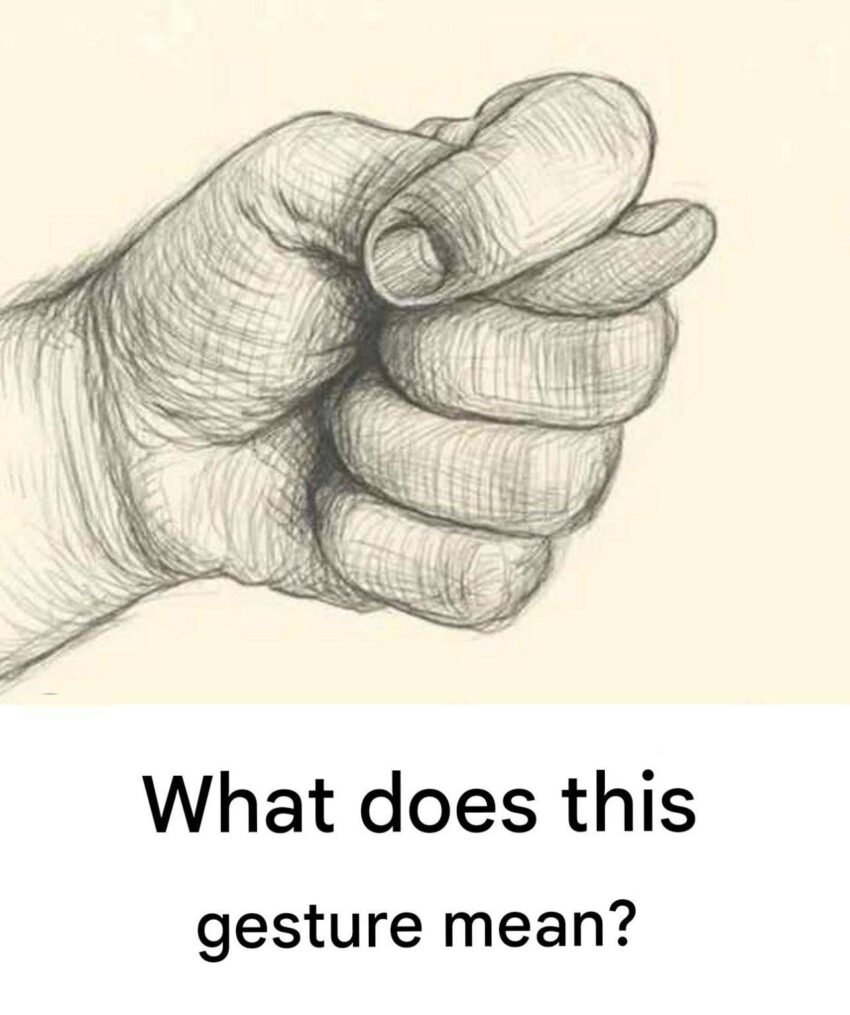
The gesture where the thumb is tucked between the index and middle fingers (or sometimes between the index and ring finger) inside a closed fist is commonly known as the “fig sign” or “mano fico.”
Its meaning depends heavily on culture:
🌍 In Many European & Latin Cultures
Historically, it was:
- A protective symbol against evil or bad luck
- A charm against the “evil eye”
- A sign used in amulets for protection
In Brazil and Portugal, for example, it can still symbolize good luck or protection.
⚠️ In Other Contexts
In some countries (including parts of Eastern Europe, Turkey, and Russia), it can be:
- An insulting gesture
- A crude or vulgar symbol
- A way of saying “you’ll get nothing” or “no way”
👶 With Children
In some cultures, adults make this gesture playfully toward babies to:
- “Protect” them from bad energy
- Express affection in a traditional way
🤔 Why Is It Controversial?
The shape of the gesture has historically been interpreted as symbolic in different ways — sometimes protective, sometimes obscene — which explains why its meaning changes by region.
Bottom Line
This gesture can mean good luck and protection in some places, but be considered rude or offensive in others. Context and location matter a lot.
If you tell me which country you’re asking about, I can give the exact meaning there.
