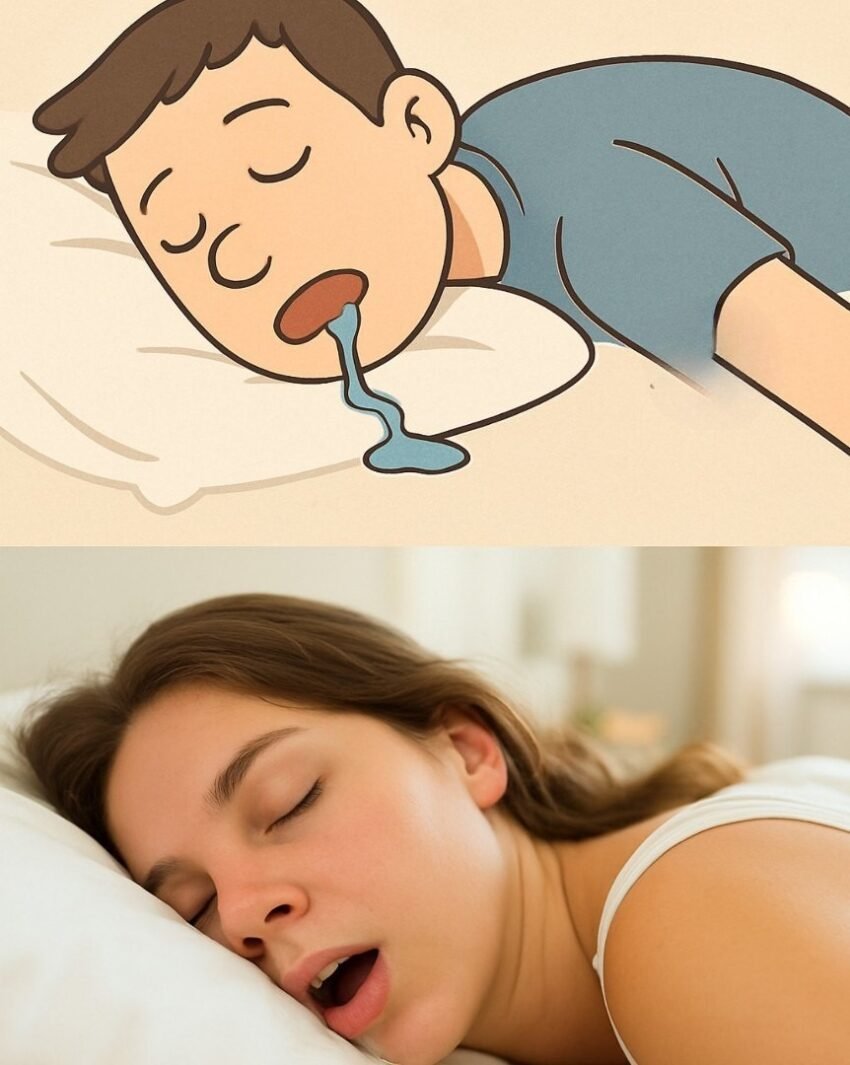
😴 If You Drool While You Sleep, It’s a Sign That Your Brain…?
You may have seen posts claiming that drooling during sleep means something dramatic about your brain — good or bad. Let’s clear that up.
🧠 The Truth: Drooling Is Usually Normal
Drooling while sleeping is not typically a sign of a brain problem. It most often happens because:
- Your facial muscles relax deeply during sleep
- You’re sleeping on your side or stomach
- Saliva naturally pools in your mouth
- You’re in deep sleep and swallowing less often
In fact, drooling can simply mean your body is fully relaxed.
😌 Why It Happens
During sleep:
- Swallowing reflex slows down
- Muscles in your face and jaw loosen
- Mouth may fall open
If saliva builds up and your mouth is open, it escapes.
That’s it — nothing mysterious.
💤 Could It Mean You’re in Deep Sleep?
Sometimes, yes.
Drooling may be more common during:
- Deep (slow-wave) sleep
- REM sleep when muscles are very relaxed
But it does not directly measure brain performance or intelligence — despite what social media claims.
⚠️ When Drooling Might Signal a Problem
Occasional drooling is harmless.
However, frequent or excessive drooling with other symptoms could point to:
- Nasal congestion or allergies
- Sleep apnea
- Acid reflux
- Neurological conditions (if combined with speech issues, weakness, or facial drooping)
Seek medical care if drooling is new and accompanied by:
- Slurred speech
- Difficulty swallowing
- Facial weakness
- Sudden numbness
- Severe snoring with choking episodes
🛏️ How to Reduce Nighttime Drooling
- Sleep on your back
- Treat allergies or congestion
- Stay hydrated
- Practice good sleep posture
- Consider evaluation for sleep apnea if you snore heavily
💡 Bottom Line
Drooling during sleep is usually just a sign that:
- Your body is relaxed
- Your mouth opened
- Saliva pooled naturally
It’s not automatically a sign of brain damage or special brain ability.
If you want, tell me:
- How often it happens
- Your sleep position
- Whether you snore
I can help narrow down the cause.
