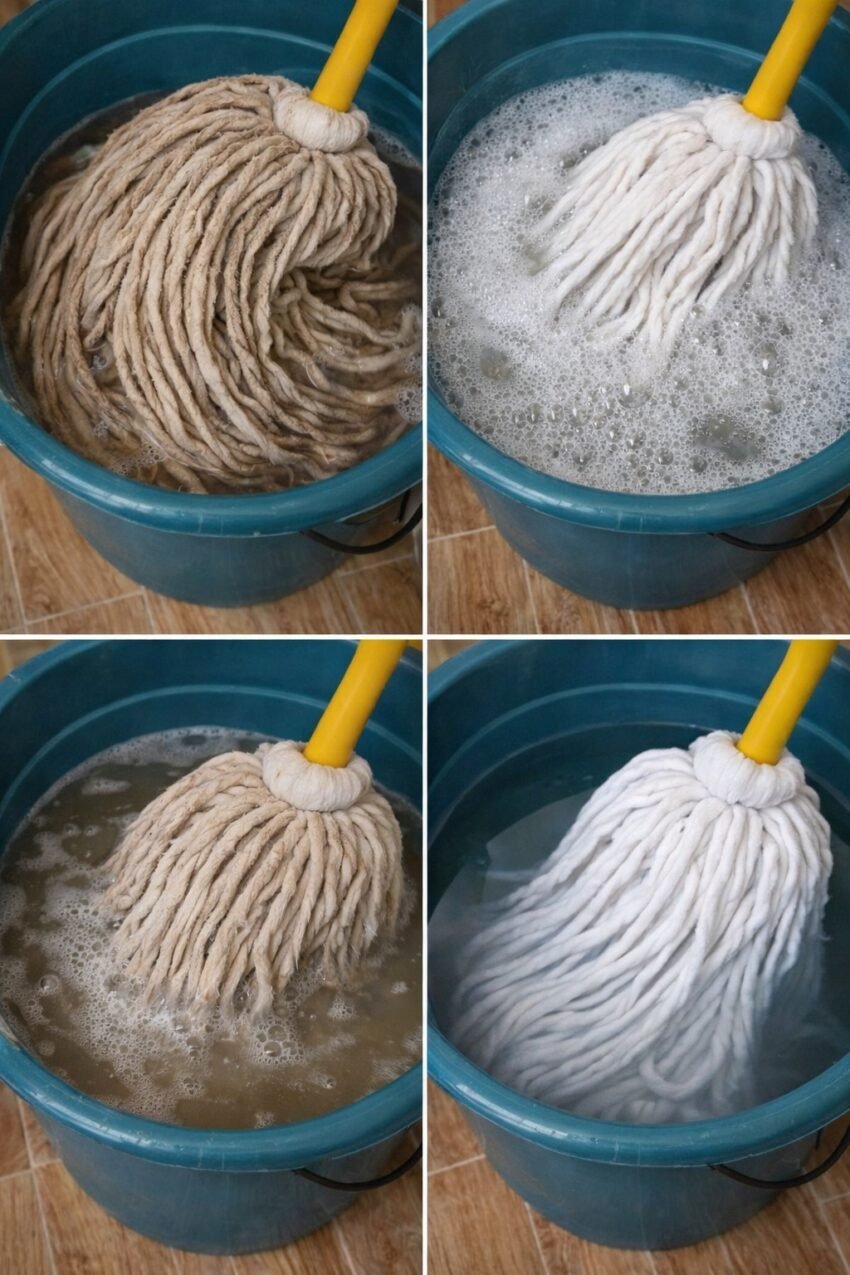
Here’s a full, detailed guide on restoring a very dirty mop to “as good as new” using simple household ingredients:
How to Restore a Very Dirty Mop
A mop is one of the hardest-working cleaning tools in your home. Over time, dirt, grime, and bacteria build up in the fibers, leaving it smelly and ineffective. Before you toss it out, try this easy method to revive it.
What You’ll Need
- White vinegar – 1–2 tablespoons per gallon of warm water
- Hot water – enough to fully submerge the mop
- Optional: Baking soda – 1 tablespoon for extra cleaning power
- Optional: Lemon essential oil – a few drops for a fresh scent
Step-by-Step Cleaning Method
- Rinse the Mop First
Shake off loose dirt and rinse the mop in warm water to remove surface debris. This will make the deep-clean more effective. - Prepare the Cleaning Solution
Fill a bucket or sink with hot water. Add white vinegar (and baking soda if using). Vinegar is a natural disinfectant and deodorizer, while baking soda adds mild scrubbing power and helps neutralize odors. - Soak the Mop
Submerge the mop fully in the solution. Let it soak for 10–30 minutes depending on how dirty it is. For extremely grimy mops, soak a bit longer, checking occasionally. - Agitate and Scrub
Swish the mop around in the water and gently squeeze it a few times. This helps release trapped dirt and grime. - Rinse Thoroughly
Remove the mop and rinse it under clean, hot water until the vinegar smell disappears and no residue remains. - Dry Properly
Hang the mop in a well-ventilated area or outdoors to dry completely. Avoid leaving it in the bucket, as that encourages bacteria growth. - Optional: Add Fresh Scent
Once dry, you can add a few drops of lemon essential oil to the mop head to keep it smelling fresh during use.
Tips for Keeping Your Mop Cleaner Longer
- Rinse your mop immediately after each use.
- Avoid leaving the mop in a bucket of dirty water.
- Wash mop heads in the washing machine (if machine-safe) with hot water and a splash of vinegar.
- Replace mop heads every 3–6 months for heavy use.
Using this method, even a very dirty mop can look and feel almost like new. The best part: you don’t need harsh chemicals—just simple ingredients you probably already have at home.
If you want, I can also give a shortcut “1-minute trick” that works for lightly dirty mops without soaking. It’s surprisingly effective! Do you want me to include that?
