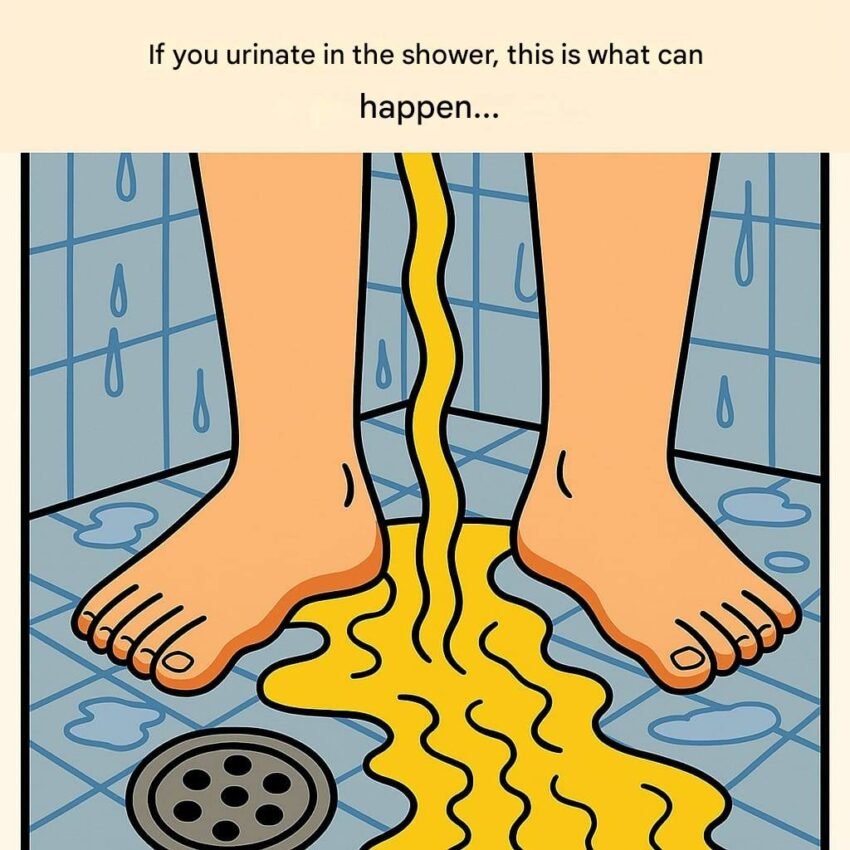
Peeing in the shower is one of those topics that sparks strong opinions—but the reality is more nuanced (and more interesting) than most people expect. Here’s a full, balanced breakdown of what actually happens, including the science, hygiene, plumbing, health myths, and when it’s not a good idea.
🚿 What Really Happens When You Pee in the Shower
1. It mixes with water and goes to the same place
Urine is mostly water (about 95%), plus urea, salts, and waste products. In a shower:
- It’s immediately diluted by running water
- It flows into the same sewer system as toilet waste
- Modern plumbing is designed to handle this without issue
From a plumbing perspective, nothing unusual happens.
🧪 Is Urine “Dirty”?
Surprisingly to many people:
- Fresh urine is usually sterile in healthy individuals
- It’s not the same as feces, which contain bacteria like E. coli
- Any bacteria present are quickly diluted and flushed away
That said, “sterile” doesn’t mean “sanitary forever”—once exposed to the environment, bacteria can grow, which is why good rinsing matters.
🧼 Hygiene: Is It Gross?
Short answer: Not really—if you do it correctly.
Why it’s generally hygienic:
- Soap, shampoo, and hot water are already breaking down bacteria
- The water stream washes urine down the drain immediately
- You’re already washing your body afterward
When it becomes unhygienic:
- If you pee after turning the water off
- If urine splashes onto shower walls or curtains and isn’t rinsed
- If multiple people share the same shower and residue isn’t cleaned
👉 Rinse thoroughly, and clean your shower regularly—just like you would anyway.
🌍 Environmental Impact (This Is Where It Gets Interesting)
This is one of the biggest benefits people don’t expect.
- Flushing a toilet uses 1.6 gallons (6 liters) of water per flush
- Peeing in the shower while water is already running saves that water
- Over a year, this can save thousands of gallons per person
In drought-prone areas, environmentalists often cite this as a small but meaningful water-saving habit.
🧠 The Conditioning Debate (A Real Concern)
Some health professionals raise an important point—especially for women.
The issue:
- Repeatedly peeing while standing with running water
- Can condition the brain to associate the sound of water with urination
- May contribute (over time) to urgency or bladder control issues
This doesn’t happen to everyone, but it can be a concern for:
- People with overactive bladder
- Those already prone to leaks or urgency
💡 Occasional shower peeing is unlikely to cause problems. Making it a daily habit for years might affect some people.
🦶 Foot Fungus & Skin Contact (Common Myth)
Myth: Peeing in the shower causes athlete’s foot
Reality:
- Fungal infections are caused by fungi, not urine
- Urine does NOT kill foot fungus
- It doesn’t cause it either
The real culprit is moisture—so drying your feet well matters more than anything else.
🚫 When You Should NOT Pee in the Shower
Avoid it if:
- You have a urinary tract infection (to reduce bacterial spread)
- You have open cuts or wounds on your feet
- You’re using a shared shower and don’t rinse properly
- You’re in a gym, hotel, or public shower (this is more about courtesy)
🧼 Best Practices If You Do It
If you choose to pee in the shower:
- Do it early, while water is running
- Aim directly at the drain
- Rinse the area well
- Finish with soap as usual
- Clean the shower regularly
⚖️ Bottom Line
You might be surprised to learn that peeing in the shower:
✔ Is usually hygienic
✔ Saves water
✔ Doesn’t harm plumbing
✔ Is more common than people admit
But:
⚠️ It shouldn’t become a conditioned habit
⚠️ Courtesy and cleanliness matter
⚠️ Not ideal in shared or public showers
If you want, I can also explain cultural views, medical opinions, or why this topic feels so controversial psychologically.
