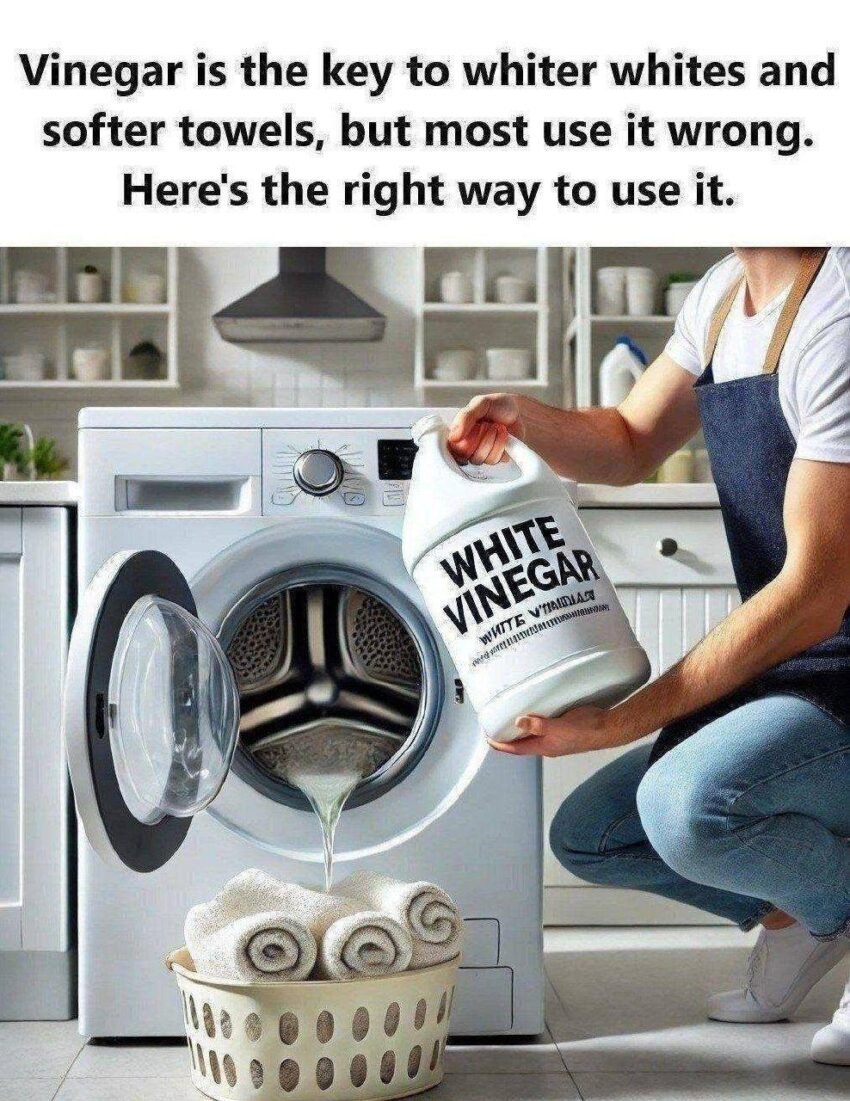
Vinegar Is the Secret to Whiter Whites & Softer Towels — Here’s How to Use It the Right Way
Vinegar has been used in laundry for generations, yet most people either use too much, use it at the wrong time, or mix it with the wrong products. When used correctly, plain white distilled vinegar can brighten whites, soften fabrics, remove odors, and reduce detergent buildup — all without harsh chemicals.
Here’s the complete, correct guide to using it safely and effectively.
Why Vinegar Works in Laundry
White distilled vinegar contains acetic acid (usually 5%), which:
- Breaks down mineral buildup from hard water
- Dissolves detergent residue
- Neutralizes odors
- Softens fabric naturally
- Helps prevent yellowing in whites
It doesn’t “bleach” clothes — it restores brightness by removing residue that makes fabrics look dull.
✅ How to Whiten Whites (The Right Way)
Method 1: Add to the Rinse Cycle
- Wash whites as usual with detergent.
- Add ½ to 1 cup of white distilled vinegar to the fabric softener dispenser.
- Let the rinse cycle do the work.
This removes detergent buildup that causes dingy-looking whites.
👉 Do NOT pour vinegar directly on clothes — always dilute it through the dispenser or water.
Method 2: Pre-Soak for Dingy or Yellowed Whites
- Heat 1 gallon of water (not boiling).
- Add 1 cup white distilled vinegar.
- Soak whites overnight.
- Wash normally the next day.
Great for socks, undershirts, and pillowcases.
✅ How to Make Towels Softer
Towels often feel stiff because of detergent and fabric softener buildup.
Deep-Reset Method (Highly Effective)
Step 1:
Wash towels in hot water with 1 cup vinegar (no detergent).
Step 2:
Wash again in hot water with ½ cup baking soda (no detergent).
This removes residue and restores fluffiness.
⚠️ Most Common Mistakes People Make
❌ Mixing Vinegar with Bleach
Never mix vinegar with chlorine bleach. It creates toxic chlorine gas.
❌ Using It with Every Load
Use vinegar occasionally (every few washes), not daily. Overuse can weaken rubber washer seals over time.
❌ Pouring It Directly on Fabric
Always dilute it in water or use the dispenser.
❌ Using Apple Cider Vinegar
Stick to white distilled vinegar only. Other vinegars can stain.
🧺 Extra Laundry Benefits
- Removes mildew smell from gym clothes
- Reduces static cling
- Helps dark clothes rinse cleaner
- Cleans washing machine residue (run 1 cup in an empty hot cycle monthly)
Who Should Avoid Using Vinegar?
- Homes with delicate silk or acetate fabrics
- People with natural stone laundry sinks (vinegar can etch stone)
- If your washer manufacturer advises against acidic additives
Final Takeaway
Vinegar isn’t a miracle product — but when used correctly, it’s one of the simplest, cheapest ways to:
✔ Brighten whites
✔ Soften towels
✔ Remove odors
✔ Reduce detergent buildup
Used properly, it can upgrade your laundry routine without expensive additives.
If you’d like, I can also share a printable laundry cheat sheet with exact measurements for every load type.
