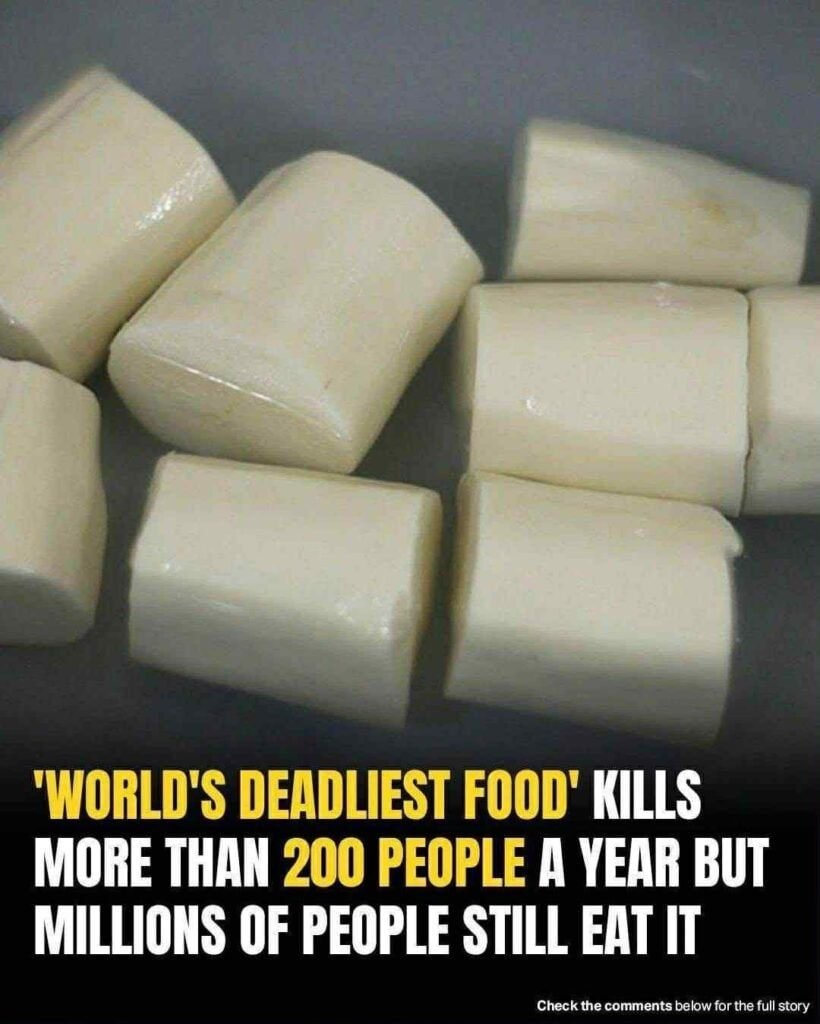
The “World’s Deadliest Food” Claims 200+ Lives a Year — Yet 500 Million People Still Eat It
The food often referred to as the “world’s deadliest” is cassava — a staple crop that feeds nearly half a billion people worldwide. While it sustains millions, it can also become toxic if not prepared properly.
🌍 What Is Cassava?
Cassava is a starchy root vegetable native to South America and now widely grown in Africa, Asia, and Latin America. It’s also known as:
- Yuca
- Manioc
- Tapioca (when processed into starch)
Cassava is drought-resistant, inexpensive, and calorie-dense — making it a critical food security crop in many developing regions.
⚠️ Why Is Cassava Dangerous?
Cassava naturally contains cyanogenic glycosides, chemicals that can release cyanide when the plant cells are damaged (such as when chewing or crushing).
If eaten raw or improperly processed, cassava can cause:
- Acute cyanide poisoning
- Vomiting and dizziness
- Paralysis
- In severe cases, death
The World Health Organization estimates cassava poisoning contributes to over 200 deaths annually, primarily in areas where food shortages force people to skip proper processing.
🧪 The Condition Linked to Cassava: Konzo
One of the most serious disorders associated with improperly prepared cassava is:
Konzo
A permanent neurological condition that causes sudden paralysis of the legs. It typically affects children and women in communities heavily dependent on bitter cassava during drought or famine.
🍽 Why Do 500 Million People Still Eat It?
Despite the risks, cassava remains essential because:
- It thrives in poor soil and drought conditions
- It provides affordable calories
- It can be stored underground for long periods
- Proper preparation makes it safe
In many African countries, cassava is processed into:
- Garri
- Fufu
- Cassava flour
- Tapioca
When soaked, fermented, dried, and cooked correctly, the toxic compounds are removed and cassava becomes safe to eat.
🧼 How Cassava Is Made Safe
Safe preparation methods include:
- Peeling the root
- Soaking in water for 24–72 hours
- Fermenting
- Sun-drying
- Thorough cooking
These steps reduce cyanide content to safe levels.
🟢 Sweet vs. Bitter Cassava
There are two main varieties:
- Sweet cassava – lower cyanide levels, safer with basic cooking
- Bitter cassava – higher toxin levels, requires extensive processing
Communities that rely on bitter cassava face higher risk if preparation steps are shortened.
🧠 Is Cassava Dangerous in the U.S. or Europe?
In developed countries, cassava products are regulated and properly processed. Eating cassava flour, tapioca, or commercially sold cassava root is generally safe when cooked properly.
The danger mainly arises in regions facing:
- Food insecurity
- Drought
- Conflict
- Lack of proper processing knowledge
📝 Final Takeaway
Cassava isn’t deadly by default — it becomes dangerous when improperly prepared. For hundreds of millions, it is not just food but survival.
When handled correctly, cassava is a vital, nutritious staple. When rushed or eaten raw, it can be lethal.
If you’d like, I can also explain how cassava compares to other naturally toxic foods like kidney beans or pufferfish.
