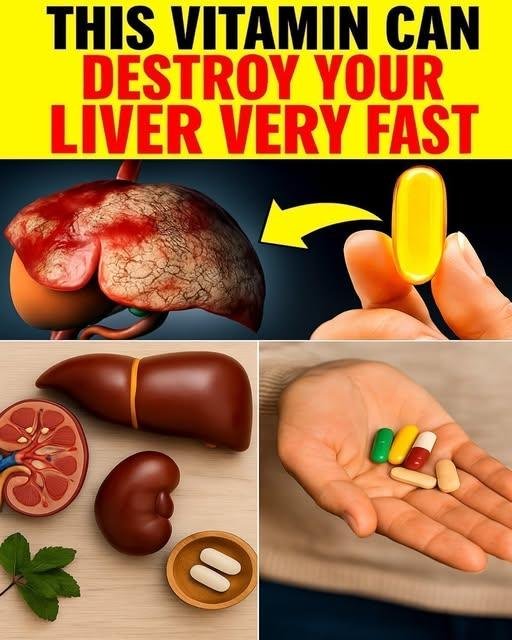
Here’s a careful, evidence-based look at vitamins and supplements that can harm the liver and kidneys if taken in excess or improperly. While many supplements are safe at recommended doses, misuse—especially high doses—can be dangerous.
⚠️ 1. Vitamin A (Retinol / Fat-Soluble A)
- Why it’s risky: Fat-soluble; can accumulate in the liver.
- Effects of excess: Liver toxicity, nausea, dizziness, bone pain.
- Safe dose: ≤ 3,000 mcg/day (adults).
- Tip: Avoid megadoses unless prescribed by a doctor.
⚠️ 2. Vitamin D
- Why risky: Fat-soluble; builds up in fat and organs.
- Effects of excess: Hypercalcemia → kidney stones, kidney failure, arrhythmias.
- Safe dose: 600–800 IU/day (adults), max ~4,000 IU/day unless monitored.
⚠️ 3. Vitamin E
- Why risky: Fat-soluble; high doses can cause oxidative stress in the liver.
- Effects of excess: Increased bleeding risk, liver enzyme elevation.
- Safe dose: ≤ 1,000 mg/day.
⚠️ 4. Niacin (Vitamin B3, High-Dose)
- Why risky: Used in high doses to lower cholesterol.
- Effects of excess: Liver toxicity, jaundice, elevated liver enzymes.
- Safe dose: ≤ 35 mg/day for supplements; therapeutic doses require monitoring.
⚠️ 5. Iron
- Why risky: Can accumulate in the liver.
- Effects of excess: Liver damage, cirrhosis, kidney strain, organ failure.
- Tip: Only supplement iron if deficiency is confirmed; avoid “just in case” megadoses.
⚠️ 6. Herbal Supplements
Some herbs are hepatotoxic (liver-damaging) or nephrotoxic (kidney-damaging), especially in high doses:
- Kava → liver failure
- Comfrey → liver toxicity
- Yohimbe → kidney stress, high blood pressure
- Chaparral → liver toxicity
- Aristolochia (banned in many countries) → kidney failure
💡 Natural doesn’t always mean safe.
⚠️ 7. Creatine (High Doses Without Hydration)
- Generally safe at moderate doses, but high doses without enough water can strain kidneys, especially in those with pre-existing kidney disease.
⚠️ 8. Protein Powders / Amino Acids (Excess)
- Excessive protein can increase kidney workload, particularly in older adults or those with kidney disease.
- Not toxic to healthy kidneys in moderation, but chronic high intake may worsen kidney function in vulnerable people.
⚠️ 9. Fat-Soluble Multivitamins in Megadoses
- Combining high-dose A, D, and E in a multivitamin can overload the liver.
- More is not better—the body only needs recommended amounts, and fat-soluble vitamins accumulate.
🩺 How to Protect Your Liver & Kidneys While Supplementing
- Check labels carefully—know how much you’re taking.
- Avoid multiple supplements with overlapping doses.
- Stay hydrated—water helps kidneys flush excess nutrients.
- Monitor lab work if taking high-dose vitamins/herbs.
- Talk to a doctor before starting new supplements, especially if you have liver/kidney disease.
⚡ Bottom Line
- Supplements are not inherently dangerous, but megadoses or certain herbs can seriously harm liver and kidneys.
- Stick to recommended doses, consult a healthcare professional, and monitor your health regularly.
If you want, I can make a quick visual table showing each vitamin/herb, safe dose, and liver/kidney risks—so you can easily see what to avoid.
Do you want me to do that?
