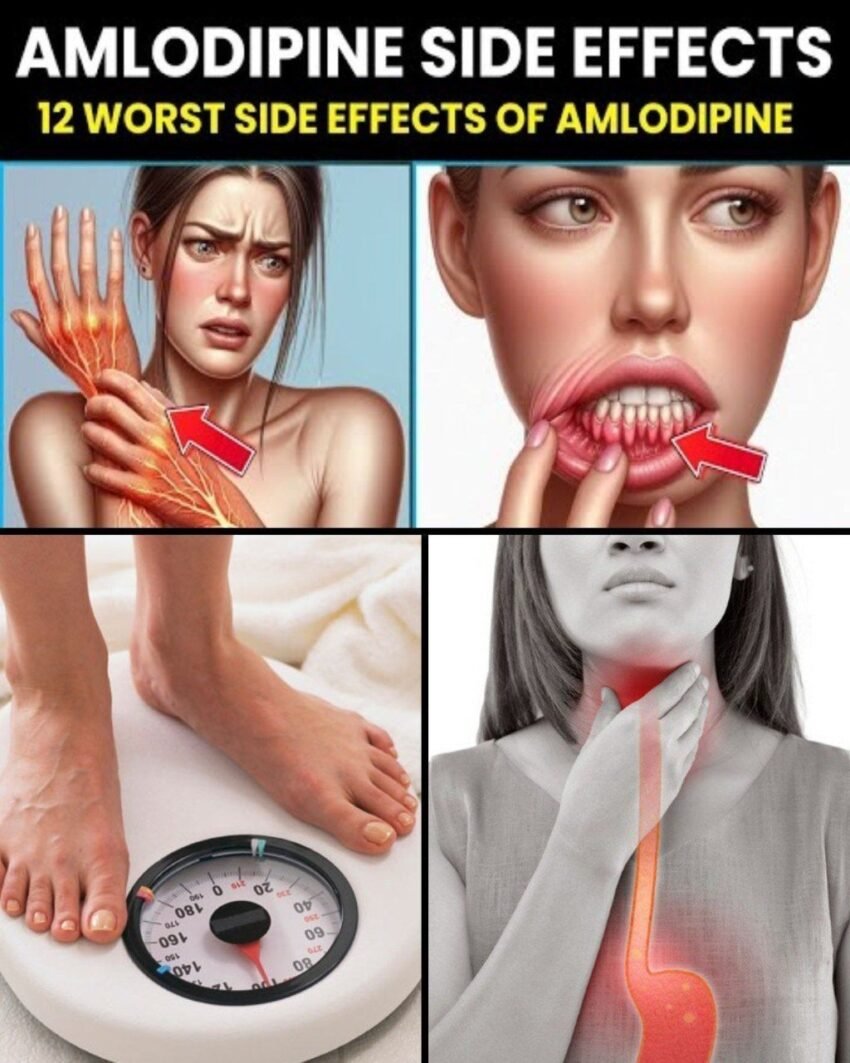
Here’s a **comprehensive and medically-sourced overview of the 12 worst side effects of amlodipine — especially the ones you should never ignore. This blood pressure medicine is widely prescribed, but like all drugs it carries a spectrum of side effects, from mild to rare but serious. (NCBI)
📌 1. Peripheral Edema (Swelling of Ankles, Feet & Legs)
What it is: Fluid buildup in tissues, especially in lower limbs.
Why it matters: Very common; can worsen with higher doses and may be uncomfortable or limit mobility.
Signs: Noticeable swelling, tight shoes/socks, puffy skin.
💡 This occurs because amlodipine dilates blood vessels and causes fluid to leak into tissues. (NCBI)
📌 2. Severe Low Blood Pressure (Hypotension)
What it is: Blood pressure drops too low.
Why it matters: Can lead to fainting, dizziness, confusion, fainting spells, or shock.
Signs: Light-headedness, blurry vision, fainting, confusion especially on standing up.
💡 Particularly risky in older adults and those on multiple blood pressure drugs. (Medical News Today)
📌 3. Worsening Angina or Heart Attack
What it is: Chest pain worsening or new heart attack symptoms after starting or increasing dose.
Why it matters: Though rare, it’s serious and needs urgent medical evaluation.
Signs: Chest tightness, pressure spreading to arm/jaw, nausea, difficulty breathing.
💡 More common in those with severe coronary artery disease. (Medical News Today)
📌 4. Allergic Reactions (Anaphylaxis)
What it is: Severe immune response to the drug.
Why it matters: Life-threatening emergency if it affects breathing or causes swelling of face/throat.
Signs: Hives, swelling of lips/tongue/face, difficulty breathing, severe rash.
🚨 Seek emergency help immediately. (Drugs.com)
📌 5. Gingival Hyperplasia (Gum Overgrowth)
What it is: Overgrowth or swelling of the gums.
Why it matters: Changes in oral appearance, can trap food and lead to cavities or infection.
Signs: Puffy gums, bleeding with brushing, discomfort.
💡 Often preventable with good oral hygiene. (NCBI)
📌 6. Dizziness and Fainting
What it is: A neurological effect tied to blood-pressure reduction and vasodilation.
Why it matters: Can increase fall risk, especially in elders.
Signs: Light-headedness, feeling about to pass out, especially when standing.
💡 Alcohol may worsen this effect. (Mayo Clinic)
📌 7. Heart Palpitations / Irregular Heartbeat
What it is: Noticeably fast, irregular or pounding heartbeat.
Why it matters: Could reflect reflexive heart responses or potential arrhythmia.
Signs: Fluttering in chest, rapid beats.
💡 Often benign but check if persistent or worsening. (Drugs.com)
📌 8. Liver Injury / Hepatic Effects
What it is: Rare drug-induced liver damage.
Why it matters: Can be serious and require stopping the medication.
Signs: Yellow skin/eyes (jaundice), dark urine, pain in upper stomach, loss of appetite.
💡 Usually reversible once drug is stopped. (NCBI)
📌 9. Severe Headache or Migraine
What it is: Can range from mild tension headaches to migraines.
Why it matters: Persistent severe headache should be investigated and could signal hypotension or vascular changes.
Signs: Throbbing head pain, light/sound sensitivity.
💡 Usually improves as the body adjusts. (Medical News Today)
📌 10. Neurological Symptoms & Numbness
What it is: Includes tingling, “pins and needles,” and numbness.
Why it matters: Sometimes linked to nerve or vascular changes from the drug.
Signs: Tingling hands/feet, numb patches, altered balance.
💡 Typically uncommon but worth medical evaluation. (Mayo Clinic)
📌 11. Fatigue / Drowsiness & Mood Changes
What it is: Excess tiredness, unusual drowsiness, occasional mood changes (like depression or irritability).
Why it matters: Can affect daily functioning and safety (e.g., driving).
Signs: Persistent tiredness, low energy, mood shifts.
💡 Many people notice this at the start of treatment. (NCBI)
📌 12. Respiratory & Rare Serious Effects
Serious respiratory symptoms: breathing difficulties, shortness of breath, pulmonary edema in sensitive individuals.
Rare neurological/skin symptoms: rash, blistering, burning sensations. (Mayo Clinic)
⚠️ When to Seek Medical Help Immediately
You should stop the medication and seek urgent care if you experience:
✔ Signs of heart attack (chest pressure spreading to arm/jaw, shortness of breath)
✔ Severe hypotension (fainting, confusion)
✔ Allergic reactions (facial swelling, breathing trouble)
✔ Jaundice or severe abdominal pain
✔ Severe respiratory distress (Mayo Clinic)
📋 Important Notes
- Many side effects lessen as the body adapts over time.
- Not everyone experiences all of these — reactions vary by individual.
- Always discuss any side effect with your doctor or pharmacist and check if the benefits outweigh the risks in your situation.
- Never stop or adjust medication doses on your own.
If you want, I can also explain why these effects occur (the mechanisms), and how to tell which ones are common vs. truly dangerous — would you like that?
