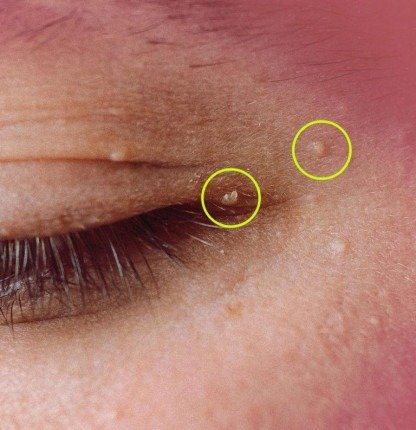
Here’s a complete guide to getting rid of milia — those small, stubborn white cysts that can appear on the face, especially around the eyes and cheeks. Milia are not acne but tiny keratin‑filled bumps under the skin, and they often won’t go away on their own without some care or professional help. (Healthline)
🧴 What Are Milia?
- Milia are tiny, firm, white or pearly bumps caused by keratin trapped beneath the skin’s surface.
- They are harmless but can be cosmetically bothersome.
- Unlike pimples, they cannot be popped like acne because they lack a pore opening on the surface. (Healthline)
🚫 What Not to Do
❌ Do not squeeze, pick, or dig at milia.
Trying to extract them yourself can damage skin, cause scarring or infection, and make the bumps worse. (Healthline)
❌ Avoid heavy, oily creams or thick moisturizers around affected areas — especially near the eyes — as these can block pores and contribute to milia. (nivea.co.uk)
🧼 Everyday Skincare Habits That Help
1. Gentle Cleansing Daily
Wash your face with a mild, non‑abrasive cleanser morning and night.
Pat your skin dry – don’t rub. (Healthline)
2. Wear Sunscreen
Daily sunscreen (SPF 30+) helps prevent skin damage and irritation that can contribute to milia. (Healthline)
🪄 At‑Home Treatments That May Help
🌿 1. Chemical Exfoliants (Safely)
Products with salicylic acid (a BHA) or glycolic/lactic acid (AHAs) help remove dead skin cells and prevent keratin buildup — the underlying cause of milia.
- Use 1–3 times per week.
- Start slowly to avoid irritation. (Snuggy Mom)
Note: These are better than harsh physical scrubs, which can irritate and worsen milia. (GoodRx)
🌞 2. Retinoids
Retinoid creams (vitamin A derivatives) — such as retinol or prescription‑strength tretinoin/adapalene — speed up skin cell turnover and help milia gradually resolve over weeks to months. They also support prevention.
- Apply at night only.
- Always use sunscreen in the daytime, as retinoids increase sun sensitivity. (Healthline)
🔥 3. Warm Compress or Steam
Gently steaming your face or applying a warm, damp washcloth for ~5–10 minutes can help soften the cysts and may support natural shedding when combined with exfoliation. (Snuggy Mom)
🧪 Optional Natural Remedies
Some people explore gentle natural remedies, though evidence is more limited and irritation is possible:
- Honey masks or sugar scrubs to lightly exfoliate and soothe. (instah.com)
- Clay masks (like kaolin) to draw out impurities gently. (findderma.com)
Always patch‑test new natural remedies on a small area first and stop if irritation develops.
🩺 Professional Options (Faster Results)
If milia persist or are extensive, a dermatologist or trained esthetician can safely remove them:
✅ Deroofing / Extraction
A professional uses a sterile needle or blade to open the skin and release the trapped keratin — done under sterile conditions to avoid scarring. (Good Housekeeping)
❄️ Cryotherapy
Freezing with liquid nitrogen may be used in some cases to treat milia, though this depends on location and skin type. (Prevention)
💉 Chemical Peels or Laser
In-office peels or laser treatments can encourage cell turnover and reduce stubborn milia by resurfacing skin. (Good Housekeeping)
🕰️ How Long Does It Take?
- Mild cases treated with skincare changes can take several weeks to months to improve.
- Professional extraction yields immediate results for treated spots, though new ones may still form if prevention is neglected. (Vision Center)
🧠 Prevention Tips
✔ Use non‑comedogenic products that won’t clog pores. (Good Housekeeping)
✔ Avoid thick, greasy creams — especially around the eyes. (nivea.co.uk)
✔ Don’t over‑exfoliate; gentler is better long‑term. (findderma.com)
✔ Wear daily sunscreen. (Healthline)
✨ Summary
- Milia are harmless but stubborn keratin cysts.
- Do not squeeze them yourself — this can make them worse. (Healthline)
- Gentle everyday skincare, chemical exfoliants, and retinoids can help over time. (Snuggy Mom)
- Professional extraction or treatments speed removal safely if needed. (Good Housekeeping)
If you’d like, I can tailor this into a step‑by‑step daily skincare routine for treating and preventing milia — just tell me your skin type (e.g., dry, oily, combination, sensitive).
