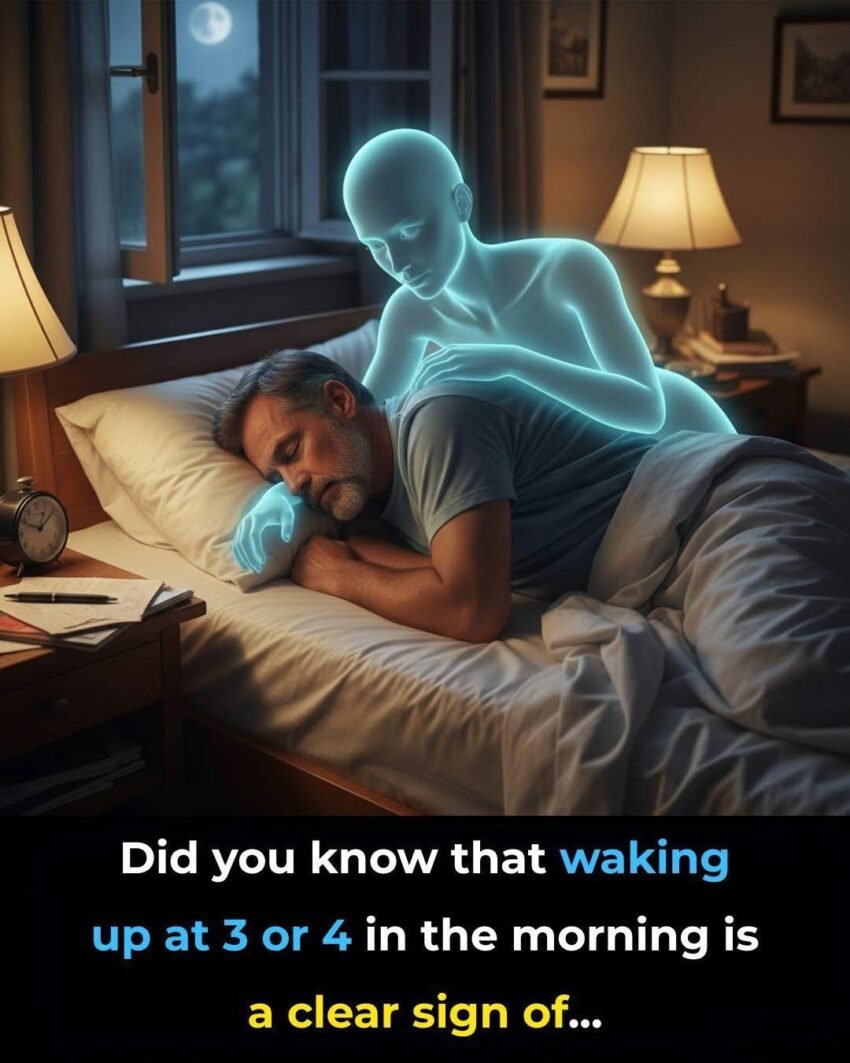
Waking up at 3 or 4 in the morning is not a “clear sign” of one specific medical condition — despite what many viral posts suggest.
Here’s what it usually means:
1) Stress or Anxiety (Most Common Cause)
Early-morning waking is strongly linked to stress hormones like cortisol.
Around 3–4 a.m., your body temperature and sleep cycle naturally shift. If you’re stressed, your brain becomes more alert at that time — making it easier to wake up and harder to fall back asleep.
This pattern is common in:
- Work stress
- Emotional strain
- Overthinking
- Major life changes
2) Insomnia
Frequent waking at the same time each night is a classic symptom of Insomnia.
People with insomnia often:
- Fall asleep fine
- Wake between 2–4 a.m.
- Struggle to return to sleep
3) Depression
Early-morning awakening can also be associated with Major depressive disorder.
A common pattern:
- Wake very early
- Feel alert but low in mood
- Unable to go back to sleep
If this happens along with low mood, fatigue, or loss of interest, it may be worth speaking with a professional.
4) Blood Sugar Changes
Drops in blood sugar during the night can trigger adrenaline release, which may wake you up.
This is more common in people with diabetes or those who skip dinner.
5) Sleep Cycle Timing (Normal Biology)
A full sleep cycle lasts about 90 minutes.
If you go to bed at 10:30 p.m., 3–4 a.m. may naturally fall between cycles — a light sleep stage when waking is easier. Brief awakenings are actually normal; we just don’t always remember them.
6) Hormonal Changes
Hormone fluctuations during:
- Perimenopause
- Thyroid imbalance
- High cortisol states
can contribute to early waking.
What It Is NOT
- It is not automatically a “spiritual awakening.”
- It is not a guaranteed sign of liver problems.
- It is not proof something is seriously wrong.
Those claims are not supported by medical evidence.
When to Be Concerned
Talk to a doctor if:
- It happens most nights for 2+ weeks
- You feel daytime exhaustion
- You notice mood changes
- You have loud snoring or gasping (possible sleep apnea)
If you’d like, tell me:
- What time you go to bed
- How long this has been happening
- Whether you feel anxious, stressed, or low lately
I can help narrow down the most likely cause.
