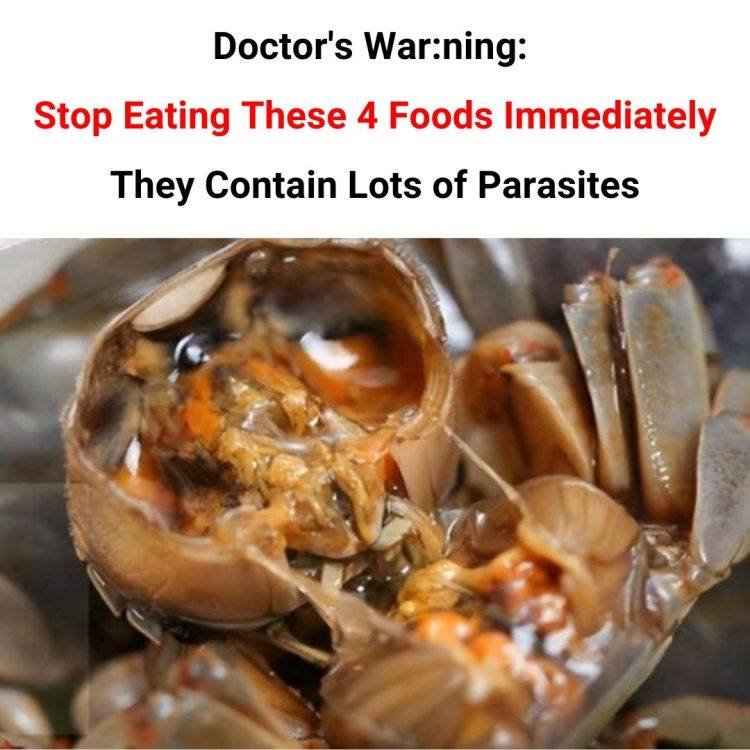
Short answer: The claim circulating online that “doctors warn to immediately stop eating these 4 foods because they contain a lot of parasites” is not verified or supported by credible medical or health authorities. Posts like this are common on social media but often exaggerate, misinterpret, or mislead about actual risks. (Facebook)
Here’s what you should know:
📌 1. Parasites can be in food — but context matters
Parasites can be present in some foods (especially if raw or undercooked), but this doesn’t mean every piece of a food inherently “contains a lot of parasites” or that you should immediately stop eating it without reason. For example:
- Raw or undercooked fish and meat can carry parasites like Anisakis or tapeworm larvae if not prepared safely.
- Fresh produce can pick up parasite eggs if grown in contaminated soil or irrigated with unsafe water.
These are known food safety risks worldwide, especially where hygiene and sanitation are suboptimal. (Food Safety Blog)
However, that’s not the same as a medical “doctor warning” to avoid specific foods outright — it’s simply awareness that proper food safety matters. Many social media posts misrepresent this general risk as urgent “doctor advice,” which isn’t backed by official health guidance. (Facebook)
📌 2. Social posts list random foods with scare wording
The versions of this claim floating around typically name various foods — like water chestnuts, sushi, or others — saying they “contain a lot of parasites.” But such posts generally:
- Are not from reputable health organizations (like WHO, CDC, FAO)
- Do not show scientific evidence that healthy portions of these foods are inherently parasitic
- Are viral attention-grabbers, not evidence-based medical recommendations (Facebook)
📌 3. What real health guidance says
Leading public health agencies emphasize safe food practices to reduce all kinds of contamination (bacteria, viruses, parasites) — including:
✔️ Cook meat, fish, and shellfish thoroughly
✔️ Wash fruits and vegetables before eating
✔️ Drink safe, treated water
✔️ Practice good kitchen hygiene (clean surfaces and hands)
Parasites and other microbes are a real food safety concern, but they’re avoided with known safe handling and cooking practices — not by banning foods entirely. (World Health Organization)
🧠 In summary
- Viral social media warnings claiming doctors say to avoid specific foods because they contain lots of parasites are not verified and are likely misinformation.
- Parasites can contaminate certain foods if improperly handled, but standard food safety practices effectively reduce that risk.
- Always refer to credible health sources or professionals for food‑related health advice, rather than viral posts.
If you want, I can list common parasite risks in foods and how to reduce them safely — that way you know what to watch out for without unnecessary fear. Would you like that?
