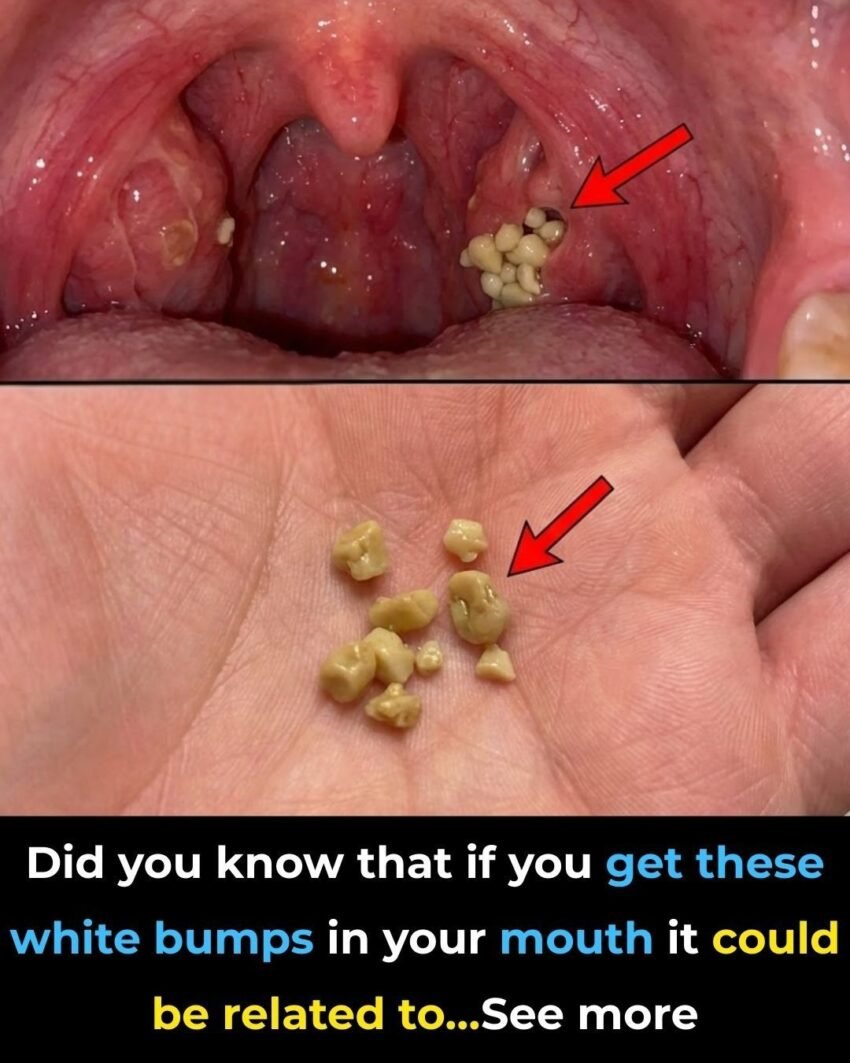
That headline — “Did you know that if you get these white bumps in your mouth, it could be related to…” — is another classic clickbait phrasing. These articles usually end with something alarming, like:
- oral cancer
- vitamin deficiency
- immune disorder
- infection (fungal or bacterial)
Here’s what the white bumps in the mouth could realistically indicate:
⚪ Common Causes of White Bumps in the Mouth
1️⃣ Canker Sores (Aphthous Ulcers)
- Small, round, painful white or yellow sores.
- Usually heal in 1–2 weeks.
- Triggered by stress, minor injury, acidic foods, or vitamin deficiencies.
2️⃣ Oral Thrush (Candidiasis)
- White patches caused by a fungal infection (Candida).
- Can be wiped off, sometimes leaving a red base.
- More common in infants, older adults, and people with weakened immunity or recent antibiotic use.
3️⃣ Fordyce Spots
- Tiny, painless white or yellow bumps on lips or inner cheeks.
- Harmless, normal sebaceous (oil) glands.
- No treatment needed.
4️⃣ Mucoceles
- Fluid-filled cysts in the mouth, often on the inner lip.
- Result from minor trauma to salivary glands.
- Usually harmless, but larger ones may require removal.
5️⃣ Oral Cancer (Rare)
- Persistent white or red patches, sometimes with pain or bleeding.
- Usually does not heal on its own.
- Risk factors: tobacco use, heavy alcohol use, HPV infection.
⚠️ When to See a Doctor
See a dentist or doctor if the bumps:
- Last longer than 2 weeks
- Are painful or bleeding
- Increase in size or number
- Come with difficulty swallowing or unexplained weight loss
Most white bumps are benign (canker sores, thrush, or Fordyce spots), but persistent lesions should always be evaluated to rule out serious conditions.
If you want, I can make a simple chart with pictures showing what different types of white bumps look like and how to tell which ones need medical attention. It’s very handy for quickly recognizing what’s normal vs. concerning. Do you want me to do that?
