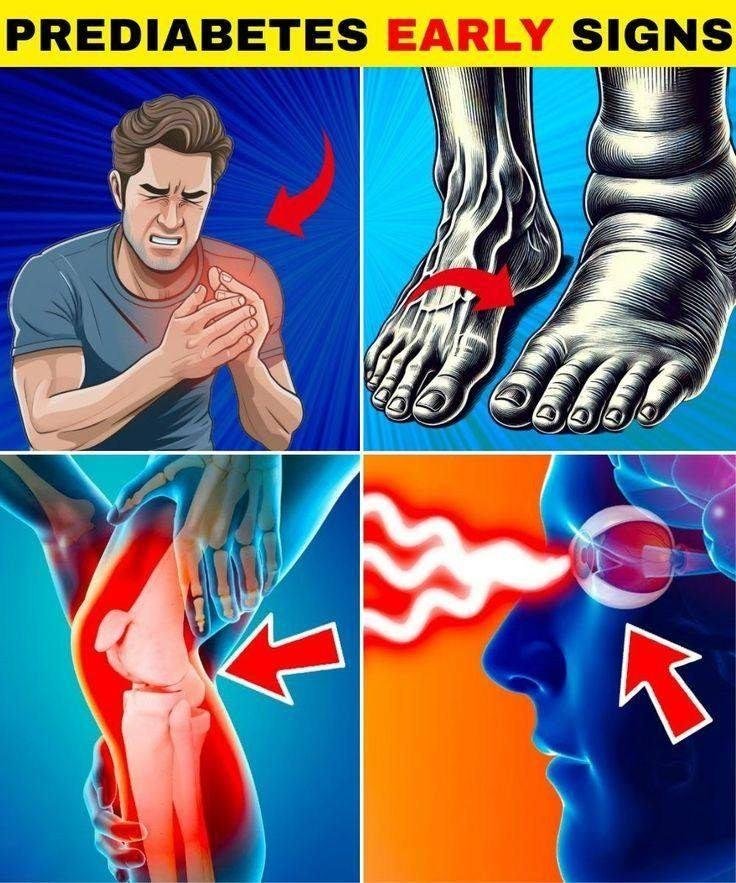
12 Signs You May Have Prediabetes, How to Detect It, and How to Control It
Prediabetes means your blood sugar levels are higher than normal but not high enough to be diagnosed as Type 2 diabetes. It’s a warning sign — and the good news is that it can often be reversed with the right steps.
12 Possible Signs of Prediabetes
Many people have no symptoms at all, which is why testing is important. But some people may notice:
- Increased thirst
- Frequent urination
- Fatigue
- Blurred vision
- Slow-healing cuts or wounds
- Increased hunger
- Darkened skin patches (especially around neck, armpits — called acanthosis nigricans)
- Unexplained weight gain
- Tingling or numbness in hands/feet
- Frequent infections
- Brain fog or difficulty concentrating
- Sleep problems
⚠️ Important: Many of these symptoms are more common in full diabetes — prediabetes is often silent.
How to Detect Prediabetes
Diagnosis requires a blood test. Doctors typically use:
1. Fasting Blood Sugar Test
- Normal: Below 100 mg/dL
- Prediabetes: 100–125 mg/dL
- Diabetes: 126 mg/dL or higher
2. A1C Test
- Normal: Below 5.7%
- Prediabetes: 5.7%–6.4%
- Diabetes: 6.5% or higher
3. Oral Glucose Tolerance Test (OGTT)
Measures how your body handles sugar over 2 hours.
Risk Factors for Prediabetes
You may be at higher risk if you:
- Are overweight or obese
- Have a family history of diabetes
- Are physically inactive
- Are over age 45
- Have high blood pressure
- Have abnormal cholesterol levels
- Had gestational diabetes
How to Control or Reverse Prediabetes
The goal is to improve insulin sensitivity and lower blood sugar naturally.
1. Lose 5–10% of Body Weight
Even modest weight loss can dramatically reduce risk.
2. Exercise Regularly
Aim for:
- 150 minutes per week of moderate exercise
- Strength training 2–3 times weekly
Walking 30 minutes daily is very effective.
3. Improve Your Diet
Focus on:
- High-fiber foods
- Vegetables
- Lean proteins
- Whole grains
- Healthy fats
Reduce:
- Refined carbs
- Sugary drinks
- Processed foods
4. Improve Sleep
7–9 hours per night improves insulin sensitivity.
5. Manage Stress
Chronic stress raises blood sugar.
6. Consider Medical Guidance
Doctors may prescribe medications like metformin in high-risk cases.
When to See a Doctor
You should get tested if:
- You are over 45
- You are overweight
- You have multiple risk factors
- You have symptoms
The Good News
Prediabetes does not mean you will develop diabetes. With early detection and lifestyle changes, many people return their blood sugar to normal levels.
If you’d like, I can also provide:
- A 7-day prediabetes meal plan
- A simple beginner exercise plan
- A checklist to assess your personal risk
