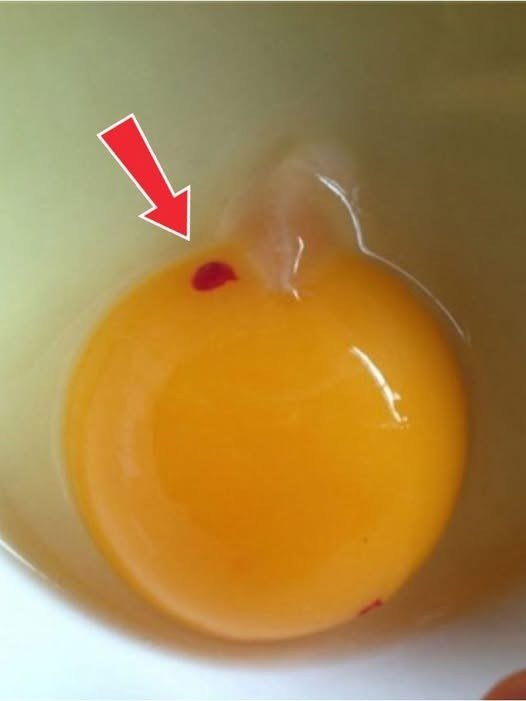
There Are Red Floaty Things in My Store-Bought Eggs — Is This Normal or a Warning Sign?
Finding red or dark spots in eggs can be alarming, but it’s usually not dangerous. Here’s what you need to know.
1. What Those Red Spots Are
The red spots in eggs are typically blood spots or meat spots:
- Blood spots: Small bits of blood from a ruptured blood vessel in the hen’s ovary or oviduct.
- Meat spots: Bits of tissue from the reproductive tract.
These are naturally occurring and do not indicate the egg is fertilized or unsafe.
2. Are They Safe to Eat?
Yes. The USDA states that eggs with blood or meat spots are safe to eat as long as the egg is properly cooked.
- Cook until both white and yolk are firm to reduce any risk.
- You can remove the spot with the tip of a knife if it makes you uncomfortable.
3. Why They Happen
Blood or meat spots can appear due to:
- Age or strain of the hen
- Genetics
- Natural variation in ovulation
- Stress or diet of the hen
They are more common in brown eggs than white eggs, but can occur in any type.
4. How Often It Happens
- Only about 1 in every 1,000 eggs has a blood spot.
- Modern egg production often catches most eggs with large spots during grading, so it’s relatively rare in store-bought eggs.
5. When to Worry
You should discard eggs if:
- The egg has a bad odor
- The egg is discolored, slimy, or moldy
- The shell is cracked or damaged
Otherwise, a small red spot is harmless.
Bottom Line
Red floaty things in your eggs are usually just blood or tissue spots.
They are safe to eat once cooked, though you can remove them if you prefer.
If you want, I can also explain:
- Why some eggs have larger spots than others
- How to inspect eggs for freshness before cooking
- Tips for avoiding these spots in home-bought eggs 🥚
