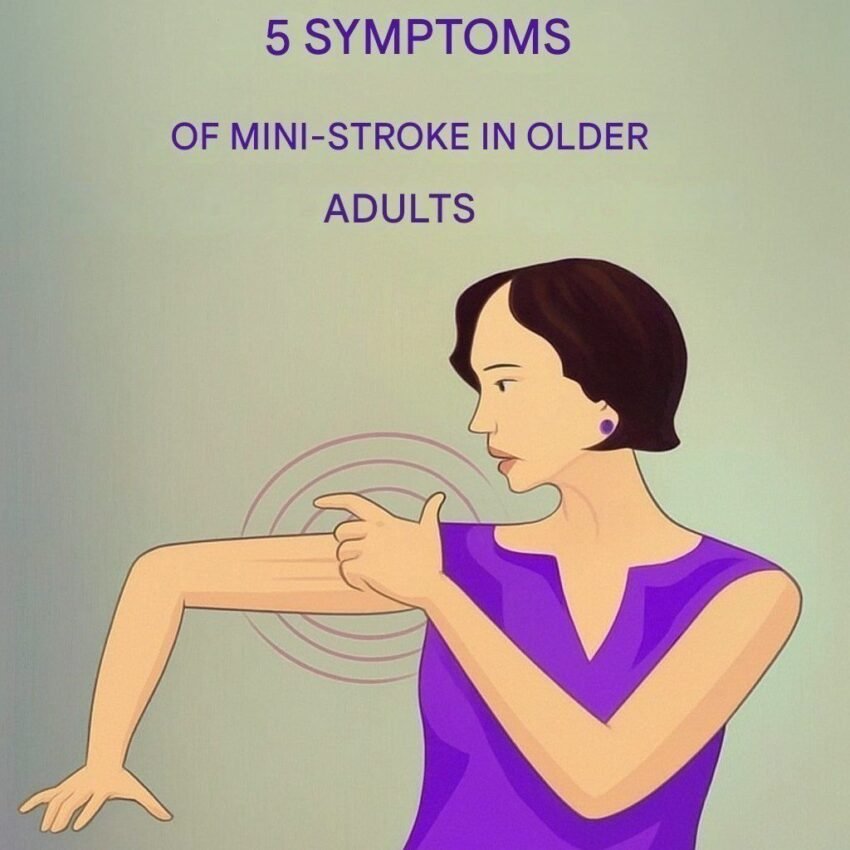
A mini stroke, medically known as a Transient Ischemic Attack (TIA), is a temporary blockage of blood flow to the brain. Unlike a major stroke, symptoms usually resolve within minutes to hours — but it’s a serious warning sign of a future stroke.
Here are 5 symptoms of a mini stroke in seniors that should never be ignored:
1. Sudden Weakness or Numbness (Especially on One Side)
If a senior suddenly experiences weakness, numbness, or tingling in the face, arm, or leg — particularly on one side of the body, it could signal a TIA.
Drooping on one side of the face is especially common.
2. Trouble Speaking or Understanding Speech
Sudden:
- Slurred speech
- Difficulty forming words
- Confusion
- Trouble understanding others
These language issues may last only a few minutes, but they are a major red flag.
3. Vision Changes
Temporary vision problems can include:
- Blurred vision
- Double vision
- Sudden loss of vision in one or both eyes
Some seniors describe it as a “curtain” briefly coming over one eye.
4. Sudden Dizziness or Loss of Balance
Unexplained:
- Dizziness
- Trouble walking
- Loss of coordination
- Sudden falls
These symptoms are especially concerning if they appear abruptly.
5. Sudden Severe Headache
A sudden, intense headache with no known cause — especially if different from usual headaches — can be a warning sign.
Why It’s Critical to Act Fast
Even if symptoms disappear quickly, a mini stroke is often a warning that a major stroke may follow, sometimes within days.
Use the F.A.S.T. method:
- Face drooping
- Arm weakness
- Speech difficulty
- Time to call emergency services
When to Seek Help
Call emergency services immediately if any of these symptoms occur — even if they go away. Early treatment can significantly reduce the risk of a full stroke.
If you’d like, I can also share:
- Risk factors specific to seniors
- Prevention strategies
- What doctors typically do after a suspected mini stroke
