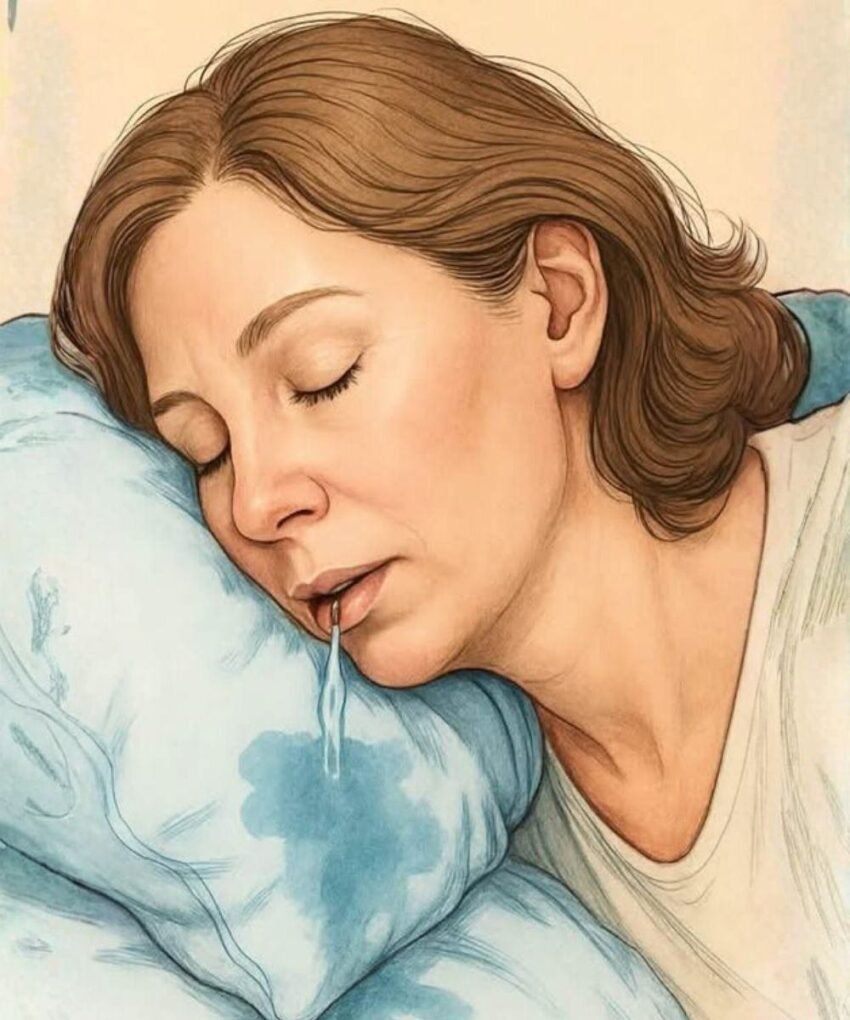
If You Drool at Night, Here’s What It Means 😴💧
Waking up with a wet pillow can be annoying — and maybe a little embarrassing — but drooling during sleep is actually quite common. Most people do it occasionally, and it usually isn’t a sign of anything serious. However, there are several reasons why it happens, ranging from simple sleep habits to underlying health issues.
1. You’re Sleeping on Your Side or Stomach
The easiest explanation: gravity.
- Sleeping on your back makes it easier for saliva to stay in your mouth.
- Side or stomach sleepers are more likely to let saliva escape while they snooze.
- Solution: Try sleeping on your back or using a supportive pillow to keep your head slightly elevated.
2. Your Mouth Isn’t Closing Properly
If your jaw or mouth can’t fully close while you sleep, saliva can leak out. This can happen if you:
- Breathe through your mouth instead of your nose
- Have nasal congestion from a cold, allergies, or a deviated septum
- Have enlarged tonsils or adenoids
Fixing nasal congestion or using a gentle mouth tape at night (with guidance from a doctor) can reduce drooling.
3. Excessive Saliva Production
Sometimes your body produces more saliva than usual, which can happen if you:
- Eat certain foods before bed (spicy, sour, or very sweet)
- Take medications that increase saliva flow
- Have acid reflux (GERD), which can stimulate saliva production
4. Sleep Position and Relaxation
Drooling can also be a sign that your body is in deep sleep.
- When muscles relax fully, the tongue and jaw can slip slightly, allowing saliva to escape.
- In other words, drooling can be a sign you’re sleeping deeply — sometimes a good thing!
5. Possible Health Concerns
While most nighttime drooling is harmless, it can occasionally signal an underlying issue:
- Sleep apnea: If drooling is accompanied by snoring, pauses in breathing, or daytime fatigue, consult a doctor.
- Neurological conditions: Rarely, conditions like Parkinson’s or stroke can affect muscle control, including the mouth.
6. Tips to Reduce Nighttime Drooling
- Sleep on your back with your head slightly elevated.
- Treat nasal congestion with saline sprays, humidifiers, or allergy medications.
- Avoid heavy meals or very acidic foods before bed.
- Check medications with your doctor if they increase saliva.
- Practice jaw exercises to strengthen control if needed.
Bottom Line
Nighttime drooling is usually harmless and often just comes from sleep position or deep relaxation. Occasional drooling is normal, but persistent or excessive drooling — especially with other symptoms like snoring, fatigue, or breathing issues — should be discussed with a healthcare professional.
If you want, I can make a list of 7 quick home remedies and pillow tricks to stop drooling at night, which people find surprisingly effective. Do you want me to do that?
