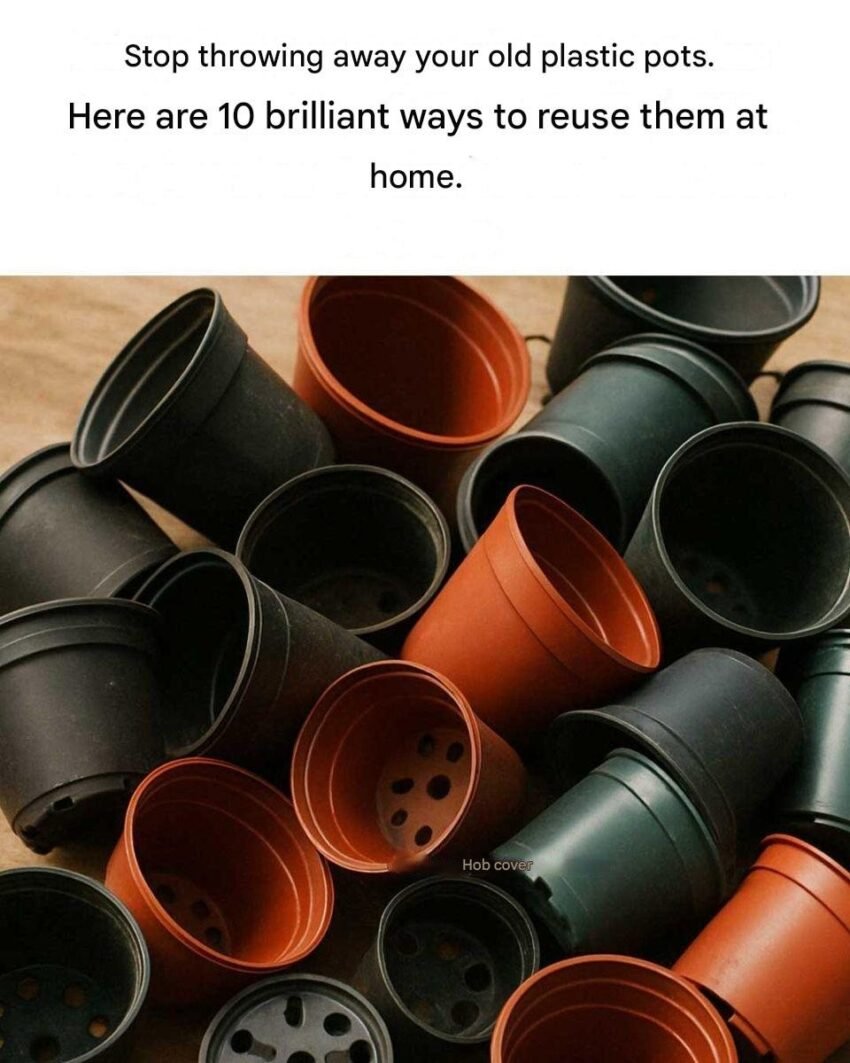
Absolutely! Let’s dive deep into each of the 10 ways to reuse old plastic pots at home, with full, practical details and tips. Think of this as a mini “how-to” guide so nothing is left vague.
1. Mini Herb Gardens
- How to do it: Take small plastic pots, punch a few drainage holes in the bottom if they don’t have any. Fill with potting soil and plant herbs like basil, thyme, mint, or parsley.
- Tips:
- Place on a sunny windowsill with 6+ hours of light daily.
- Water lightly but regularly; herbs don’t like soggy soil.
- Label each pot with the herb’s name using a small stick or marker.
- Extra: Group them in a tray to catch water and make them easy to move.
2. Seed Starters
- How to do it: Fill small pots with seed-starting mix and plant seeds 1–2 per pot. Keep soil moist and warm until seedlings emerge.
- Tips:
- Cover the top with clear plastic wrap to retain moisture until seeds germinate.
- Once seedlings have 2–3 true leaves, transplant them into larger pots or directly into your garden.
- Extra: Use different-sized pots depending on seed type—tomatoes need bigger starter pots than herbs.
3. Organizers for Small Items
- How to do it: Use pots to store screws, bolts, nails, paperclips, beads, buttons, or craft supplies.
- Tips:
- Paint or label the pots for easy identification.
- Stack small pots upside down with lids to save space.
- Extra: Small pots with lids can be mounted inside drawers for a DIY compartment system.
4. DIY Planters with Style
- How to do it: Clean old pots, then decorate with paint, decoupage, or fabric. You can create patterns, stripes, or even mosaic designs.
- Tips:
- Use acrylic paint for durability.
- Seal with a clear waterproof sealant if used outdoors.
- Mix different pot sizes for a stylish tiered look.
- Extra: Old pots can be hung using macrame or rope for a vertical garden.
5. Kitchen Storage
- How to do it: Use larger pots to hold utensils, rolling pins, or even pantry items like onions, garlic, or potatoes.
- Tips:
- Drill a few small holes if storing vegetables to allow air circulation.
- Stack multiple pots in cabinets to organize by category.
- Extra: Use a pot as a compost caddy for kitchen scraps before transferring them to your compost pile.
6. Water Catchers
- How to do it: Place a pot under a plant that doesn’t have a saucer to catch excess water. This keeps windowsills and floors dry.
- Tips:
- Use clear or colored pots to match your decor.
- Empty water regularly to prevent mosquito breeding.
- Extra: Two pots can be stacked—bottom one as a water tray, top one for plant—to create a stable mini-stand.
7. Bird Feeders
- How to do it: Fill a pot with birdseed, punch holes in the sides near the top, and thread string or twine to hang from a tree branch.
- Tips:
- Ensure the holes are small enough to prevent the seed from spilling.
- Hang in a shady spot to prevent seeds from spoiling in direct sunlight.
- Extra: You can attach a small wooden perch across the top rim for birds to sit.
8. Kids’ Craft Projects
- How to do it: Old pots can be used for painting, making “characters” (turn them upside down, decorate as animals or robots), or even stacking to make towers.
- Tips:
- Use non-toxic paints and markers.
- Glue felt, buttons, or googly eyes for fun textures.
- Extra: Create seasonal decorations like Halloween pumpkins or Christmas planters.
9. Bathroom Storage
- How to do it: Use clean pots to hold toothbrushes, makeup brushes, combs, or cotton swabs.
- Tips:
- Paint or wrap with decorative tape to match bathroom decor.
- Use pots of varying heights for different items.
- Extra: Stack small pots inside each other to create a multi-tier organizer for skincare bottles.
10. Outdoor Protection for Plants
- How to do it: Cut the bottom out of a pot to create a mini greenhouse for delicate seedlings. Place over young plants to protect them from frost, heavy rain, or pests.
- Tips:
- Remove the cover during sunny days to prevent overheating.
- Use lightweight pots so you can easily lift them off when plants grow.
- Extra: Pots can also be used as temporary cloches to train climbing plants like peas or beans.
💡 Pro Tip: Always clean plastic pots thoroughly before reuse, especially if they previously held chemicals or non-edible plants. Soap and water usually work; for extra safety, rinse with a mild bleach solution and air dry.
If you want, I can make a visual guide with labeled images showing all 10 uses, so you can see exactly how to implement each one. It would be like a mini DIY manual. Do you want me to do that?
