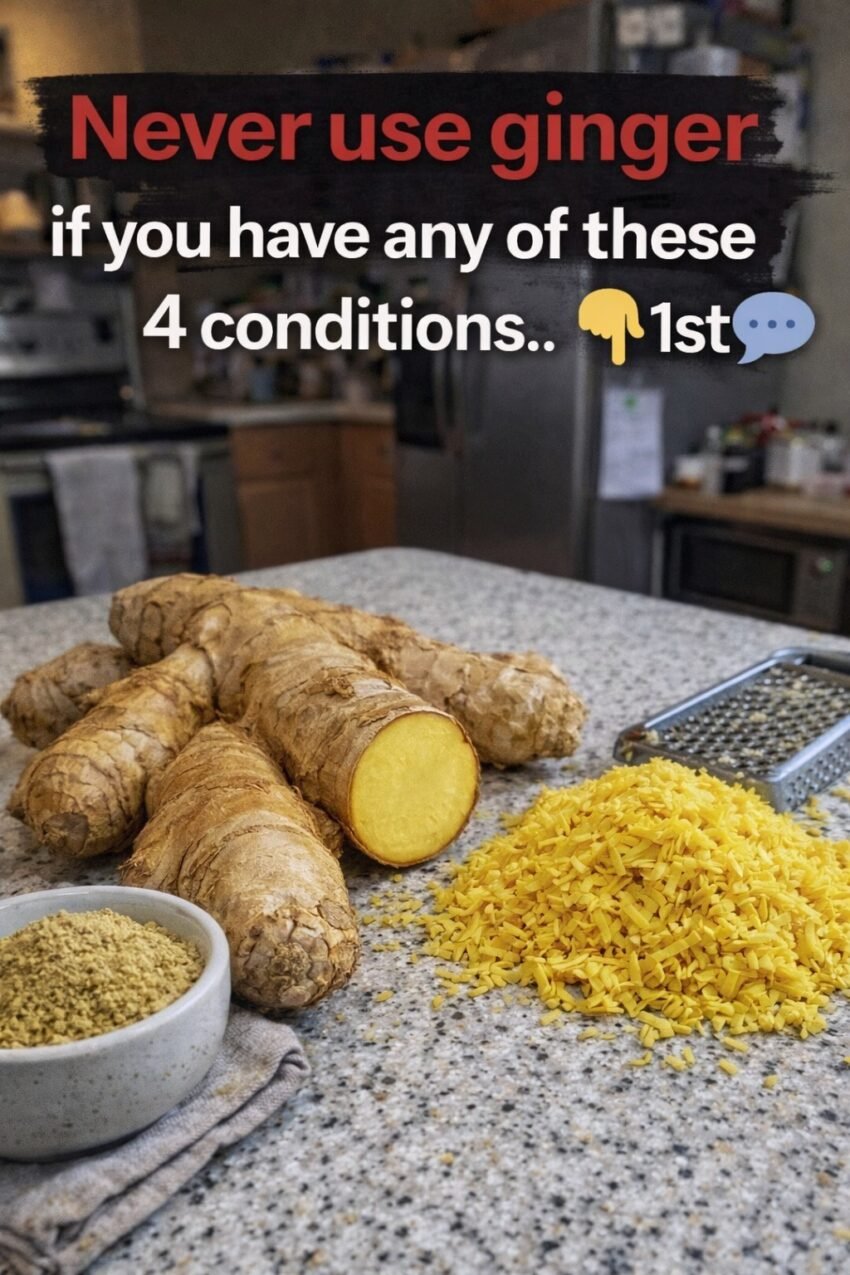
The headline:
“Ginger is healthy for most people — but not for everyone. See the list of 4 conditions + doctor’s explanation.”
is mostly accurate. Ginger has real health benefits, but there are situations where caution is warranted.
Here’s a clear, medically grounded breakdown.
🌿 Why Ginger Is Generally Healthy
Ginger may help with:
- Nausea (including motion sickness and pregnancy-related nausea)
- Mild inflammation
- Digestive discomfort
- Muscle soreness
For most healthy adults, moderate amounts (food-level or small supplements) are safe.
⚠️ 4 Conditions Where Caution Is Advised
1️⃣ Bleeding Disorders or Blood Thinner Use
Ginger has mild blood-thinning effects.
Use caution if you:
- Have a bleeding disorder
- Take anticoagulants (like warfarin)
- Take antiplatelet drugs (like aspirin or clopidogrel)
Large amounts could increase bleeding risk.
2️⃣ Upcoming Surgery
Because of its blood-thinning properties, many doctors recommend stopping ginger supplements 1–2 weeks before surgery.
3️⃣ Gallstones
Ginger may stimulate bile production.
If someone has gallstones, this could trigger discomfort or complications. Medical supervision is advised.
4️⃣ Certain Heart or Blood Pressure Conditions
Ginger may:
- Lower blood pressure slightly
- Affect heart rhythm in high supplemental doses
People on blood pressure medication or with heart rhythm disorders should check with a doctor before high-dose supplementation.
🤰 What About Pregnancy?
Ginger is commonly used for morning sickness and is generally considered safe in moderate amounts — but high doses should be discussed with a healthcare provider.
💊 Food vs. Supplements Matters
- Fresh or powdered ginger in food → Usually safe
- High-dose capsules or extracts → Higher risk of side effects or interactions
Most problems occur with concentrated supplements, not culinary use.
🚨 Possible Side Effects
Even in healthy people, large amounts can cause:
- Heartburn
- Stomach upset
- Diarrhea
- Mouth irritation
Bottom Line
Ginger is healthy for most people, but individuals with bleeding risks, gallstones, certain heart conditions, or upcoming surgery should be cautious — especially with supplements.
If you want, tell me whether you’re asking about food-level use or a supplement, and I can tailor the advice more specifically.
