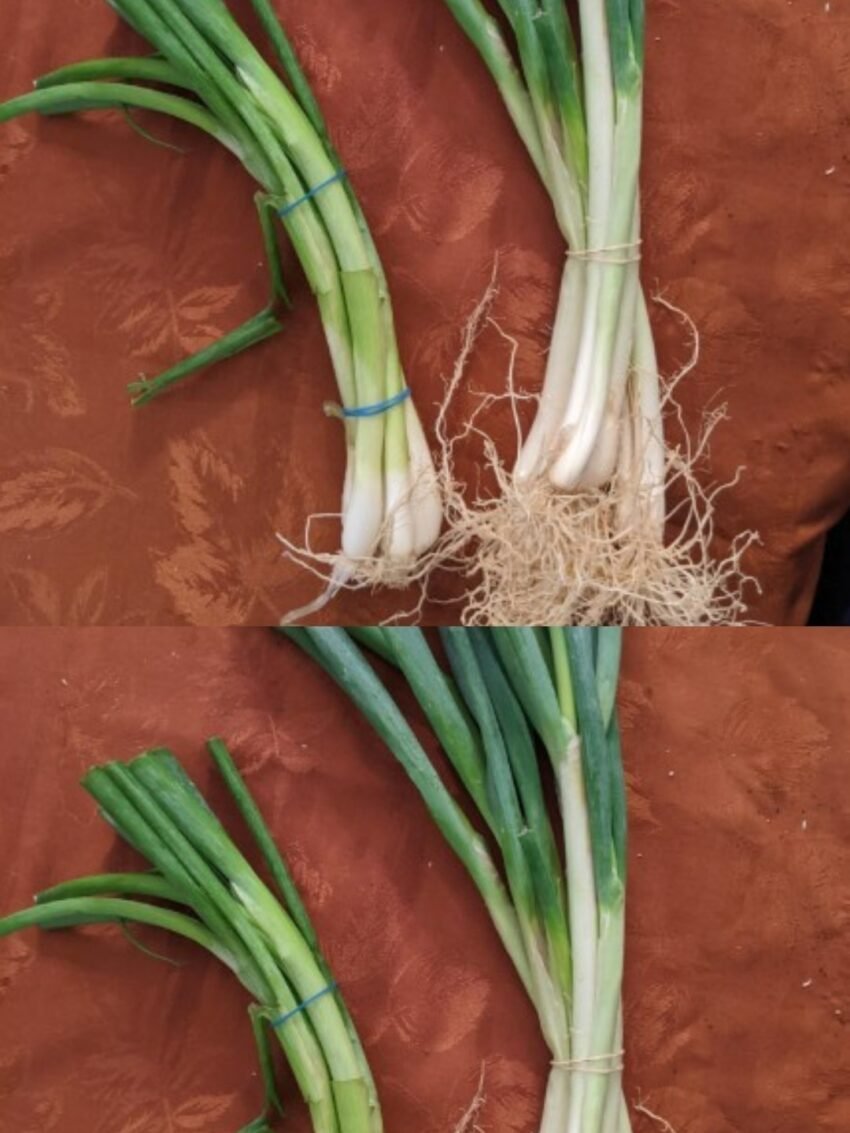
Here’s a full, detailed article explaining the differences:
Green Onions vs. Scallions vs. Spring Onions vs. Chives: What’s the Difference?
If you’ve ever picked up “green onions” at the grocery store and wondered whether they’re the same as scallions, spring onions, or chives, you’re not alone. The terms are often used interchangeably, but there are subtle differences in flavor, size, and culinary uses. Knowing these distinctions can elevate your cooking and help you choose the right ingredient for your recipe.
1. Green Onions
- Appearance: Green onions have long, slender green tops with small white bulbs at the base.
- Flavor: Mild, slightly peppery, less pungent than mature onions.
- Uses: Commonly used raw in salads, as a garnish, or lightly cooked in stir-fries and soups.
- Notes: In many countries, “green onion” is a general term for young onions harvested before the bulb fully develops.
2. Scallions
- Appearance: Almost identical to green onions, with white stems and green tops.
- Flavor: Very similar to green onions—mild and fresh.
- Uses: Scallions are versatile, used in omelets, soups, and as a fresh topping for tacos or baked potatoes.
- Notes: In many regions, scallion is just another name for green onion. The terms can usually be used interchangeably.
3. Spring Onions
- Appearance: Slightly larger than green onions/scallions, with a more developed, rounded white bulb.
- Flavor: Stronger, more pungent, closer to regular onions but still mild.
- Uses: Can be eaten raw in salads or cooked in roasting, grilling, or sautés. Their bulb adds more oniony flavor than a green onion.
- Notes: Spring onions are actually young onions harvested later than scallions, giving them a small, noticeable bulb at the base.
4. Chives
- Appearance: Very thin, grass-like stems, bright green, with no bulb.
- Flavor: Delicate, onion-like, and slightly garlicky. Much milder than scallions or spring onions.
- Uses: Best used raw as a garnish for soups, baked potatoes, eggs, or creamy sauces. Cooking reduces their flavor quickly.
- Notes: Chives are an herb, not a young onion, so they’re mainly used for flavoring rather than as a vegetable.
Quick Comparison Table
| Name | Bulb Size | Stem Size | Flavor | Best Use |
|---|---|---|---|---|
| Green Onion | Small | Long, thin | Mild, fresh | Garnish, stir-fries, salads |
| Scallion | Small | Long, thin | Mild, fresh | Same as green onion |
| Spring Onion | Medium | Shorter | Mild, slightly strong | Raw salads, roasting, sautés |
| Chives | None | Very thin | Delicate, oniony | Garnish, soups, eggs, sauces |
Tips for Using Them in Cooking
- Flavor intensity: Use green onions or scallions for mild flavor, spring onions when you want more punch.
- Raw vs. cooked: Chives are best raw; green onions and scallions can be raw or lightly cooked; spring onions handle heat better.
- Garnish: Chives are ideal for finishing dishes due to their delicate flavor.
Bottom Line
While these four all belong to the onion family, their size, flavor, and culinary role differ. Using the right one can make a subtle but noticeable difference in your dish. Next time you see these at the market, you’ll know exactly which to pick.
If you want, I can also create a visual guide infographic showing each type of onion and chive, with flavor and use tips—it’s a handy kitchen cheat sheet.
Do you want me to make that?
