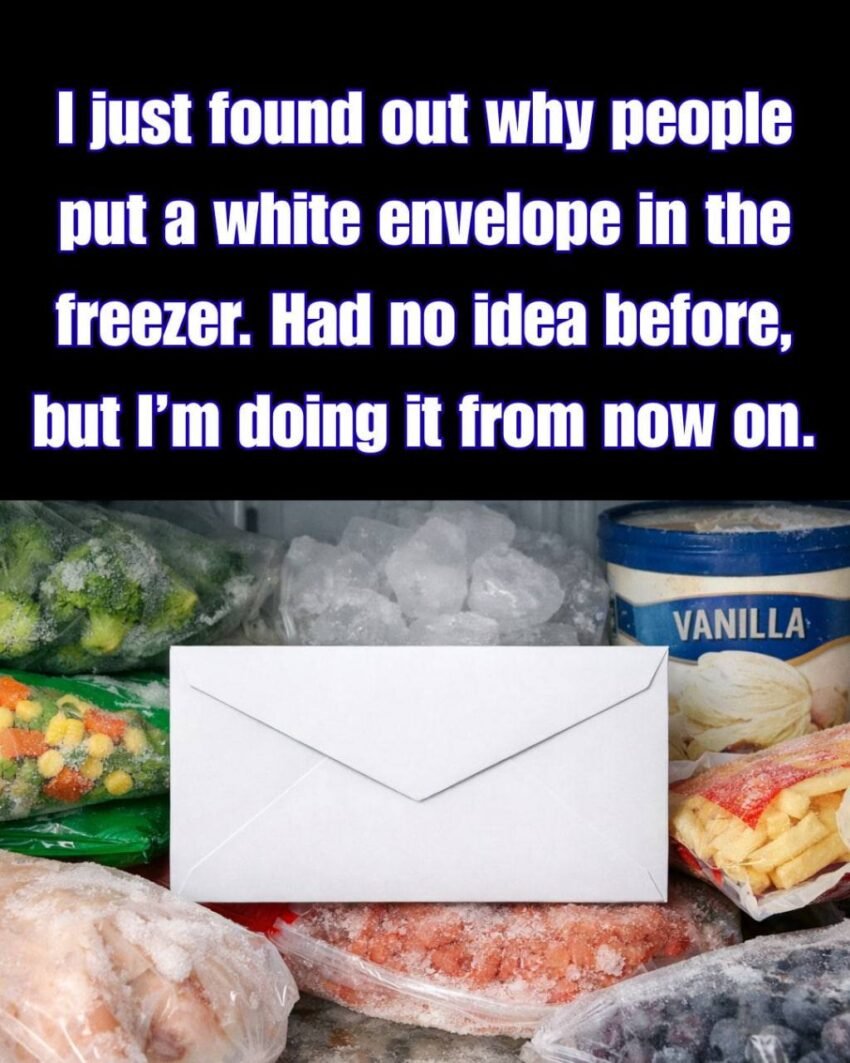
Why Do People Put an Envelope in the Freezer? ❄️✉️
Putting an envelope in the freezer is a well-known household trick used mainly to open a sealed envelope without tearing it. It works because extreme cold affects the adhesive used on envelope flaps, making it easier to separate the seal. (Bizfluent)
Below is a complete explanation of the science, the method, and the limitations of this trick.
1. The Science Behind the Freezer Trick
Most traditional envelopes use water-activated gum adhesive. This adhesive becomes sticky when moistened (for example, when someone licks the flap).
When the envelope is placed in a freezer:
- The very low temperature freezes and stiffens the glue.
- Frozen adhesive loses its flexibility and bonding strength.
- As the glue becomes brittle, the flap can often be lifted without tearing the paper. (Bizfluent)
In simple terms:
Cold → adhesive becomes brittle → seal weakens → envelope opens easier.
2. Step-by-Step: How the Freezer Method Works
People who use this trick usually follow these steps:
Step 1: Protect the Envelope
Place the envelope in a plastic bag before freezing.
This prevents moisture or ice from damaging the paper. (Kipkis)
Step 2: Freeze the Envelope
Put the envelope in the freezer for 1–2 hours or longer.
Some guides suggest several hours or even overnight to fully weaken the adhesive. (Yahoo Creators)
Step 3: Open the Flap
After removing it from the freezer:
- Use a butter knife, letter opener, or fingernail
- Slide it gently under the flap
- Slowly lift the flap
The frozen adhesive should loosen enough for the envelope to open with minimal damage.
Step 4: Reseal the Envelope
If needed, the envelope can be resealed by:
- Moistening the adhesive again
- Pressing the flap closed
- Adding a small amount of glue if necessary (Bizfluent)
3. Common Reasons People Use This Trick
People freeze envelopes for several reasons:
1. Fixing a Mistake
Someone may seal an envelope and then realize they forgot to include:
- A document
- A check
- A letter
Freezing lets them reopen it without destroying the envelope.
2. Opening Stuck Envelopes
Sometimes envelopes seal accidentally due to:
- Humidity
- Moisture in storage
Freezing can help unstick the adhesive and make the envelope usable again. (ehow.com)
3. Crafting and Collecting
Collectors or scrapbookers may open envelopes carefully to preserve:
- Stamps
- Vintage letters
- Decorative envelopes.
4. Curiosity or Pranks
The trick is also widely shared online as a life hack experiment, where people test whether they can open envelopes without visible damage.
4. When the Trick Does NOT Work
The freezer trick does not work on all envelopes.
It works best with:
✔ Old-style moistened glue envelopes
It usually fails with:
❌ Self-adhesive (peel-and-stick) envelopes
❌ Industrial latex adhesives
These modern adhesives are designed to resist moisture and temperature changes, so freezing won’t loosen them easily. (Mytour.vn)
5. Risks and Problems
Although the trick can work, it isn’t perfect.
Possible issues
- Paper may crack if frozen too long
- Condensation can damage ink or documents
- The envelope may still tear when opened
- Modern envelopes often won’t open at all
Another important issue is legal concerns.
Opening someone else’s mail without permission can be illegal in many countries, so the method should only be used for your own envelopes.
6. Other Methods People Use
If freezing does not work, people sometimes try:
Steam Method
Hold the envelope over steam from hot water to soften the glue.
Iron Method
Use a low-heat iron to warm and loosen the adhesive.
Microwave Method
Some guides suggest microwaving briefly, but this is risky because paper can burn. (Bizfluent)
7. Interesting Fact
This freezer trick is often listed among “unexpected freezer hacks”, along with tricks like:
- killing odor bacteria in clothes
- making candles burn slower
- chilling drinks faster. (Yahoo Creators)
✅ In short:
People put an envelope in the freezer because the cold weakens the adhesive glue, allowing the envelope to be opened carefully without ripping it.
If you want, I can also show you 10 strange freezer hacks people actually use at home—some of them are really surprising. ❄️
