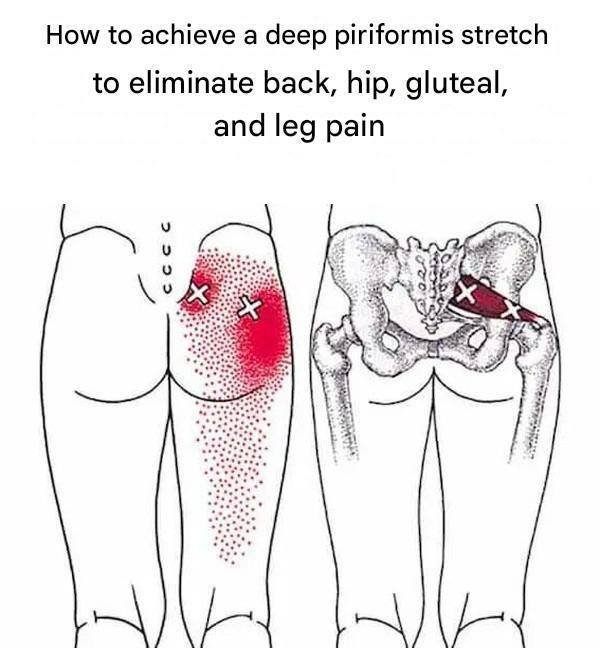
How to Achieve a Deep Piriformis Stretch to Help Reduce Back, Hip, Gluteal, and Leg Pain
The piriformis is a small muscle located deep in the buttock region, behind the gluteal muscles. It plays an important role in stabilizing the hip and rotating the thigh outward. When this muscle becomes tight or inflamed, it can irritate the Sciatic Nerve, leading to pain in the lower back, hips, buttocks, and legs. This condition is commonly known as Piriformis Syndrome.
A proper deep piriformis stretch can help relieve pressure on the nerve, improve hip mobility, and reduce pain.
Understanding the Piriformis Muscle
The Piriformis Muscle connects the lower spine (sacrum) to the top of the femur (thigh bone). It helps with:
- Hip rotation
- Stabilization of the hip joint
- Movement of the leg when walking or running
When tight, the muscle can compress the sciatic nerve, producing symptoms similar to Sciatica.
Benefits of a Deep Piriformis Stretch
Regular stretching of the piriformis can:
- Reduce pressure on the sciatic nerve
- Improve hip flexibility and mobility
- Reduce lower-back tension
- Relieve buttock and leg pain
- Improve posture and movement patterns
Many physiotherapists recommend piriformis stretching as part of rehabilitation for Lower Back Pain and hip stiffness.
5 Effective Deep Piriformis Stretches
1. Figure-4 Stretch (Lying Piriformis Stretch)
This is one of the safest and most effective stretches.
How to Perform
- Lie flat on your back with both knees bent.
- Place your right ankle over your left knee, forming a “4” shape.
- Reach behind your left thigh and gently pull it toward your chest.
- Keep your head and shoulders relaxed on the floor.
Hold
20–30 seconds, repeat 3–4 times per side.
What You Should Feel
A deep stretch in the buttock and outer hip.
2. Seated Piriformis Stretch
This stretch is excellent for people who sit for long hours.
Steps
- Sit upright in a chair.
- Place one ankle over the opposite knee.
- Keep your back straight.
- Lean forward slowly until you feel a stretch in the glute.
Hold
20–30 seconds and repeat 3 times per side.
3. Pigeon Pose (Deep Yoga Stretch)
A popular yoga stretch that deeply targets the piriformis.
Steps
- Start in a push-up position.
- Bring your right knee forward toward your right wrist.
- Extend your left leg straight behind you.
- Lower your chest toward the floor.
Hold
30–60 seconds.
This position provides one of the deepest piriformis stretches available.
4. Standing Piriformis Stretch
Great for quick stretching during the day.
Steps
- Stand facing a table or bench.
- Place one leg on the surface with the ankle over the knee.
- Slowly bend forward while keeping the back straight.
Hold
20–30 seconds.
5. Knee-to-Opposite-Shoulder Stretch
This stretch directly targets the piriformis.
Steps
- Lie on your back with legs extended.
- Bend your right knee.
- Pull the knee toward your left shoulder.
- Hold gently without forcing the movement.
Hold
20–30 seconds.
Tips to Achieve a Deeper Stretch Safely
1. Warm Up First
Do light activity like walking for 5–10 minutes before stretching.
2. Maintain Proper Breathing
Slow breathing helps muscles relax and allows deeper stretching.
3. Avoid Bouncing
Stretch slowly and steadily to prevent injury.
4. Stretch Both Sides
Even if only one side hurts, balance is important.
5. Be Consistent
Perform these stretches daily for best results.
Common Causes of Piriformis Tightness
Several lifestyle factors can lead to piriformis problems:
- Prolonged sitting
- Poor posture
- Weak glute muscles
- Running or cycling overuse
- Hip injuries
People who sit for long hours often develop tightness in the piriformis muscle.
Additional Exercises That Help
Stretching works best when combined with strengthening exercises like:
- Glute bridges
- Clamshells
- Hip abduction exercises
- Core strengthening
These exercises stabilize the hips and reduce stress on the piriformis.
When to See a Doctor
Seek medical advice if you experience:
- Persistent leg numbness
- Severe or worsening pain
- Weakness in the leg
- Loss of bladder or bowel control
These symptoms may indicate severe Sciatica or another spinal condition.
Final Thoughts
A deep piriformis stretch is a simple but powerful way to reduce pain in the back, hips, buttocks, and legs. When performed regularly and correctly, these stretches can improve flexibility, relieve nerve compression, and restore healthy movement patterns.
Consistency, proper technique, and gradual progression are the keys to long-term relief.
✅ If you want, I can also show you 3 advanced piriformis stretches used by physiotherapists that relieve sciatica faster.
