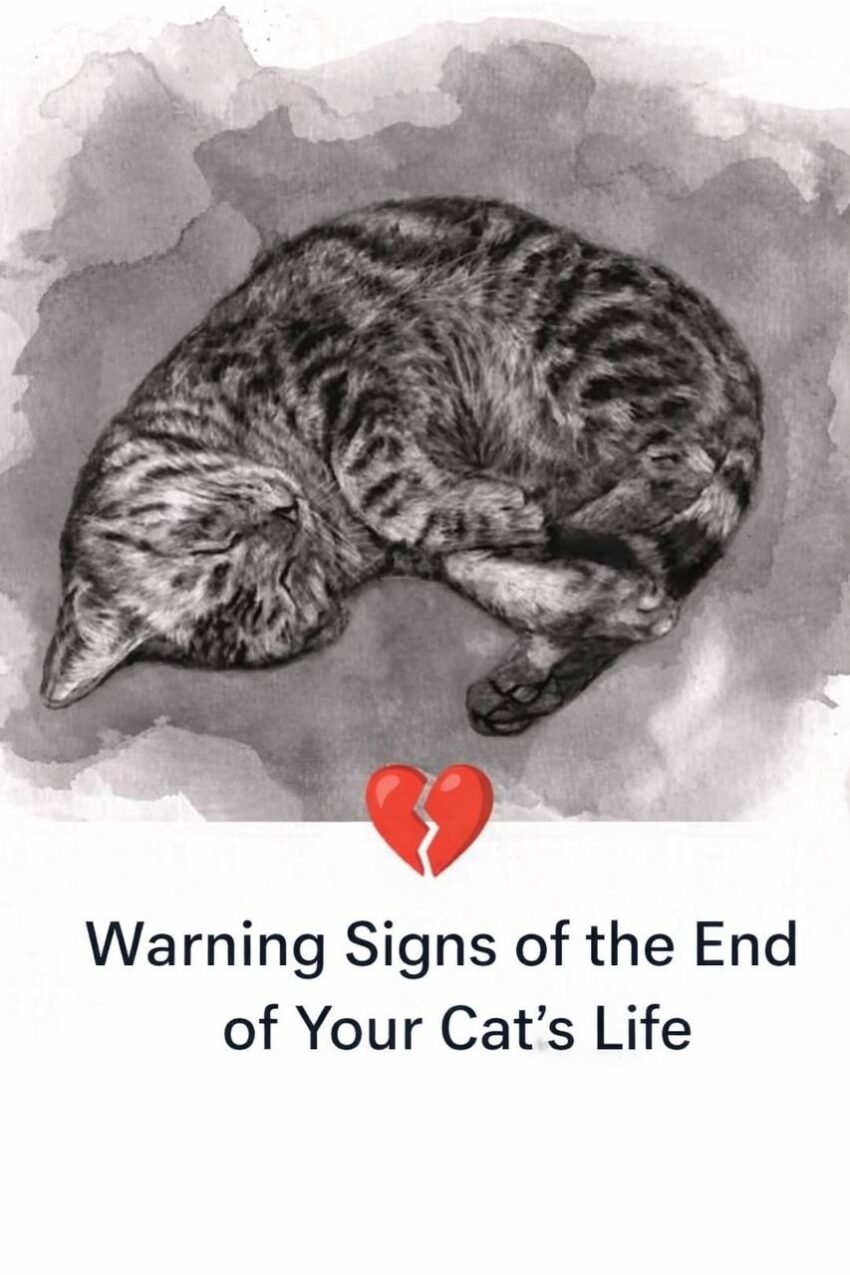
Here’s a careful guide on 11 signs that may indicate a cat is nearing the end of life. These signs don’t automatically mean your cat is dying, but they are serious warning signs that require a veterinarian’s attention and, often, compassionate care at home.
1. Loss of Appetite
Cats near the end of life often stop eating or drinking. Even favorite foods may be ignored, leading to rapid weight loss and dehydration.
2. Severe Weight Loss
Noticeable wasting, especially over a short period, is a concerning sign. Muscles may shrink, and the cat may appear frail.
3. Extreme Lethargy or Weakness
Your cat may sleep much more than usual, struggle to move, or have difficulty standing or walking.
4. Hiding or Avoiding Contact
Cats may seek seclusion or avoid interaction, retreating to quiet, dark spaces.
5. Labored or Irregular Breathing
Breathing may become rapid, shallow, or noisy. Gasping or long pauses between breaths are concerning signs.
6. Incontinence or Difficulty Using Litter Box
Cats may lose control over bladder or bowels, or stop grooming themselves altogether.
7. Changes in Body Temperature
Cool extremities, such as ears or paws, and a drop in overall body temperature may occur.
8. Disorientation or Confusion
Some cats appear “lost,” wander aimlessly, or have altered responses to familiar stimuli.
9. Poor Coat Condition
The fur may become matted, greasy, or patchy as cats lose the energy or ability to groom themselves.
10. Signs of Pain or Distress
Hissing, growling, excessive meowing, or sudden aggression may indicate discomfort. Pain can also appear as restlessness, tremors, or rapid breathing.
11. Loss of Interest in the Environment
Cats may stop responding to sounds, people, or toys they previously enjoyed, showing profound disinterest in life.
🩺 Important Notes:
- Not all cats show every sign, and some of these symptoms can appear with severe illness that is treatable.
- Veterinary care is essential for diagnosis and comfort care.
- Quality of life assessments help determine when humane end-of-life care, including palliative care, may be appropriate.
If you want, I can also provide a detailed guide on how to make a cat comfortable in its final days, including tips for feeding, hydration, and pain relief at home.
Do you want me to create that guide?
