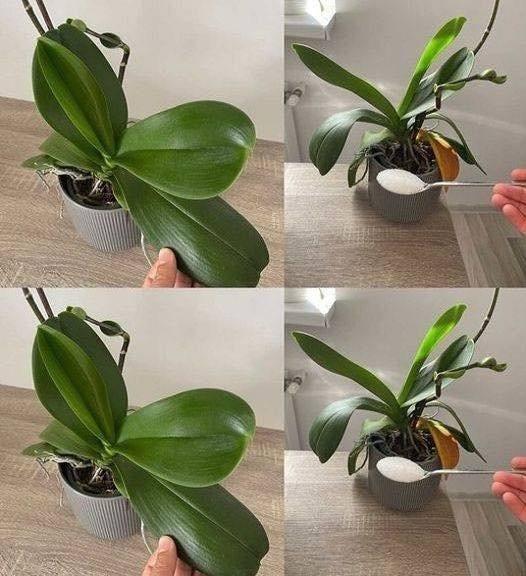
That sounds like one of those “miracle fertilizer” claims you see online. While there’s no magical tablespoon that will make orchids bloom non-stop, there are effective fertilizers and care routines that significantly improve blooming and overall plant health. Here’s a safe, evidence-based guide:
🌸 Orchid Bloom Basics
- Orchids bloom on a cycle, depending on species.
- Phalaenopsis orchids, for example, typically bloom once or twice per year, but healthy care can lengthen flower life.
- Continuous blooming year-round is rare without special hybrid species or controlled greenhouse conditions.
- Fertilizer can support flowering, but it cannot override the natural cycle.
🌿 Effective Fertilizer Use
1. Balanced Orchid Fertilizer
- Use a water-soluble orchid fertilizer with a ratio like 20-20-20 or 30-10-10.
- During active growth, fertilize every 1–2 weeks at ¼ strength to avoid burning roots.
2. “Bloom Boosters”
- Fertilizers higher in phosphorus (the middle number) encourage flower formation.
- Use a bloom-specific fertilizer once a month during flowering season.
3. Proper Watering
- Water orchids when roots are dry, usually once a week for Phalaenopsis.
- Avoid letting roots sit in water; soggy roots lead to rot.
4. Light and Temperature
- Bright, indirect light is essential.
- Many orchids need a slight drop in night temperature to trigger blooming.
5. Repotting and Root Health
- Healthy roots = better blooms.
- Repot every 1–2 years using fresh orchid bark or moss.
⚠️ Common Misconceptions
- No single tablespoon of powder can produce non-stop flowers.
- Miracle claims online often exaggerate results and can harm orchids if the product is too concentrated.
✅ Bottom Line
- Consistent care, proper fertilizer, light, and temperature are what make orchids bloom reliably.
- Use fertilization as a support tool, not a “magic fix.”
If you want, I can make a complete “Orchid Blooming Cheat Sheet” showing fertilizer schedule, watering, light, and bloom triggers to maximize flowers safely.
Do you want me to make that guide?
