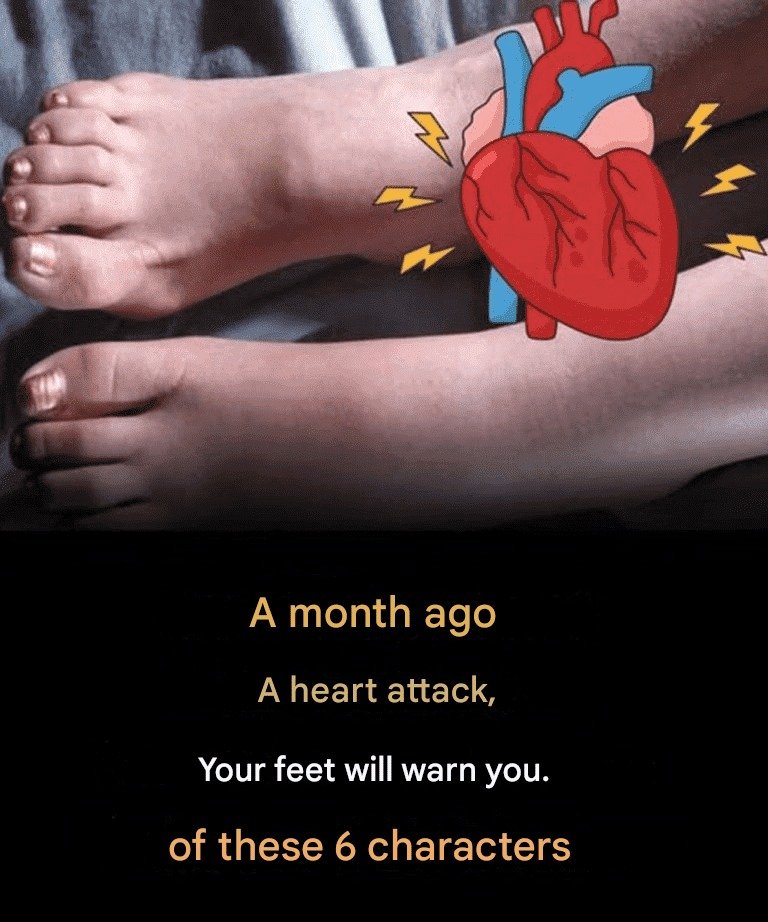
🫀 6 Signs Your Body May Give Up to ~1 Month Before a Heart Attack
These are prodromal signs — early warning symptoms that can occur days or weeks before a major heart attack. They don’t always mean a heart attack will happen, but they can be red flags that something is wrong with your cardiovascular system.
1. Swelling in the Feet, Ankles, or Legs (Edema)
Fluid buildup in the lower extremities can happen when the heart isn’t pumping efficiently. This swelling is a sign of poor circulation and may be seen in people with heart failure or other heart stress.
2. Discoloration or Cold Feet
Feet that appear bluish, purplish, very pale, or colder than usual may reflect reduced blood flow or oxygen delivery to those areas — a possible indicator of vascular problems.
3. Numbness or Tingling
A pins‑and‑needles sensation, numbness, or tingling in the feet might also suggest poor circulation (as in peripheral artery disease), which is linked to heart risk.
4. Slow‑Healing Sores or Wounds
Cuts or sores on the feet that heal slowly (or not at all) can be a sign that blood isn’t reaching that area well — another possible clue to vascular compromise.
5. Pain When Walking (Claudication)
Cramping, aching, or pain in the feet or calves during walking that goes away with rest may be a sign of reduced blood flow to the lower limbs. This is characteristic of peripheral artery disease (PAD), which shares risk factors with heart disease.
6. General Heart‑Related Symptoms
Beyond the feet signs, early symptoms a month before a heart attack can include:
-
Unexplained fatigue or weakness
-
Shortness of breath
-
Chest discomfort or heaviness
-
Palpitations (irregular heartbeat)
-
Dizziness or lightheadedness
These are common in prodromal heart attack stages and are more directly linked to heart distress.
⚠️ Important Clarification
-
No specific changes in your feet can definitively predict a heart attack. There’s no strong scientific evidence that signs in the feet alone reliably signal an imminent heart attack.
-
Swelling, poor wound healing, or discoloration in the feet can occur for many reasons — e.g., diabetes, venous insufficiency, kidney problems, neuropathy, or simply prolonged standing or sitting.
-
Many people experience other early symptoms like fatigue, shortness of breath, chest discomfort, or palpitations weeks before a cardiac event — these are usually more concerning from a heart health perspective.
🩺 When to Take Action
If you or someone else experiences any combination of:
-
Chest pain or pressure
-
Shortness of breath
-
Sudden dizziness
-
Cold sweats
-
Fainting
-
Symptoms that don’t improve with rest
…seek urgent medical evaluation or contact emergency services immediately. These can be signs of a heart attack in progress or about to happen.
🧠 In Summary
These 6 signs often highlighted in online articles are more about general cardiovascular issues (like poor circulation) than specific warnings that a heart attack is exactly one month away. They can be useful as cues to talk to your doctor — but they’re not a definitive prediction tool for when a heart attack will happen.
If you’d like, I can also provide a medically referenced list of early heart attack symptoms from major health organizations (like the AHA or CDC). Just let me know!
