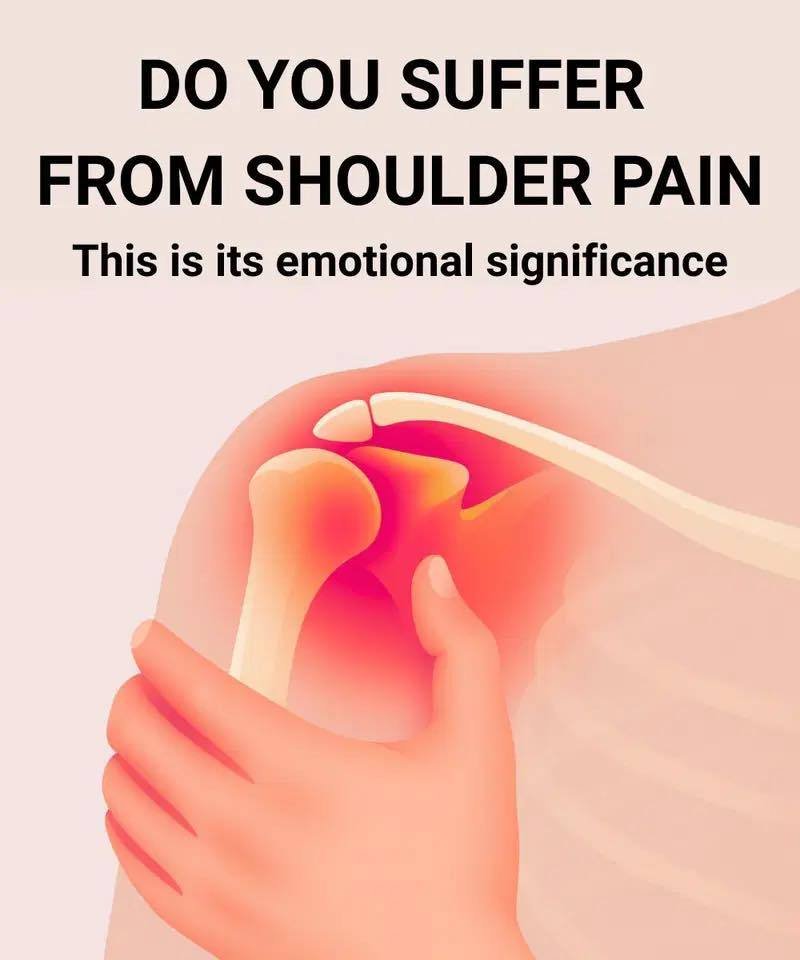
Shoulder pain is usually linked to physical issues (muscle strain, posture, injury). However, in some mind-body approaches and stress research, emotional tension can contribute to muscle tightness—especially in the shoulders and neck. The idea comes from fields like Psychosomatic Medicine and stress-related muscle tension.
Below are some emotional patterns that are commonly associated with shoulder discomfort.
1. Feeling Overburdened or Carrying Too Much Responsibility
The shoulders literally “carry weight,” so many people tense these muscles when they feel overwhelmed.
Common emotional triggers:
- excessive responsibilities
- caregiving stress
- pressure at work or home
This tension can lead to chronic tightness or pain in the shoulder muscles.
2. Stress and Anxiety
Chronic stress activates the body’s fight-or-flight response, a concept related to the Sympathetic Nervous System.
When this system stays activated:
- shoulder muscles remain tense
- blood flow to muscles decreases
- pain and stiffness may develop
Many people unconsciously raise their shoulders when anxious.
3. Suppressed Emotions
Some psychological theories suggest that unexpressed emotions—such as anger or frustration—can manifest as physical tension.
This can lead to:
- stiff shoulders
- limited range of motion
- headaches or neck pain
The body often stores stress in areas that already hold tension, like the shoulders.
4. Lack of Support or Feeling Alone
Emotionally feeling unsupported can increase physical tension in the upper body.
People experiencing this may subconsciously tighten the shoulders as a protective posture.
5. Difficulty Letting Go
Persistent worry or holding onto past stress can keep the body in a tense state.
Over time this can contribute to:
- chronic shoulder tightness
- muscle fatigue
- discomfort when moving the arms
Important: Physical Causes Are Much More Common
Most shoulder pain is actually related to medical conditions such as:
- Rotator Cuff Injury
- Frozen Shoulder
- Tendinitis
- muscle strain from posture or repetitive movement
Emotional stress may worsen muscle tension, but it usually isn’t the only cause.
Ways to Reduce Stress-Related Shoulder Pain
Helpful approaches include:
Relaxation techniques
- deep breathing
- meditation
- yoga
Physical methods
- gentle stretching
- massage
- improving posture
Lifestyle
- regular exercise
- stress management
- adequate sleep
✅ Key takeaway:
Shoulder discomfort can sometimes reflect emotional stress—especially feeling overburdened, anxious, or tense—but most shoulder pain has physical causes. Addressing both physical posture and emotional stress often provides the best relief.
💡 If you’d like, I can also explain what different body pains (neck, back, knees, hips) are sometimes linked to emotionally—a topic many psychologists and mind-body experts discuss.
