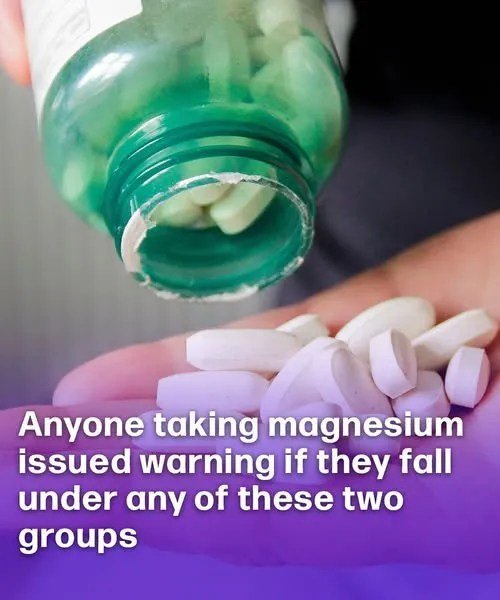
Health experts have recently warned that magnesium supplements, while popular for sleep, muscle cramps, and stress relief, can be dangerous for certain people if taken without medical guidance. ⚠️
The two high-risk groups doctors are warning about
1️⃣ People with kidney disease
The kidneys normally remove excess magnesium from the body. If kidney function is reduced, magnesium can build up in the bloodstream and lead to a condition called Hypermagnesemia. (Cleveland Clinic)
Possible symptoms include:
- Severe fatigue or drowsiness
- Muscle weakness
- Low blood pressure
- Irregular heartbeat
- In extreme cases, cardiac arrest or coma (Cleveland Clinic)
Experts note that people with kidney disease should not take magnesium supplements unless a doctor approves them, because their bodies cannot easily eliminate excess magnesium. (WebMD)
2️⃣ People taking certain medications
Magnesium can interact with many common medications, which may reduce drug effectiveness or increase side effects. These include:
- Antibiotics
- Blood pressure medicines
- Thyroid medications
- Diuretics
- Some osteoporosis drugs (Verywell Health)
For example, magnesium can block the absorption of antibiotics or other medicines, making them less effective. (Verywell Health)
Other possible side effects of too much magnesium
Even in healthy people, excessive doses may cause:
- Diarrhea and stomach cramps
- Nausea
- Low blood pressure
- Heart rhythm problems in extreme cases (WIRED)
Most experts say supplemental magnesium above about 350 mg/day should only be taken under medical supervision. (WIRED)
✅ Bottom line:
Magnesium is an important mineral, but supplements aren’t risk-free. People with kidney problems or those taking certain medications should always consult a doctor before using them.
💡 If you want, I can also explain:
- 4 warning signs of magnesium overdose many people ignore
- The best natural foods high in magnesium (safer than supplements).
