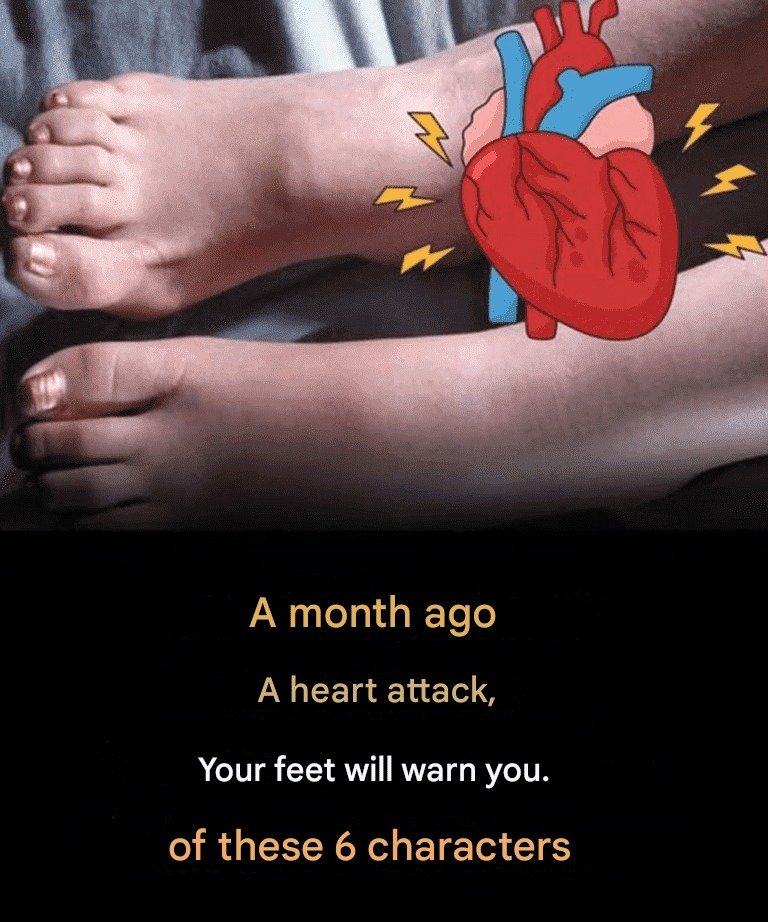
Here’s a fact‑checked overview of what your body — including your feet and legs — might show up to a month before a heart attack and what you should really pay attention to. Note: there’s no widely accepted evidence that your feet specifically send six distinct pre‑heart‑attack signals, but leg and foot symptoms can reflect cardiovascular and circulation issues that deserve medical evaluation. (Healthline)
🫀 Symptoms That May Appear Weeks to a Month Before a Heart Attack
Medical experts describe prodromal symptoms — warning signs that can show up days, weeks, or even a month before a heart attack. These signs often start slowly and can easily be mistaken for less serious health issues. (Healthline)
1. Unusual or Persistent Fatigue
You feel exhausted even after rest, and tasks that were once easy now make you tire quickly. This can reflect that your heart isn’t pumping efficiently. (Healthline)
2. Shortness of Breath
Breathlessness with minimal activity — like climbing stairs or walking short distances — can be a warning sign. This may occur with or without chest discomfort. (www.heart.org)
3. Chest Discomfort or Pressure
This might feel like pressure, squeezing, fullness, or mild pain in the center of the chest that comes and goes. (www.heart.org)
4. Radiating Pain
Pain can travel from the chest to the arms, back, neck or jaw — especially the left arm — and may happen intermittently before a full heart attack. (Healthline)
5. Heart Palpitations or Irregular Heartbeat
Feeling like your heart is racing, fluttering, or skipping beats, without exercise or obvious cause, should prompt a check‑up. (Harvard Health)
6. Unexplained Symptoms: Dizziness, Nausea, Anxiety
Not everyone has classic chest pain — especially women. Some report dizziness, nausea, sudden anxiety, or a general sense of something “being off.” (www.heart.org)
👣 What Your Feet and Legs Can Reveal
While feet symptoms alone aren’t established as specific signs of an imminent heart attack, they can indicate underlying cardiovascular issues such as poor circulation or heart failure, which increase cardiac risk: (Harvard Health)
- Swelling (Edema):
Swollen feet, ankles or lower legs may be a symptom of heart failure or reduced heart pumping efficiency. (Harvard Health) - Slow‑Healing Foot Sores or Cold Feet:
Poor blood flow due to peripheral artery disease (related to cardiovascular disease) can cause cold feet, slow‑healing sores or weak pulses in the feet. These don’t predict a heart attack on their own, but they signal vascular problems that need medical evaluation. (Healthline) - Discoloration or Pain in Legs:
Persistent pain, cramps, or color changes can indicate circulatory blockages — something that also increases heart attack risk. (The Times of India)
🧠 Important Notes
- Not everyone will experience warning signs. Some heart attacks can occur suddenly without prodromal symptoms. (www.heart.org)
- Many warning signs can mimic other conditions (like indigestion, anxiety, or fatigue from stress), which is why vigilance and medical evaluation are crucial.
- Seek emergency care immediately if you experience chest pain, pressure, shortness of breath, or sudden radiating pain — even if symptoms are intermittent. (www.heart.org)
🩺 When to See a Doctor
If you notice persistent patterns of fatigue, shortness of breath, chest discomfort, swelling in feet/legs, or changes in heart rhythm — especially if you have risk factors like high blood pressure, diabetes, smoking, or family history — schedule a medical evaluation promptly. Early detection can significantly improve outcomes. (www.heart.org)
If you’d like, I can tailor this into a brief article‑style summary you can save or share.
