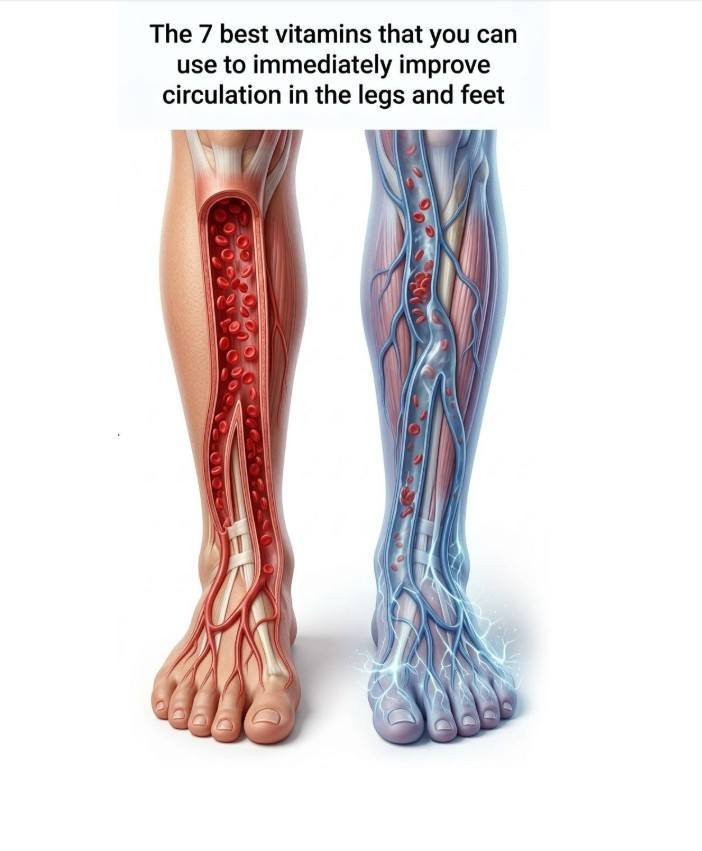
That headline is catchy—but a bit misleading. You can’t fully “fix” poor circulation in 20 minutes, but you can noticeably improve blood flow and reduce symptoms (like cold hands, tingling, or heaviness) with the right quick routine.
Here’s a practical 20-minute circulation boost plan backed by physiology:
⏱️ 20-Minute Routine to Improve Circulation
🔥 1. Warm-Up (3 minutes)
Start by gently increasing body temperature:
- March in place
- Shoulder rolls + arm swings
- Ankle circles
👉 This helps dilate blood vessels and prepares your system.
🚶 2. Light Cardio (7–10 minutes)
Pick one:
- Brisk walking
- Climbing stairs
- Jump rope (if able)
This activates Blood Circulation by increasing heart rate and pushing blood through vessels more efficiently.
🦵 3. Targeted Movements (5 minutes)
Focus on common problem areas:
Legs:
- Calf raises (15–20 reps)
- Leg lifts or squats
Arms:
- Arm circles
- Light stretching
👉 These act like a “pump,” helping blood return to the heart.
🧘 4. Elevation + Deep Breathing (3–5 minutes)
- Lie down and raise legs against a wall
- Take slow, deep breaths
This improves venous return and reduces swelling.
🌡️ Quick Add-Ons (Optional but Effective)
🚿 Contrast shower
- 1 min warm → 20 sec cool (repeat 2–3 times)
- Stimulates blood vessel contraction/expansion
💧 Hydration
- Drink water—dehydration thickens blood slightly and slows flow
☕ Warm drinks
- Tea or warm water helps mild vasodilation
⚠️ Important: When it’s NOT just “poor circulation”
Sometimes symptoms may be linked to conditions like:
- Peripheral Artery Disease
- Diabetes
- Raynaud’s Disease
👉 If you notice:
- Persistent numbness
- Pain while walking
- Color changes (white/blue fingers)
You should get medical advice.
🧠 What actually improves circulation long-term
- Daily movement (most important)
- Not sitting too long
- Healthy weight
- Not smoking
- Balanced diet
✅ Bottom line
You can boost circulation in 20 minutes, but it’s temporary. Real improvement comes from consistent habits.
If you want, I can create a daily routine specifically for cold hands/feet or leg circulation—those need slightly different approaches.
