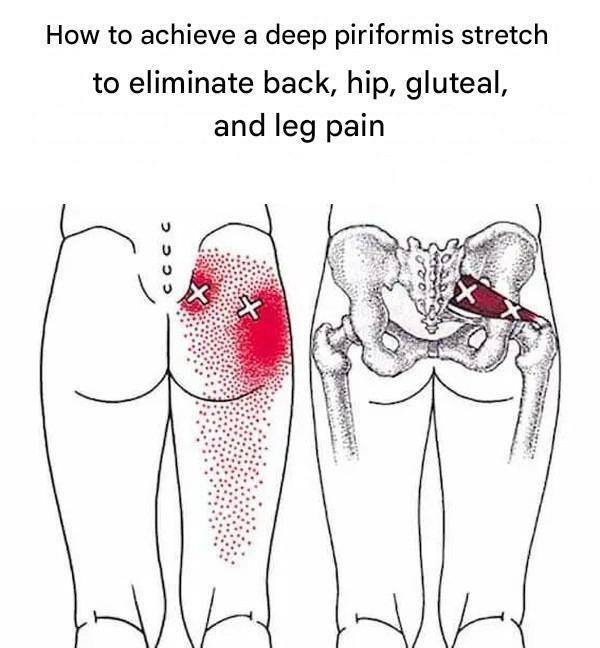
Absolutely! A deep piriformis stretch can relieve tension in your lower back, hips, glutes, and even sciatic nerve–related leg pain. I’ll give a step-by-step, safe, and detailed approach, plus tips for maximum effectiveness.
1. Why the Piriformis Matters
The piriformis muscle is a small, deep muscle in the buttocks that:
- Connects the sacrum to the top of the femur
- Stabilizes the hip
- Can compress the sciatic nerve if tight, causing pain down the leg (“piriformis syndrome”)
Stretching it can relieve pain in:
- Lower back
- Hips
- Glutes
- Legs (especially sciatic nerve pain)
2. Preparation
- Wear comfortable, non-restrictive clothing
- Use a yoga mat or soft surface
- Warm up with 2–3 minutes of walking, gentle hip rotations, or seated torso twists
3. Top Deep Piriformis Stretches
A. Figure-4 Stretch (Supine)
- Lie on your back, knees bent, feet flat on the floor
- Cross your right ankle over your left knee (like a “4”)
- Grab the left thigh and gently pull it toward your chest
- Keep your shoulders on the ground and spine neutral
- Hold 30–60 seconds; repeat on the other side
Tip: Focus on the gluteal and hip area, not just pulling the knee.
B. Seated Piriformis Stretch
- Sit on a chair with feet flat on the floor
- Place your right ankle on your left knee
- Keep your back straight and gently lean forward from your hips
- Stop when you feel a deep stretch in your right glute/hip
- Hold 30–45 seconds, repeat on the other side
Tip: Lean slowly and breathe deeply to relax the muscle.
C. Pigeon Pose (Yoga)
- Start in a plank or downward dog position
- Bring your right knee forward, placing it behind your right hand
- Extend your left leg straight back
- Square your hips forward, keeping your torso upright
- Fold forward slightly to deepen the stretch
- Hold 30–60 seconds, repeat on the other side
Tip: Keep hips square and avoid twisting the knee or torso.
D. Lying Knee-to-Opposite Shoulder
- Lie on your back
- Bring your right knee toward your left shoulder
- Keep your left leg straight and lower back on the ground
- Hold 20–40 seconds, then switch sides
Tip: This also gently stretches the glute and lower back along with piriformis.
4. Deepening the Stretch Safely
- Use props: Yoga blocks or a rolled towel under the hip can help with alignment
- Breathe deeply: Exhale slowly to allow muscles to relax
- Move slowly: Avoid bouncing; go deeper gradually
- Combine stretches: Rotating between 2–3 stretches per side often gives the best relief
5. Additional Tips for Relief
- Foam rolling the glutes before stretching
- Strengthening surrounding muscles (glutes, core, hip rotators) to prevent re-tightening
- Avoid sitting for long periods without breaks
- Heat therapy for 5–10 minutes can relax the piriformis before stretching
💡 Key Takeaway: For lasting relief, combine deep piriformis stretches, glute strengthening, and proper posture. Stretch daily or every other day, especially if sitting a lot.
If you want, I can make a step-by-step visual routine showing 4 deep piriformis stretches so you can follow it at home without guessing angles. It’s very effective for sciatic or hip pain.
Do you want me to create that visual routine?
