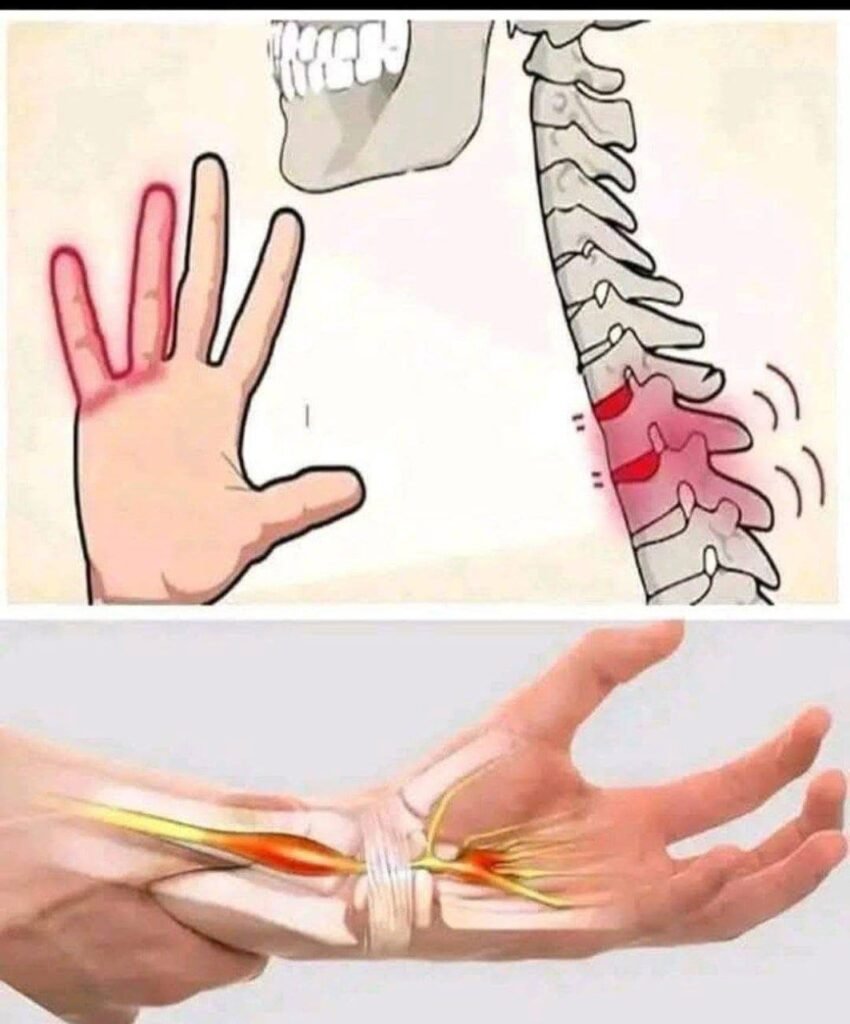
From a Traditional Chinese Medicine (TCM) perspective, numbness and tingling aren’t seen as isolated nerve problems—they’re usually described as a disruption in the flow of Qi (vital energy) and blood through the body’s channels (meridians).
How TCM interprets numbness & tingling
In TCM, these sensations often fall under a category called “Bi syndrome” (blockage syndrome), where circulation is impaired.
1. Qi and Blood stagnation
- When Qi and blood don’t flow smoothly, areas of the body may feel:
- Numb
- Tingly (“pins and needles”)
- Heavy or dull
👉 This is one of the most common explanations—think of it as “traffic congestion” in the body.
2. Blood deficiency
- If the body doesn’t have enough nourishing blood:
- Nerves and tissues aren’t properly “fed”
- This can lead to numbness, especially in hands and feet
👉 Often linked with fatigue, pale complexion, or dizziness.
3. Wind invasion (external or internal)
- In TCM, “Wind” is associated with movement and sudden changes.
- Symptoms may:
- Come and go quickly
- Move from place to place
👉 Tingling that shifts location is often attributed to Wind.
4. Dampness or Phlegm accumulation
- These are considered “heavy” pathological factors that block flow.
- You might feel:
- Tingling with heaviness
- Swelling or sluggishness
5. Liver and Kidney imbalance
- The Liver in TCM controls tendons and smooth flow of Qi
- The Kidney nourishes marrow (linked to brain and nerves)
👉 Weakness in these systems can lead to chronic numbness or neuropathy-like symptoms.
How TCM approaches treatment
Treatment aims to restore balance and circulation rather than just suppress symptoms:
- Acupuncture
Stimulates specific points to improve Qi and blood flow - Herbal medicine
Formulas tailored to the pattern (e.g., tonifying blood, dispelling wind) - Massage (Tui Na)
Helps unblock meridians - Diet & lifestyle
Warming foods, circulation-supporting habits
Important perspective
TCM provides a holistic framework, but numbness and tingling can also come from biomedical causes like:
- Nerve compression (e.g., carpal tunnel syndrome)
- Vitamin deficiencies
- Diabetes
- Neurological conditions
So it’s best to not rely on one system alone—persistent or worsening symptoms should be medically evaluated.
Bottom line
In TCM, numbness and tingling are usually a sign of blocked or insufficient flow of Qi and blood, influenced by factors like stagnation, deficiency, or “Wind.” Treatment focuses on restoring balance and circulation rather than targeting a single nerve.
If you want, I can map your specific symptoms (location, timing, triggers) to a likely TCM pattern—it gets much more precise that way.
