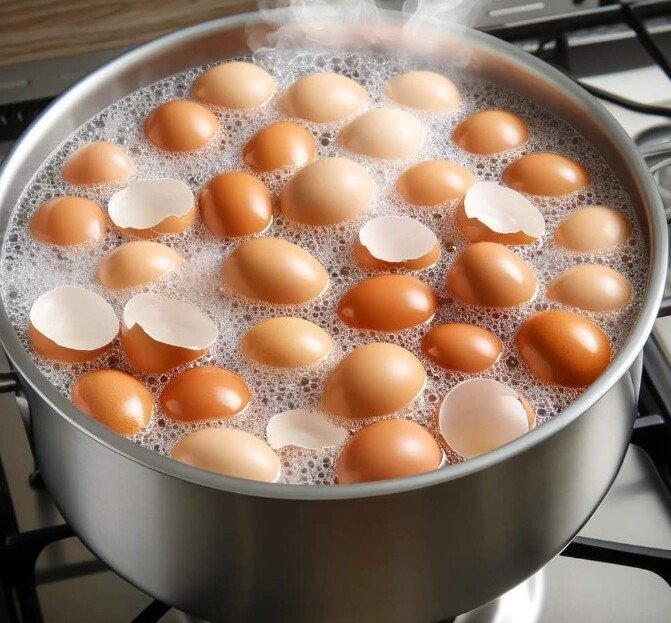
Here’s a well‑structured, article‑style overview on why people boil and reuse eggshells instead of just throwing them away — including the science, benefits, and safe ways to use them: (Healthline)
🥚 Why You Shouldn’t Throw Away Eggshells: A Detailed Look
Eggshells are often overlooked as kitchen waste, but scientific analysis confirms they’re highly rich in calcium carbonate (CaCO₃) — up to about 94–96 % of their composition — making them a potentially valuable resource rather than trash. (PMC)
🌿 1. Nutritional Value & Calcium Source
Eggshells are one of the cheapest natural sources of calcium:
- They consist mainly of calcium carbonate, which is a primary dietary source of calcium — an essential mineral for bone strength and general health. (Healthline)
- Studies show eggshell calcium may be absorbed effectively by the body and can help meet daily calcium requirements, sometimes even better than commercial calcium carbonate supplements. (Healthline)
- Some research also highlights trace amounts of beneficial minerals like magnesium and strontium alongside calcium. (PMC)
👉 Health tip: Many people boil eggshells to sterilize them before grinding into a fine powder for use as a dietary supplement. Boiling reduces the risk of bacterial contamination (e.g., Salmonella) and prepares the shells for safe consumption or processing. (Healthline)
🌱 2. Garden and Soil Benefits
Rather than just throwing shells away, eggshells can be reused in outdoor gardening:
- Calcium enrichment: When crushed finely or composted, eggshells contribute calcium to the soil, which is important for plant cell wall development and can support healthy growth of vegetables like tomatoes or peppers. (Better Homes & Gardens)
- Natural compost ingredient: Adding cleaned and crushed eggshells to compost enriches it with minerals that help overall soil fertility. (The Spruce)
However, there are important nuances:
- Simply tossing whole or roughly broken shells into the soil doesn’t release calcium quickly — eggshell pieces decompose slowly, and plants won’t benefit unless shells are finely ground or added to compost. (Better Homes & Gardens)
- Overuse in some gardens may raise soil pH, which can be problematic for acid‑loving plants like blueberries or azaleas. (Ideal Home)
🧼 3. Household Uses
Eggshells can also serve practical purposes around the home:
- Cleaning scrub: Ground eggshells mixed with baking soda and soap make a mild abrasive that helps scrub pots, pans, and stubborn stains. (KFoods)
- Some articles even suggest creative upcycling ideas — such as using crushed shells to help with cleaning or minor household uses — though these are often more lifestyle tips than scientific recommendations. (KFoods)
🧠 Summary: What You Get by Boiling/Processing Eggshells
| Purpose | Why It Helps | Notes |
|---|---|---|
| Calcium supplement | Provides absorbable calcium | Must be sterilized & finely ground; consult a health professional |
| Garden amendment | Calcium for plants & soil health | Works best when ground or composted |
| Cleaning/household use | Natural abrasive | Practical but secondary to nutritional benefits |
📌 Safety & Preparation Tips
If you’re planning to reuse eggshells for dietary purposes:
- Boil them first to kill harmful bacteria. (Healthline)
- Dry thoroughly before grinding to avoid mold or contamination.
- Grind into a very fine powder for best absorption and safety (larger fragments can be sharp or irritate the digestive tract). (Healthline)
- Don’t overdo calcium supplements—too much calcium can sometimes cause issues like kidney stones or interfere with mineral balance, and health professionals often recommend moderation. (Healthline)
If you want, I can also give you a step‑by‑step how‑to guide for preparing eggshell powder safely at home (including boiling, drying, and grinding). Just let me know!
