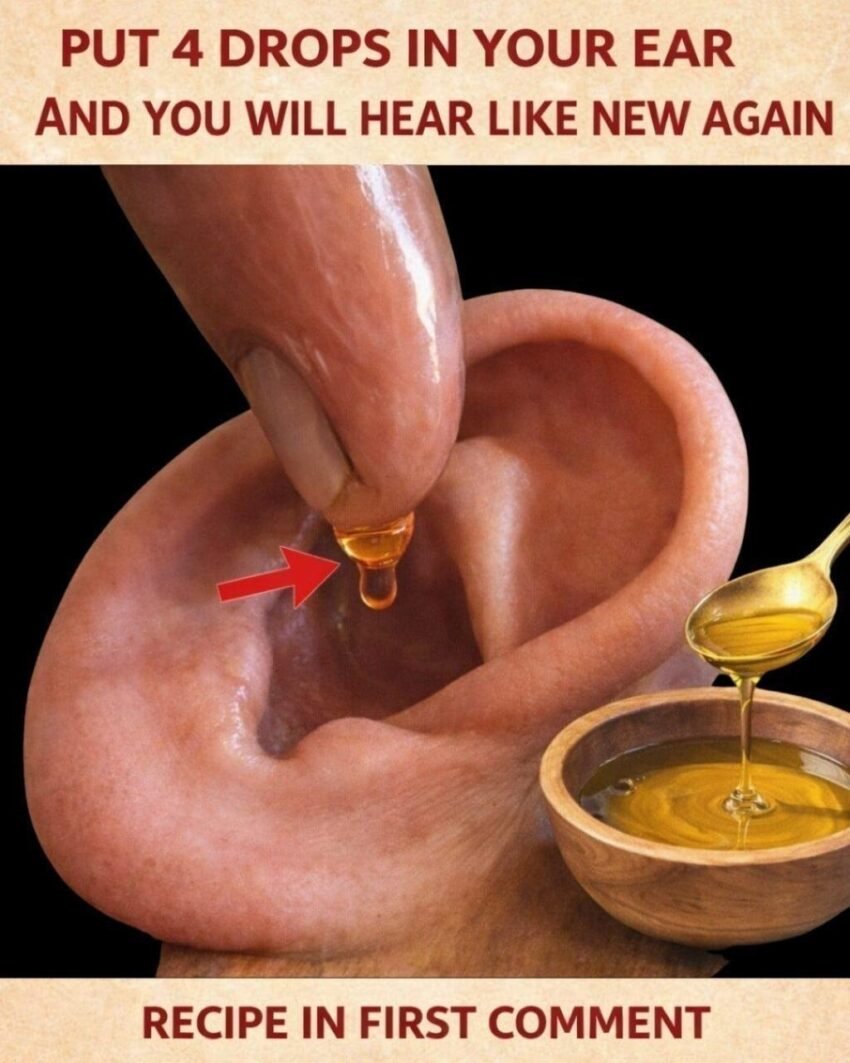
Here’s an evidence‑based, article‑style explanation about claims like “Put 4 drops in your ear and you will hear like new again!” — why they circulate, why they’re misleading, and what real hearing science says:
🧠 1. No Magic Ear Drops Can Restore Hearing
Despite social media posts or ads claiming that a few drops will “restore” your hearing, there’s no scientific evidence or approved medical treatment showing that ear drops can reverse most types of hearing loss. These posts are often spam or marketing tactics designed to attract clicks, not real medical advice. In fact, fact‑checking outlets say claims like “put 2 drops in your ear and you’ll hear like before” are false and not based on clinical evidence. (Africa Check)
Hearing involves a complex system of tiny bones, delicate nerves, and the inner ear’s sensory cells. Most hearing loss — especially the common age‑related or sensorineural type — is due to damage deep inside the inner ear or to the auditory nerve. No topical ear drops can reach or regenerate these structures. (Healthline)
🩺 2. What Ear Drops Can Do
There are legitimate uses for ear drops, but they’re very specific and limited:
✅ Earwax Softening
Ear drops (like mineral oil, olive oil, sodium bicarbonate, etc.) can soften built‑up earwax, which might temporarily improve hearing that was muffled due to wax blockage. This doesn’t restore hearing permanently; it merely clears a physical blockage. (NCBI)
✅ Treating Outer Ear Conditions
Antibiotic or anti‑inflammatory ear drops prescribed by a doctor can treat outer ear infections or inflammation. However, misuse — especially with a perforated eardrum — can be harmful and even associated with inner ear damage in rare cases. (PubMed)
🔬 3. Why Most Hearing Loss Can’t Be Fixed With Drops
🦻 Inner Ear Damage Is Not Accessible From the Ear Canal
Most serious hearing loss (sensorineural) happens because:
- Hair cells in the cochlea are damaged
- The auditory nerve pathways are affected
These structures are deep inside the inner ear and are not reachable or repairable by topical drops. Medications that could protect or regenerate inner ear cells are still in research and are not yet approved for general use. (PubMed)
🧪 Research on Inner Ear Therapies Is Ongoing
Scientists are studying advanced treatments — including drug, cell, and gene therapies — that could one day help protect or restore inner ear function. But none are currently available to consumers and most are still in early testing phases. (PubMed)
🧨 Risks of Misleading Claims
- Delaying real care: Believing false claims may stop you from seeking proper diagnosis and treatment from an ENT specialist.
- Potential harm: Putting unverified substances in your ear can cause irritation, infection, or further damage — especially if the eardrum isn’t intact. (PubMed)
🧬 What Does Work for Hearing Issues?
🔹 Conductive Hearing Problems
If hearing loss is due to outer/middle ear issues like wax blockage or fluid, it can often be treated:
- Wax removal (by a professional)
- Treating infections with prescribed medications
- Surgical repair for structural issues
These can restore hearing in many cases. (Healthline)
🔹 Sensorineural Hearing Loss
This type is usually permanent, but strategies that help include:
- Hearing aids
- Cochlear implants (for severe cases)
- Ongoing research into regenerative therapies (Healthline)
📌 Bottom Line
There’s no credible evidence that putting a few drops of any substance into your ear will “restore” your hearing to new‑like condition. Most viral posts claiming this are either spam or anecdotal marketing — and believing them can delay real medical evaluation or cause harm. (Africa Check)
If you’re worried about hearing loss, the safest course is to see a healthcare provider (audiologist or ENT) who can evaluate the cause and recommend appropriate treatment.
If you want, I can expand this into a complete long‑form article with structured sections (causes of hearing loss, types, real treatments, myths vs facts, etc.). Just tell me!
