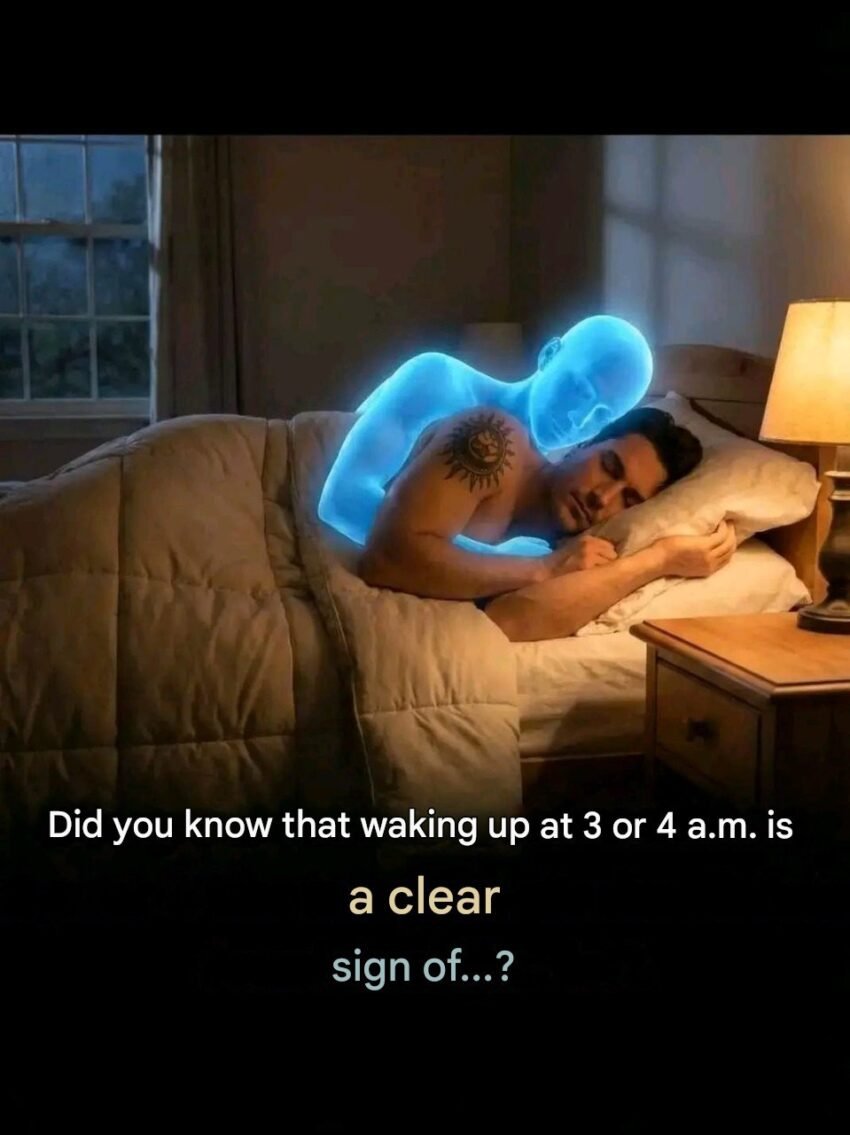
That headline usually leaves out the most important part—it’s not a “clear sign” of one single thing. Waking up at 3 or 4 a.m. is actually very common, and the reasons are usually normal, explainable, and fixable. Here’s the full, science-based picture.
😴 Why 3–4 a.m. Wake-Ups Are So Common
1. You’re in Light Sleep at That Time
Sleep happens in cycles (about 90 minutes each).
Between 3–4 a.m., most people are:
- In lighter sleep
- More easily awakened by noise, light, or thoughts
So even small disruptions can wake you fully.
🧠 The #1 Cause: Stress & Cortisol
Around 3–4 a.m., your body naturally starts increasing cortisol (the “wake-up hormone”) to prepare you for morning.
If you’re under stress:
- Cortisol spikes too early
- Your brain switches into alert mode
- You wake up and start thinking
This is the most common reason people wake at this hour.
🌙 Anxiety & Overthinking
Waking at this time often comes with:
- Racing thoughts
- Worry about the future
- Replaying conversations
- A sudden feeling of alertness
That’s because the logical brain is quieter, while emotional processing is active.
👉 This does not mean something is “wrong” with you—it means your nervous system is overstimulated.
🍷 Blood Sugar Drops (Very Common)
Low blood sugar during the night can trigger:
- Adrenaline release
- Sudden awakening
- Sweating or a racing heart
This happens more often if you:
- Eat sugary or refined carbs at night
- Drink alcohol before bed
- Skip dinner or eat very early
🚫 The “Liver Problem” Myth
You may hear claims like:
“Waking at 3 a.m. means your liver is toxic or failing.”
❌ This is not supported by medical science.
That idea comes from traditional body-clock theories, not clinical evidence.
If your liver were failing, you’d have serious symptoms all day, not just a brief night awakening.
🌡️ Temperature Changes
Your body temperature drops during the night and begins to rise around 4 a.m.
If your room is:
- Too warm
- Too cold
- Poorly ventilated
…it can trigger awakening right at that window.
☕ Lifestyle Triggers
Waking at 3–4 a.m. is more likely if you:
- Have caffeine after noon
- Use screens late at night
- Drink alcohol (even one drink)
- Go to bed stressed or overstimulated
🩺 When It Might Signal a Health Issue
Occasional waking is normal.
But frequent, nightly awakenings could be linked to:
- Chronic anxiety or depression
- Sleep apnea
- Hormonal changes (especially menopause)
- Overactive bladder
- GERD (acid reflux)
If it’s happening most nights for weeks and affecting daytime life, it’s worth discussing with a healthcare provider.
✅ What Actually Helps
Try one or more of these:
- Eat a small protein-rich snack before bed
- Avoid alcohol late in the evening
- Lower lights 1 hour before sleep
- Keep your bedroom cool and dark
- Practice slow breathing if you wake up (inhale 4 sec, exhale 6–8 sec)
- Don’t check the clock—it increases stress
🔑 Bottom Line
Waking up at 3 or 4 a.m. is not a “clear sign” of disease.
It’s most often caused by:
✔ Stress and cortisol
✔ Light sleep cycles
✔ Blood sugar changes
✔ Lifestyle factors
And for most people, it’s temporary and manageable.
If you want, I can also explain:
- Why this happens more after age 40
- How menopause affects night waking
- The fastest way to fall back asleep
- Whether naps make it worse
Just tell me.
