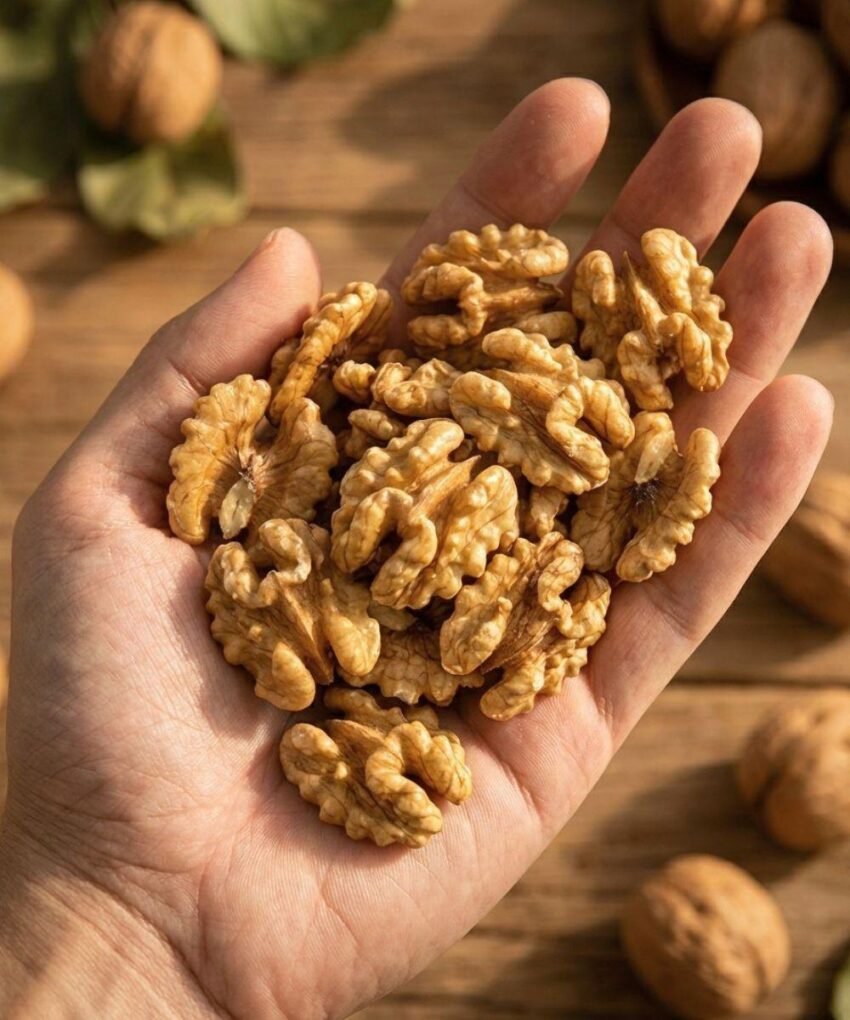
Here’s a full, well-reasoned article you can read or share — not clickbait, but what doctors and nutrition experts actually say about eating walnuts and what it causes in your body.
Doctors Reveal What Eating Walnuts Really Does to Your Body
Walnuts are one of the most talked-about nuts in nutrition circles — often surrounded by both praise and misconceptions. Headlines like:
“Doctors reveal eating walnuts causes…”
“…walnuts cause brain growth!”
“…walnuts cause blood sugar to crash!”
…make walnuts sound like something mysterious or dramatic.
The truth? Eating walnuts causes measurable, mostly beneficial effects — but not in magical ways. Here’s what science and clinical experts actually say.
1. Walnuts Improve Heart Health
Doctors and cardiologists commonly recommend walnuts because they are high in healthy fats, especially omega-3 fatty acids (alpha-linolenic acid). These help:
- Lower LDL (bad) cholesterol
- Reduce inflammation in blood vessels
- Improve blood vessel function
Multiple studies have shown that regular walnut consumption is associated with lower risk of heart disease. This is especially true when walnuts replace less healthy fats or snacks in the diet.
Real effect:
👉 Walnuts cause improved heart risk markers when part of a balanced diet.
2. Walnuts Support Brain Function — But Don’t Grow Your Brain
You may have heard that walnuts are “good for the brain.” That comes from:
- Their brain-like shape
- High content of omega-3 fats
- Antioxidants that support cell health
Some observational research links walnut consumption with better memory and cognition in older adults. However:
❌ Walnuts do not cause your brain to grow larger
❌ They don’t make you instantly smarter
The effect is supportive, not miraculous.
3. Walnuts Can Aid Weight Management (When Eaten Mindfully)
Walnuts are energy-dense — a small handful is high in calories. But research shows:
- They increase fullness
- They can reduce cravings
- They may help you eat fewer calories overall
This is because they contain:
- Protein
- Healthy fats
- Fiber
Doctors note: Consuming walnuts as a snack can be part of a weight-management plan if portion sizes are controlled.
4. Walnuts Help Blood Sugar Control
Walnuts have a low glycemic index, meaning they have a minimal effect on blood sugar levels after eating. Regular walnut consumption has been associated with:
- Improved insulin sensitivity
- Better blood sugar regulation
This is especially helpful for people with pre-diabetes or type-2 diabetes when walnuts replace high-sugar snacks.
5. Walnuts Reduce Inflammation
Inflammation is a key driver of many chronic diseases. Walnuts contain:
- Polyphenols
- Omega-3 fats
- Antioxidants
These help the body reduce inflammatory processes.
Effect doctors see:
👉 Lower markers of systemic inflammation over time (when eaten consistently).
6. Walnuts Support Gut Health
Your gut bacteria thrive on diverse, fiber-rich foods. Walnuts:
- Provide soluble and insoluble fiber
- Feed beneficial gut microbes
- Can increase microbial diversity
Better gut health is linked to improved immune function, mood, and metabolic health.
7. Walnuts Can Cause Issues — For Some People
No food is perfect for everyone. Doctors caution that walnuts may cause:
Allergic Reactions
Tree-nut allergies can cause:
- Hives
- Swelling
- Difficulty breathing
- Anaphylaxis in severe cases
If you have a known nut allergy, avoid walnuts, and speak to your doctor.
Digestive Discomfort
Eating too many walnuts at once may cause:
- Bloating
- Gas
- Loose stools
This is more likely if you’re not used to high-fiber foods.
Weight Gain (in Excess)
Because walnuts are calorie-dense, eating large amounts without accounting for calories can contribute to:
- Weight gain
- Increased daily caloric intake
Moderation is key.
8. What the Research Really Shows
Clinical studies indicate that eating a moderate amount of walnuts (usually about 1 ounce / 28 grams per day) is associated with:
✅ Lower LDL cholesterol
✅ Better heart health markers
✅ Reduced inflammation
✅ Improved gut microbiome diversity
✅ Stable blood sugar levels
✅ Increased satiety after meals
But none of these are instantaneous or magical — they’re the result of consistent dietary patterns.
So What Does Eating Walnuts Cause?
Here’s a balanced summary:
✔️ What it really causes
- Better heart-health biomarkers
- Support for cognitive function
- Increased fullness
- Improved blood sugar control
- Reduced inflammation
- Support for gut health
❌ What it does not cause
- Instant weight loss
- Dramatic IQ increases
- Brain enlargement
- Immediate detox
- Any single disease cure
How to Eat Walnuts the Smart Way
Best practices according to nutrition experts:
- Enjoy a handful (~1 oz / 28g) daily
- Combine with fruits, salads, or yogurt
- Use crushed walnuts on oatmeal or roasted veggies
- Substitute for less healthy snacks (chips, candy)
Final Takeaway
Eating walnuts causes meaningful health benefits when included as part of a balanced diet — but the effects are supportive, gradual, and biological, not dramatic or mystical.
If you’d like, I can also produce a short infographic version of this article, or tailor it to specific goals like heart health, weight loss, or diabetes management.
