Got you. Here’s a full, magazine-style article—not a recipe card, not a rant, but an actual piece about the food and why it still matters.
Yes, People Still Eat Polish Sausage, Sauerkraut, and Potatoes — And They Always Will
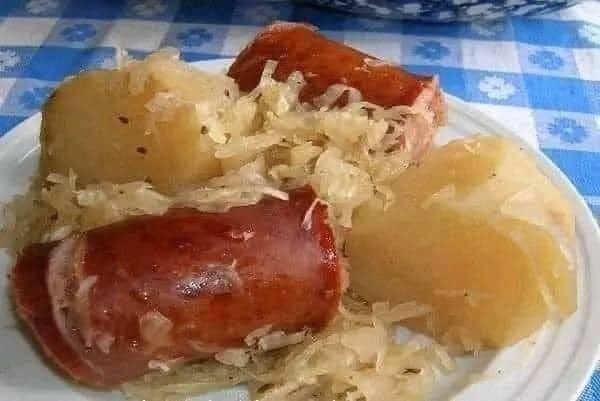
In a food culture obsessed with novelty—smash burgers, fusion tacos, foods engineered to trend for 72 hours—there’s something quietly radical about a plate of Polish sausage, sauerkraut, and potatoes. It’s not flashy. It’s not plated with tweezers. It doesn’t need a backstory involving a pop-up or a tasting menu.
And yet, it endures.
This meal, deeply rooted in Polish and Eastern European tradition, continues to appear on dinner tables across generations, regions, and seasons. Not as a novelty. As food.
A Meal Built for Real Life
Polish sausage (kielbasa), sauerkraut, and potatoes were never meant to impress. They were designed to sustain. In colder climates with long winters, preservation and calorie density mattered more than aesthetics. Pork could be smoked or cured. Cabbage could be fermented. Potatoes could be stored for months.
Together, they formed a complete, reliable meal:
- Protein and fat from sausage
- Acidity and probiotics from sauerkraut
- Carbohydrates and comfort from potatoes
This wasn’t “peasant food” in the dismissive way people sometimes use the term. It was smart food. Practical food. Food that fed families through hard seasons.
The Immigrant Table
When Polish immigrants arrived in the United States in the late 19th and early 20th centuries, they brought these dishes with them. In cities like Chicago, Detroit, Cleveland, Pittsburgh, Milwaukee, and Buffalo, kielbasa and sauerkraut became fixtures not just in Polish homes, but in the broader working-class food landscape.
Church basements served it. Corner butcher shops specialized in it. Family kitchens passed it down without needing to write anything down.
For many families, this meal wasn’t tied to a specific holiday—it was simply what you ate. On a Tuesday. After work. When money was tight. When it was cold. When you needed something dependable.
Why It Never Disappeared
Despite changing tastes and food trends, this meal has never truly gone away—and there are good reasons why.
1. It’s Affordable
Even now, kielbasa, cabbage, and potatoes remain relatively inexpensive. When food costs rise, people don’t abandon meals like this—they return to them.
2. It’s Satisfying
This is not “snack food.” It’s not a bowl that leaves you hungry an hour later. It fills you up, warms you, and sticks with you.
3. It’s Flexible
Boiled potatoes or pan-fried. Fresh or smoked sausage. Sauerkraut simmered or crisped in a pan. Mustard or no mustard. Butter, onions, pepper, caraway seeds—every family has their version.
4. It’s Emotional
For many people, this meal is memory. Grandparents. Weeknight dinners. The smell of sausage cooking. The sound of a fork scraping a plate clean.
Food like this doesn’t disappear because it’s tied to identity, not trends.
Why You Don’t See It Online (Much)
Modern food culture favors:
- Visual drama
- Novelty
- Reinvention
Polish sausage, sauerkraut, and potatoes doesn’t beg for attention. It doesn’t photograph as well as neon glazes or stacked desserts. It smells strong while cooking. It’s unapologetically beige.
But offline—where people actually eat—it’s thriving.
You’ll find it:
- In home kitchens
- In old-school diners
- At family gatherings
- On holidays like New Year’s Day
- On plates of people who care more about eating well than eating trendy
A Quiet Kind of Food Pride
There’s a growing appreciation for foods like this—not because they’re being rebranded, but because people are tired of pretending that simple, hearty meals are something to apologize for.
Eating Polish sausage, sauerkraut, and potatoes in 2026 isn’t nostalgic. It’s practical. It’s cultural continuity. It’s choosing food that does what food is supposed to do.
And the people still eating it?
They’re not behind the times.
They’re just not loud about it.
If you want, I can:
- Adapt this into a blog post, op-ed, or food history essay
- Make it more academic, more personal, or more humorous
- Add a regional focus (Midwest, Polish-American, European perspective)
Just tell me the vibe.
