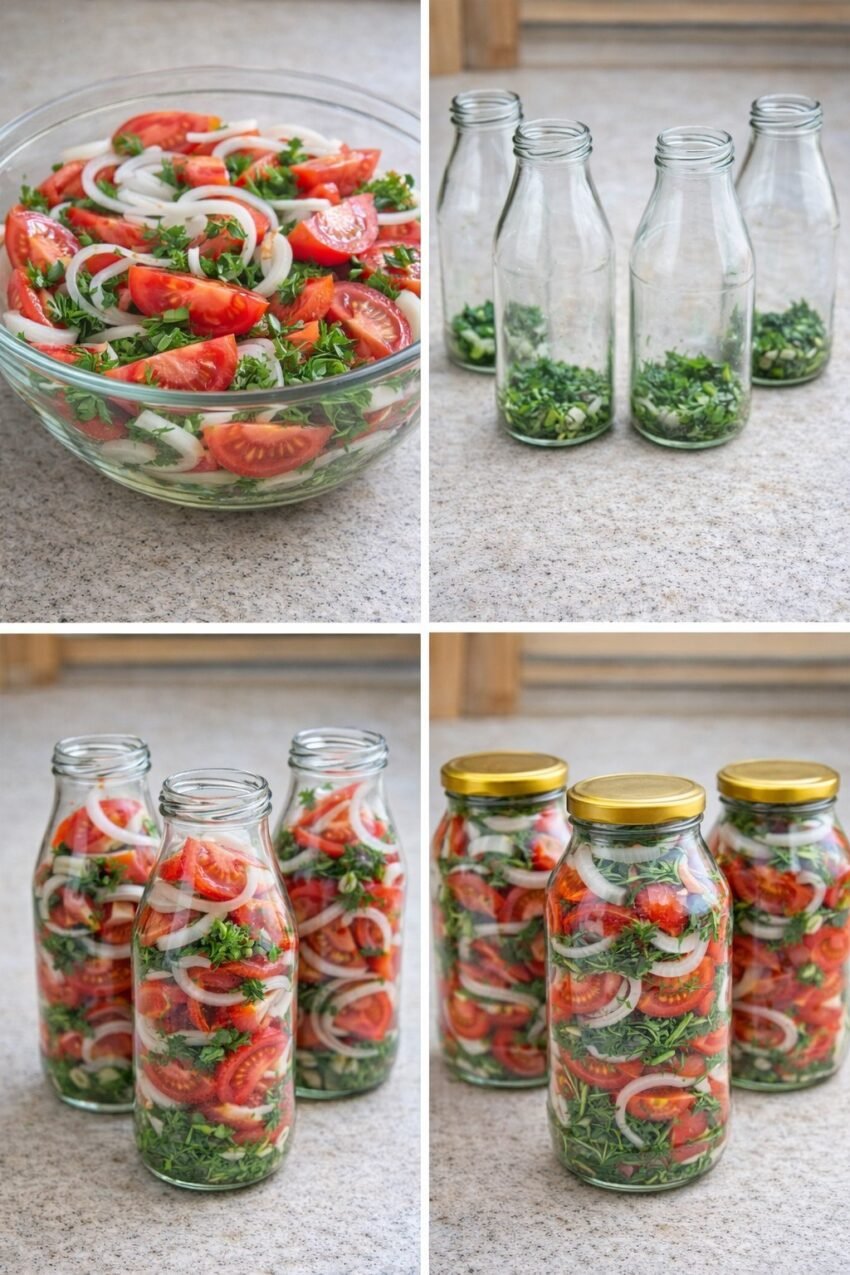
Here’s a clear, honest breakdown of the idea you may have heard — that you can make fresh tomatoes last for 2 years without vinegar — and what the safe, real methods actually are:
🧪 Myth vs. Reality: Can Fresh Tomatoes Last 2 Years with No Vinegar?
The claim circulating online usually says you can just pack whole fresh tomatoes in jars, cover them with oil (or nothing but herbs), seal, and they’ll stay good for up to two years at room temperature without vinegar or other acid.
👉 This is not safe or reliable. There’s no scientifically sound method to preserve raw fresh tomatoes for two years at room temperature without proper acidification, heat processing, or low‑temperature storage. Raw tomatoes are not naturally stable enough to do that safely — and such methods can create conditions where dangerous bacteria like Clostridium botulinum can grow. (homeremediesseasy.com)
In fact:
- Packed tomatoes covered in oil or just salt do not have enough acidity to prevent botulism and other spoilage risks. (homeremediesseasy.com)
- Government food safety experts do not recommend storing fresh tomatoes in oil at room temperature for long storage because of these risks. (nchfp.uga.edu)
So “fresh, raw tomatoes in a jar for 2 years with no vinegar or processing”? That’s a myth — and potentially unsafe. (homeremediesseasy.com)
✅ Proven Ways to Preserve Tomatoes (and Some Can Last ~2 Years)
While you can’t keep raw tomatoes unfrozen at room temp for years, there are real food‑safe methods that let you enjoy tomatoes year‑round without using vinegar if that’s your preference:
1. Pressure Canning (No Vinegar Needed, But Heat Processing)
Pressure canning allows preservation of whole tomatoes or tomato products safely because it reaches high heat that kills harmful bacteria.
- Tomatoes canned this way can last 12–24 months or longer on a pantry shelf. (FarmstandApp)
- Vinegar isn’t required if you use a pressure canner (unlike water‑bath canning). (FarmstandApp)
Important: You must follow proper pressure‑canning steps and use certified jars/lids.
2. Freezing Tomatoes
This is one of the easiest, no‑vinegar ways to preserve them:
- Wash, dry, and spread tomatoes on a tray to freeze individually.
- Once frozen solid, transfer to freeze bags or vacuum‑seal.
- Can last 12–18 months or more in a deep freezer (-18°C/0°F). (homeremediesseasy.com)
Note: Texture changes after freezing — great for sauces and cooking, not fresh salads.
3. Drying / Dehydration
Dry or semi‑dry tomatoes can last many months if fully dehydrated and stored properly:
- Use a dehydrator or low oven until leathery.
- Keep in airtight containers in a cool, dark place.
- Fully dried tomatoes (especially vacuum‑sealed) can last close to a year or more. (homeremediesseasy.com)
4. Fermentation (No Vinegar Required)
Tomatoes can be fermented in a salt brine (no vinegar) to produce tangy, shelf‑stable preserves:
- Ferment at room temp for a few days, then refrigerate.
- Can last many months in the fridge. (homeremediesseasy.com)
🧠 Key Safety Takeaways
❌ Don’t store raw tomatoes in oil at room temperature for long periods — this can cause botulism, and authorities warn against it. (homeremediesseasy.com)
✅ Proper pressure canning, freezing, drying, and fermentation are real, safe ways to keep tomatoes available long past the harvest season.
📑 Always check jars before use — bulging lids, gas bubbles, bad odors, or cloudiness are signs of spoilage.
If you’d like, I can give you a step‑by‑step recipe for pressure canning tomatoes safely or a guide to freezing tomatoes for best results! Just tell me which method you’re most interested in.
