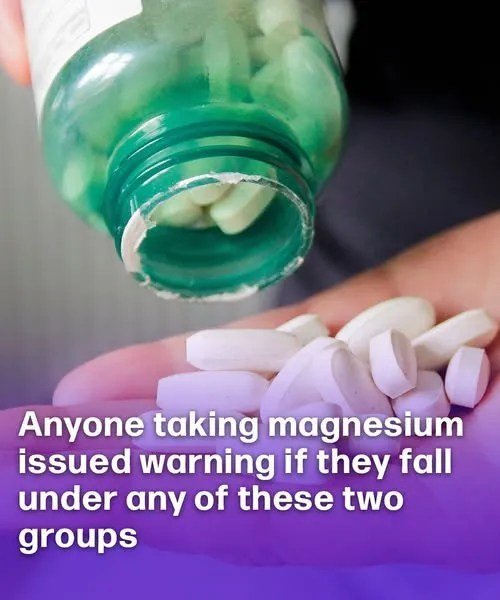
Health experts are warning people to be cautious with magnesium supplements, especially because many people take them without medical advice. While magnesium is an essential mineral for muscles, nerves, blood sugar, and heart health, taking too much—especially through supplements—can cause serious health problems in certain individuals. (Medical News Today)
Below are the two high-risk groups experts say should be especially careful, along with the reasons behind the warning.
1. People With Kidney Disease
This is considered the highest-risk group.
The kidneys normally remove excess magnesium from the body. But when kidney function is reduced, magnesium can build up in the bloodstream, leading to a dangerous condition called hypermagnesemia. (Bolt Pharmacy)
Possible symptoms of magnesium buildup:
- Nausea and vomiting
- Muscle weakness
- Low blood pressure
- Irregular heartbeat
- Difficulty breathing
- In severe cases, cardiac arrest
Because of this risk, doctors often advise people with chronic kidney disease (CKD) to avoid magnesium supplements unless they are prescribed and monitored by a physician.
2. Older Adults (Especially Over 65)
Health experts also warn that elderly individuals may face higher risks when taking magnesium supplements.
Why seniors are at risk:
- Kidney function naturally declines with age, even without diagnosed kidney disease.
- Older adults often take multiple medications that can interact with magnesium.
- Supplements, antacids, and laxatives may all contain magnesium, increasing the chance of accidental overdose. (Bolt Pharmacy)
Because of these factors, magnesium may accumulate in the body more easily in seniors.
Other People Who Should Be Careful
Doctors also advise caution for people who:
- Take diuretics, antibiotics, or heart medications that interact with magnesium. (Healthline)
- Have certain heart rhythm disorders or heart block. (Medx)
- Take high doses of magnesium-containing laxatives or antacids.
Side Effects From Too Much Magnesium
Even in healthy people, high doses from supplements can cause:
- Diarrhea
- Nausea
- Abdominal cramps
- Vomiting
Very high doses may lead to dangerously low blood pressure, irregular heartbeat, and breathing problems. (Office of Dietary Supplements)
Experts generally recommend not exceeding about 350 mg of magnesium per day from supplements unless advised by a doctor. (Office of Dietary Supplements)
✅ Safer approach:
Many experts recommend getting magnesium primarily from foods such as:
- Leafy green vegetables
- Nuts and seeds
- Whole grains
- Legumes
These foods rarely cause magnesium overload because the body can naturally regulate absorption. (Office of Dietary Supplements)
✔️ Bottom line:
Magnesium supplements can be helpful for some people, but self-prescribing high doses can be risky. Those with kidney disease and older adults should always talk to a doctor before taking them.
If you want, I can also show you 6 warning signs that your body may have too much magnesium (many people ignore the early symptoms).
